Carnegie expansion rethinks design
Designs for a proposed expansion of the historic Carnegie Library building have been changed to look less modern.
Now, the question is whether they’ve been changed enough to satisfy concerns that the original design – which featured a modern-looking glass facade – was too out of character for the landmark building at Ninth and Vermont streets.
“I think the public will react much better to this design,” said Sven Alstrom, an architect and member of the city’s Historic Resources Commission. “I really didn’t like that first plan. I thought it was a little too brutal, just too contemporary.”
The public will get a chance to weigh in, beginning tonight. Historic Resources commissioners will meet at 7 p.m. at City Hall to review the project and take public comment. State officials and city commissioners ultimately will have to give approval to the project as well.
“Even though there were a lot of references to the old building in our original design, some of them were pretty abstract,” said David Dunfield, the project’s architect and a former city commissioner. “The new design makes those connections more obvious.”
The front of the building is still primarily glass but will feature much more brick and masonry work, which complements the original building. Dunfield, who works for GLPM Architects, said the new addition should look significantly different – and more modern – than the existing building.
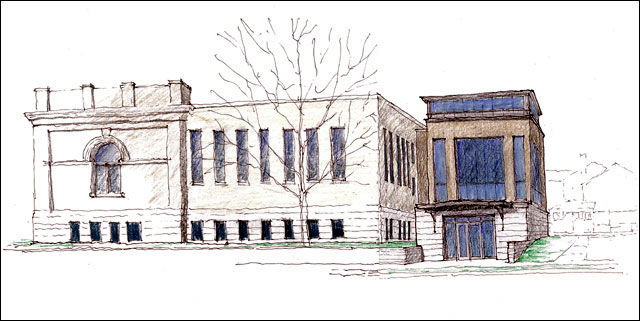
This rendering outlines the proposed addition to the Carnegie Library by GLPM architects. The original design generated concerns that it looked too modern.
That’s because the existing building actually includes the original 1904 structure that was built in an ornate style, and a 1937 addition that was built in a more pragmatic Depression-era style.
“The two parts of the building are so different, and they both clearly represent the time they were built in,” Dunfield said. “To me, it is logical that the expansion would follow that idea of a progression through time.”
“That idea flies with me, but I don’t know how it will fly with the state or the feds,” Alstrom said.
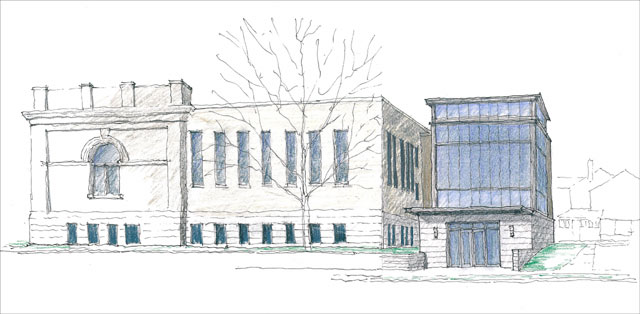
This rendering is the original design.
The project has multiple layers of review, in part, because it is on the National Register of Historic Places and because the expansion is receiving federal grant money.
The review process already has taken longer than expected, which has pushed the timeline for starting the project back from this summer to this winter. Once started, the $1.2 million project is expected to take about a year to complete.
The addition – which would include two floors – would be built on a portion of the existing city parking lot that is north of the building. Dunfield has estimated about 10 spaces in the parking lot will be lost.
City Government
Developer seeks incentive from City of Lawrence to build 131 units of housing near Wakarusa and Queens

Lawrence city leaders will consider whether to keep Community Building open, make 2 other rec centers free to access
A STAR Bond application raises questions for city leaders about Costco and housing west of the SLT

Soccer gear honoring Lawrence history’s all-star team is now on sale as part of city’s public art exhibition
To honor public servants, Lawrence’s July 4 celebration will have a whole gallery of their photos on display; submissions open now