Latest sectarian violence leads to claims of civil war in Iraq
Baghdad, Iraq ? Retaliatory massacres by gunmen and bombers linked to rival Muslim sects have left more than 130 people dead across Iraq over the last 48 hours, the latest casualties of what some politicians now are calling an undeclared civil war.
At least 57 Iraqis were killed Tuesday and scores more injured when a suicide bomber lured a group of unemployed day laborers to gather around his explosives-packed minivan with the promise of work before setting off a detonation. The attack spread blood, burnt debris and charred body parts on a small market across the street from the Muslim bin Aqil mosque in Kufa, the main platform for radical Shiite cleric and militia leader Muqtada al-Sadr.
It was the latest in a series of atrocities perpetrated by Shiite and Sunni Arab Muslims that have left more than 6,000 Iraqi civilians dead since the start of May, according to a U.N. study and Iraqi police reports.
The new bombing, coming on the heels of a series of mass murders and bombings attributed to al-Sadr’s Mahdi Army militia and their Sunni Arab enemies, brought the battle to the Shiite cleric’s doorstep, igniting fears of a fresh wave of reprisal killings.
“The message is clear, and the message confirms the sectarian differences,” said Fadhel Sharaa, a leader of the Sadr movement. “It seems clear that it’s been moving toward the direction of civil war.”
U.S. Deaths
As of Tuesday, at least 2,555 members of the U.S. military have died since the beginning of the Iraq war in March 2003, according to an Associated Press count.
U.S. and Iraqi government leaders have argued that the presence of 150,000-strong foreign troop presence has held the country from descending into full-scale civil war. But many Iraqi officials now despair that the country already has passed the threshold.
“What is happening in Iraq is a disaster and a tragedy,” Adnan Dulaymi, a Sunni Arab leader, said in an interview. “It’s bloodshed and killing of the innocents, killing the elderly and women and children. It’s mass killings. It’s nothing less than an undeclared civil war.”
Many members of Iraq’s political class spoke gravely of the massacres and bombings of the past few days, even as two U.S. Cabinet officials traipsed through Baghdad’s Green Zone on Monday and Tuesday to tout Iraq as a potential bonanza for private investors.
The Iraqi Islamic Party, the largest Sunni Arab political group, warned Tuesday that “Iraq is witnessing a grave escalation in violence,” and called on Iraqis “to return to their senses instead of slipping into the abyss.”
The upsurge in violence has terrified residents of Baghdad and other mixed Sunni and Shiite areas. The Baghdad airport has been flooded with Iraqis of modest means seeking to escape even temporarily the country’s upswing in murders based on religious identity.
According to a United Nations study based on Ministry of Health statistics, 2,669 Iraqi civilians were killed in May and 3,149 were killed in June. And this month, the rate appears to be accelerating, particularly in the Baghdad area where Iraqi security forces, on the heels of a mid-June visit by President Bush, had announced to wide fanfare a sweeping security crackdown plan aimed at quelling the violence. “Things are getting worse,” said Mahmoud Othman, a Kurdish lawmaker.
National
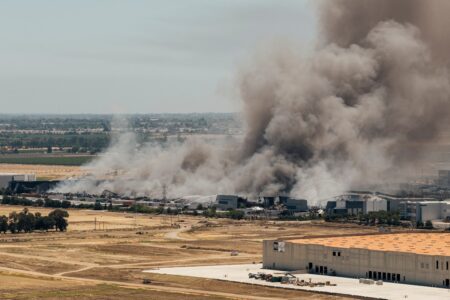
Unhealthy air quality in California city as huge warehouse fire burns for 3rd day
Judge orders Trump administration to restore National Park changes at sites that ‘disparaged’ US
Teens’ reading and math scores have stagnated, US test results show
WASHINGTON (AP) — Younger students have regained ground academically after the pandemic's disruptions while older ...
Lawyers for man accused of killing Charlie Kirk try to block death penalty
Trump’s name poised to come off Kennedy Center