Violence claims at least 60 lives
Baghdad, Iraq ? More than a dozen bombings killed about 60 people in Iraq on Tuesday, part of a recent surge in violence that prompted lawmakers to ask the government to explain why its security plan for the capital is failing.
Suicide bombers struck across the street from Baghdad’s heavily guarded Green Zone, killing up to 16 people – the deadliest attack in a wave of bombings and shootings that threatened to shatter confidence in Iraq’s new government.
In all, about 60 people died in more than a dozen bombings, shootings and ambushes – mostly in the Baghdad area, according to police reports. The dead included 10 Shiites slain by gunmen who fired on their bus as it left the capital for a funeral in southern Iraq, police said.
Lawmakers summoned the defense and interior ministers to explain the failure of Prime Minister Nouri al-Maliki’s security plan for the capital – where most of the recent violence has occurred.
The attack near the Green Zone occurred at midmorning when two suicide bombers detonated explosives at a restaurant frequented by police, the U.S. military and witnesses said.
Sixteen other people were killed in the blast, the U.S. military said.
Iraqi police put the casualty figure at 12 dead and 13 wounded. Blue-uniformed Iraqi police hauled the dead from the wreckage in body bags as heavily armed American soldiers stood guard.
A statement posted on an Islamist Web site in the name of the Islamic Army in Iraq claimed responsibility for the attack, saying it was in retaliation for Israeli military operations in Gaza and the alleged rape-slaying by U.S. soldiers of a young Iraqi woman south of Baghdad.
The Islamic Army is a major insurgent group but authenticity of the statement could not be determined.
Other developments
¢ America’s top envoy in Baghdad, Ambassador Zalmay Khalilzad, on Tuesday denied that Iraq is now embroiled in a civil war but acknowledged growing concern that sectarian clashes could derail the new government if violence is not brought under control.
¢ Clean water should flow to 80 percent of Fallujah’s homes this fall, and by summer’s end a planned wireless network will provide phone service and Internet access to thousands, a technological leap unimaginable just months ago.
But mounds of rubble litter the city and electricity is available only four hours a day, 18 months after Fallujah was destroyed in an American assault to wrest control from insurgents.
¢ The judge called a two-week recess in the trial of Saddam Hussein on Tuesday, hoping to end a boycott of the trial by the former Iraqi leader and his lawyers.
National
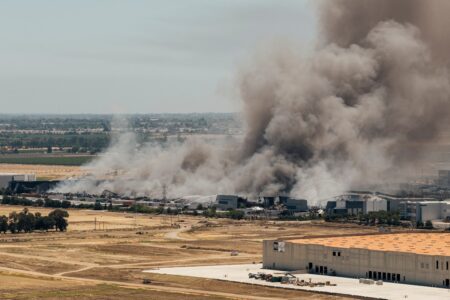
Unhealthy air quality in California city as huge warehouse fire burns for 3rd day
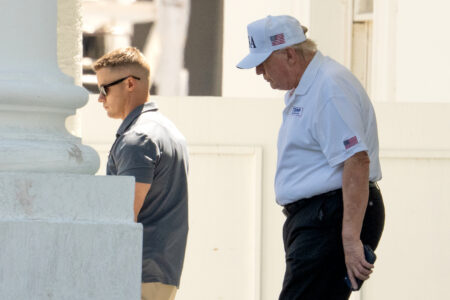
Judge orders Trump administration to restore National Park changes at sites that ‘disparaged’ US
Teens’ reading and math scores have stagnated, US test results show
WASHINGTON (AP) — Younger students have regained ground academically after the pandemic's disruptions while older ...
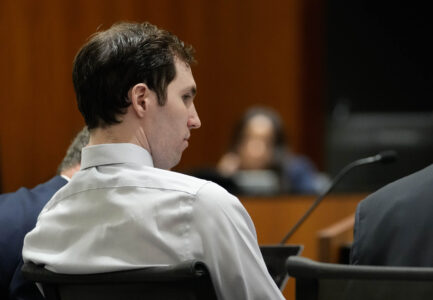
Lawyers for man accused of killing Charlie Kirk try to block death penalty
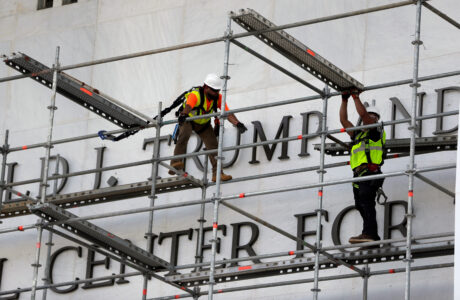
Trump’s name poised to come off Kennedy Center