Senators say White House slowing Katrina inquiry
Washington ? The White House is crippling a Senate inquiry into the government’s sluggish response to Hurricane Katrina by barring administration officials from answering questions and failing to hand over documents, senators leading the investigation said Tuesday.
In some cases, staff at the White House and other federal agencies have refused to be interviewed by congressional investigators, said the top Republican and Democrat on the Senate Homeland Security and Governmental Affairs Committee. In addition, agency officials won’t answer seemingly innocuous questions about times and dates of meetings and telephone calls with the White House, the senators said.
“No one believes that the government responded adequately,” said Sen. Joe Lieberman, D-Conn. “And we can’t put that story together if people feel they’re under a gag order from the White House.”
Sen. Susan Collins of Maine, the committee’s Republican chair, said she respects the White House’s reluctance to reveal advice to President Bush from his top aides, which is generally covered by executive privilege.
Still, she criticized the dearth of information from agency officials about their contacts with the White House.
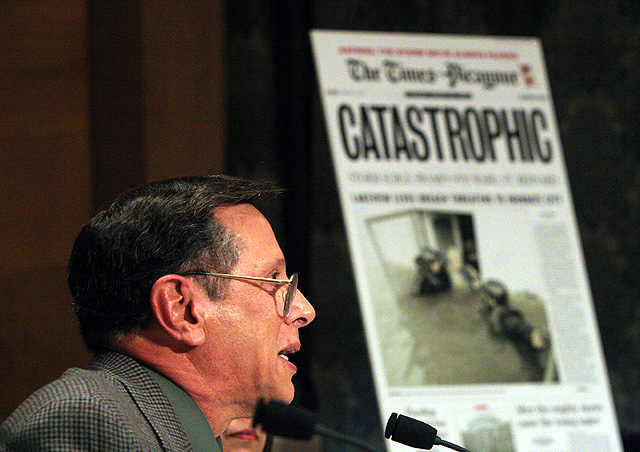
Jesse St. Amant, director of the Plaquemines Parish, La., Homeland Security Office of Emergency Preparedness, testifies before the Senate Committee on Homeland Security and Governmental Affairs hearing on Hurricane Katrina. Some senators say the White House is thwarting efforts to conduct a thorough inquiry into the national response to the disaster.
“We are entitled to know if someone from the Department of Homeland Security calls someone at the White House during this whole crisis period,” Collins said. “So I think the White House has gone too far in restricting basic information about who called whom on what day.”
White House spokesman Trent Duffy said the administration’s deputy homeland security adviser, Ken Rapuano, has briefed House and Senate lawmakers on the federal response. A “lessons learned” report from Homeland Security Adviser Frances Fragos Townsend also is expected in coming weeks, Duffy said.
But he defended the administration’s decision to prohibit White House staffers or other presidential advisers from testifying before Congress.
“There is a deliberate process, and the White House has always said it wants to cooperate with the committee but preserve any president’s ability to get advice from advisers on a confidential basis,” Duffy said. “And that’s a critical need for any U.S. president and that is continuing to influence how we cooperate with the committees.”
National
Unhealthy air quality in California city as huge warehouse fire burns for 3rd day
Judge orders Trump administration to restore National Park changes at sites that ‘disparaged’ US
Teens’ reading and math scores have stagnated, US test results show
WASHINGTON (AP) — Younger students have regained ground academically after the pandemic's disruptions while older ...
Lawyers for man accused of killing Charlie Kirk try to block death penalty
Trump’s name poised to come off Kennedy Center