Coalition organizes against prime minister
Baghdad, Iraq ? A handful of Iraqi political parties have met in recent days to discuss a government that would unite the country’s disparate ethnic and sectarian groups, a step that could result in an attempt to defeat the ruling Shiite coalition’s nominee for prime minister.
The choice of incumbent Prime Minister Ibrahim Al-Jaafari last week to serve a four-year term in Iraq’s most powerful office appeared to be a fait accompli a few days ago. Jaafari had the backing of the United Iraqi Alliance, the coalition of Shiite religious parties that won the largest share of seats in parliamentary elections in December and that was expected to have enough votes to put its candidate in office.
But since the Shiite voted to make Al-Jaafari their nominee, representatives from Kurdish, Sunni Arab and secular parties that include multiple factions said they have met to discuss a broad-based coalition that potentially could overpower the Shiite candidate. The politicians, as well as Western officials, said in interviews that the race for prime minister was far from over.
“It is too early to say who will be the president or the prime minister or anything else,” said Ibrahim Janabi, a member of the secular National Iraqi List. “I think this will take time.”
The politicians received another reminder Saturday of how important the outcome is. A roadside bomb killed an American soldier on patrol in Baghdad, U.S. military authorities said in a statement, and some 20 Iraqis were killed in other shootings and bombings, according to wire reports. In addition, two Macedonian contractors were reported kidnapped as they drove along a road in southern Iraq on Thursday.
The American soldier died when a roadside bomb exploded near a soccer stadium in eastern Baghdad, the U.S. command said. It was the first death of an American soldier since Tuesday and brought the number of U.S. personnel killed since the war began in March 2003 to at least 2,273, according to an Associated Press count.
Jaafari, who has been called ineffectual since he took over a transitional government in May, faced challenges almost immediately following his nomination to head the country’s first full-term government since the fall of Saddam Hussein. Sunni Arab and secular parties – never great friends of Jaafari – had been expected to object, but then the Shiites’ powerful allies in the Kurdistan Coalition began to express discontent.
The Kurds have clashed with Jaafari before over control of the oil-rich city of Kirkuk, which Kurdish leaders think should be a part of their largely autonomous region. Recently they have demanded secular parties be given a role in the new government. This is opposed by Muqtada Al-Sadr, the popular, radical Shiite cleric largely responsible for engineering Jaafari’s victory.
In a rare interview Saturday night on Al-Jazeera television, Al-Sadr repeated his long-standing demand that U.S. and allied troops withdraw from Iraqi soil, and he said he opposed the breakup of the country along ethnic and sectarian lines. He did not appear to be willing to assent to the Kurds’ demands – either for Kirkuk or for their own independent region.
“The problem with Kirkuk is the presence of oil in it,” he said. “It should be in the ownership of all Iraqis. No one has the right to demand Kirkuk.”
Also Saturday, a government official released figures showing the effects of the insurgency on the country’s oil industry, the foundation of Iraq’s economy.
The industry suffered $6.25 billion in losses in 2005 due to infrastructure sabotage and lost export revenues, Oil Ministry spokesman Assem Jihad said.
Most of the sabotage took place in northern oil installations.
National
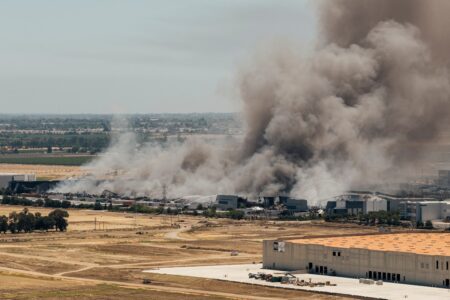
Unhealthy air quality in California city as huge warehouse fire burns for 3rd day
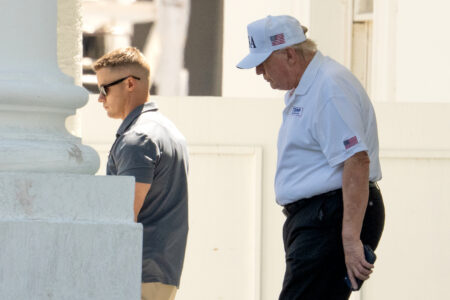
Judge orders Trump administration to restore National Park changes at sites that ‘disparaged’ US
Teens’ reading and math scores have stagnated, US test results show
WASHINGTON (AP) — Younger students have regained ground academically after the pandemic's disruptions while older ...
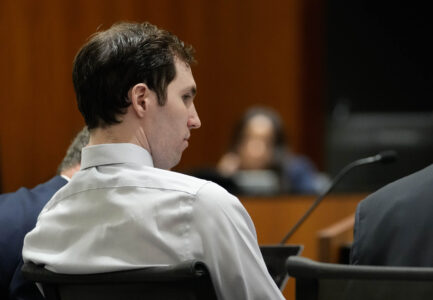
Lawyers for man accused of killing Charlie Kirk try to block death penalty
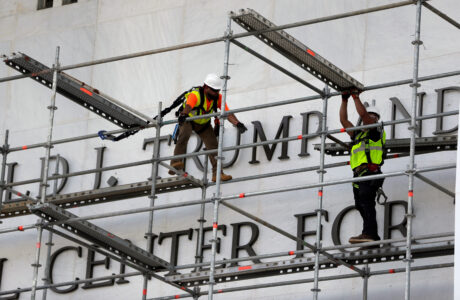
Trump’s name poised to come off Kennedy Center