Body-snatching case invades transplant patients’ confidence
Chicago ? Every year more than 1 million Americans have medical procedures that use bone or other tissue from a cadaver – like disc replacements or dental implants.
But what if the donated tissue came from someone who died of cancer? Or AIDS? Or hepatitis?
That worry caused by a ghoulish scandal in the body parts business has led to distress for hundreds of people, and some prospective patients are now reconsidering how they want their surgeries done.
Experts familiar with the situation say patients’ chances of getting a disease from the suspect tissue are small, but doctors are urging them to be tested.
“This is diabolical … if what has been alleged has been done,” said Dr. Stephen Pineda, an orthopedic surgeon in Springfield, Ill. “What it does to the whole public perception of bone and all other grafts can be catastrophic.”
Investigators are trying to determine whether a New Jersey company, Biomedical Tissue Services of Fort Lee, sold bone and tissue illegally obtained from corpses that were too old, sick or otherwise ineligible to be donors. BTS closed last month.
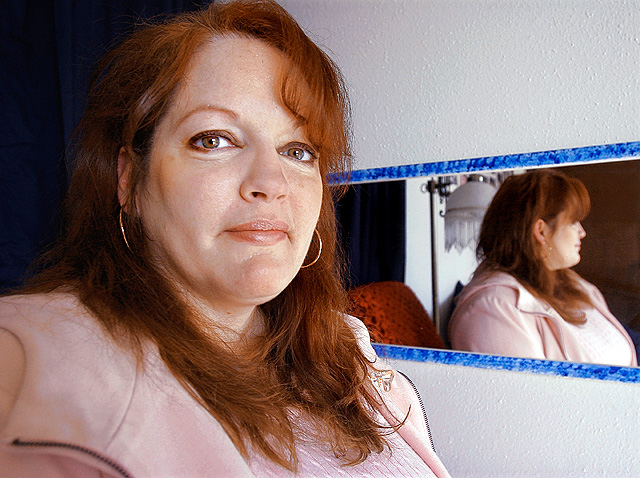
Bobi Milner, of Springfield, Ill., received a suspect tissue transplant last year to fix an aging disc in her upper spine. She recently learned that her graft came from suspect bone. A New Jersey company is under investigation for allegedly selling bone and tissue illegally obtained from corpses ineligible to be donors.
The Food and Drug Administration and federal Centers for Disease Control and Prevention say the risk of infection is low but unknown. So dozens of hospitals have contacted hundreds of patients around the country who got body parts traced to the company between early 2004 and September 2005. They are being offered testing for AIDS, hepatitis and syphilis.
Those are the three illnesses that the FDA requires donor tissue to be tested for – singled out because they cause long-lasting infections that pose a greater risk of transmission through transplanted tissue than short-lived infections.
But some patients worry about tissue or bone from bodies weakened by cancer, age or other ailments. Doctors concede that’s theoretically possible but unlikely to cause problems with the grafts.
Scared patients
Unused body parts linked to the case have been recalled. Companies that process the tissue for medical use are required to test and sterilize it. But still, some patients awaiting operations are scared.
In the past week, two of Pineda’s patients have refused donor parts and want to use their own bone for their surgeries. It’s a riskier, costlier and more painful option that Pineda said most patients used to shun. He calls their reaction “completely understandable.”
“People are worried,” Pineda said. “We’ve been fielding 10 calls a day on this from patients.”
It’s likely that only a tiny portion of patients who got bone or tissue grafts during the past two years received tissue from BTS, said Robert Rigney, chief executive officer at the American Association of Tissue Banks.
While Rigney hasn’t heard of any widespread decline in demand for donor grafts, or in people willing to be donors, he said the case’s potential impact “is something we’re extremely concerned about.”
There have been only a handful of cases, all in the late 1980s and early 1990s, in which U.S. patients got diseases from tissue donors, he said. One caught HIV and two got hepatitis, but that was before improved blood testing methods that are now used.
‘Masterpiece’ shocker
Bobi Milner, a Springfield, Ill., woman who had surgery last year to fix an aging disc in her upper spine, learned last month that her graft came from suspect bone.
Her infectious disease tests came back negative, and Milner said she didn’t freak out until she read a local newspaper article detailing the scam’s scope. Unwitting donors included former “Masterpiece Theater” host Alistair Cooke, who died from cancer at age 95 in 2004.
“That’s when I realized what the magnitude was,” said Milner, 41. “I cried and sobbed the rest of the day. I thought, ‘Oh, my God, what’s going to happen to me?”‘
Cooke “was wonderful on ‘Masterpiece Theater’ and no offense to his family, but he was an elderly gentleman and he would not be an eligible donor,” she said.
Milner worries that if her graft came from someone sick or aged, the bone will deteriorate quickly and she’ll need another operation.
FDA spokesman Stephen King said he could not discuss the number of patients and hospitals thought to be involved in the BTS case, or whether any patients have ailments that might be linked with suspect tissue.
Tissue donation Q&A
A New Jersey company, Biomedical Tissue Services, is under investigation for allegedly selling cadaver parts for tissue donation that were obtained from potentially diseased or aged corpses. Hundreds of patients who had operations using tissue from that company have been offered medical testing. Here are answers to some common questions:
Q: When were these body parts used in surgery?
A: Between early 2004 and September 2005.
Q: What type of tissue is involved?
A: Skin, bone and tendons.
Q: What kind of operations used these body parts?
A: Surgeries to repair aging spinal discs, bad fractures and dental implants are some common uses.
Q: If I’m at risk, will my doctor notify me?
A: The Food and Drug Administration is investigating and has advised doctors who implanted the suspect tissue to notify patients and offer them tests for AIDS, hepatitis and syphilis – diseases with the most likely potential of being transmitted through donated parts.
Q: If I received some of the suspect tissue, what are the chances I could get sick?
A: The FDA says chances are low, but unknown.
Q: How can we be sure most donated cadaver tissue is safe?
A: Experts say reputable tissue banks – where most tissue comes from – test donor specimens for numerous diseases and discard tainted tissue. Tissue and bone also are sterilized before being shipped to hospitals.
Q: What are my options if I don’t want to use donor body parts?
A: Sometimes you can use bone or skin from your own body, but those operations are often riskier, costlier, more painful and require longer recovery.
National
Unhealthy air quality in California city as huge warehouse fire burns for 3rd day
Judge orders Trump administration to restore National Park changes at sites that ‘disparaged’ US
Teens’ reading and math scores have stagnated, US test results show
WASHINGTON (AP) — Younger students have regained ground academically after the pandemic's disruptions while older ...
Lawyers for man accused of killing Charlie Kirk try to block death penalty

Trump’s name poised to come off Kennedy Center