

Bush budget targets domestic programs for cuts
Washington ? President Bush will propose a $2.7 trillion budget today that would take another slice out of domestic spending next year – but still leave the deficit at a larger figure than under any of the 42 presidents who preceded him.
In Bush’s budget for fiscal year 2007, which begins Oct. 1, the departments of Defense and Homeland Security would continue to grow at a rate greater than inflation.
But most other federal departments, from Agriculture to Veterans Affairs, will be asked to get along next year with less money, and with no allowance for inflation or population growth.
Altogether, Bush’s budget would save $14.5 billion next year by eliminating or sharply curtailing 141 federal programs – fulfilling his vow in last week’s State of the Union address to reduce the costs of what he termed “non-security discretionary spending.”
Separately, from a relatively small nick in Medicare’s enormous growth to virtual elimination of a small program that distributes food to the elderly, the administration would continue to chip away at entitlement programs, which mandate that certain groups of individuals, such as the elderly or the poor, receive federal benefits. The savings in this spending category would be $65 billion over the next five years.
As described by analysts who have seen them, the budget documents being made public today reflect a financial climate so tight that there is scarcely any room for innovation – and a president who is bent on curtailing the reach of government.
Even the one major new domestic program that Bush described in his State of the Union address – the American Competitiveness Initiative – offers nearly $3 in tax cuts for every $1 in new spending.
Bush would reinstate the research and experimentation tax credit for business, which Congress let expire at the end of last year, at an annual cost of $4.4 billion. He would spend $1.6 billion for measures, including the placement of 100,000 new math and science instructors in elementary and secondary schools, with the long-term goal of turning out more engineers and computer specialists.
The proposed budget anticipates a deficit of $355 billion – lower than in the previous three years, which hold the top three spots in the federal deficit derby.
In the current fiscal year, the White House says, the deficit is headed for $423 billion – the greatest on record in dollar value, in large part because of the costs of the wars in Iraq and Afghanistan and of the rebuilding efforts along the hurricane-ravaged Gulf Coast of the United States.
As a share of the national economy, the Bush deficits trail far behind those run up during the two world wars, the Depression and even the presidency of Ronald Reagan.
Provided the deficit is measured as a share of the gross domestic product, Bush is on track to keep his promise to cut the deficit in half between 2004 and 2009, the year he leaves office.
National

Suspect in Texas shooting had fired at police days earlier, officials say

Man pleads guilty to killing a top Minnesota Democrat and her husband
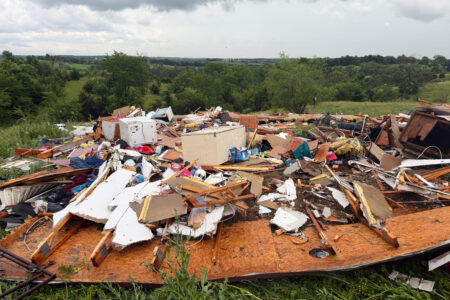
New tornadoes outside Chicago as severe storms pummel the Midwest

Feds won’t seek death penalty in plea deal with man accused of killing top Minnesota Democrat

NASA unveils astronauts to test tech for future moon landing
Social Security’ fund faces shortfall one year earlier than expected
WASHINGTON (AP) — Social Security 's retirement trust fund is projected to face a funding shortfall in 2032, a ...