Roberts court becoming more media-friendly
Washington ? Many Supreme Court justices prize the anonymity that comes with their lifetime appointments and camera-free courtroom. Unrecognized, justices have snapped pictures for tourists in front of the court or been asked to move out of the way of a shot.
On rare occasion, a justice might consent to an interview on the C-SPAN cable network to discuss a recent book or be shown addressing a lawyers’ gathering somewhere.
Lately, however, some members of the court have been popping up in unusual places – including network television news programs – and talking about more than just the law.
For an institution that has kept the media at a comfortable distance for much of its existence, the Supreme Court’s increasingly public face is astonishing, said University of Chicago law professor Dennis Hutchinson, who served as a law clerk for Justices Byron White and William Douglas.
“More and more, the justices are spending time talking off the bench informally to reporters, on the record, off the record, in public, on tape, on film,” Hutchinson said.
Justices Antonin Scalia and Stephen Breyer recently debated their competing views of the Constitution. Breyer and retired Justice Sandra Day O’Connor have talked publicly and repeatedly about threats to judicial independence. Justice Samuel Alito proudly affirmed his membership in the conservative Federalist Society, speaking in a packed ballroom at its recent convention.
Perhaps most noteworthy, though, has been the media-friendly attitude adoped by new Chief Justice John Roberts, in contrast to his predecessor William Rehnquist. Roberts recently was featured on ABC News’ Nightline discussing both his view of the court and his son Jack’s Spiderman imitation at Roberts’ introduction by President Bush.
“Roberts is putting a smiley face in the center chair,” said Hutchinson.
National

Unhealthy air quality in California city as huge warehouse fire burns for 3rd day
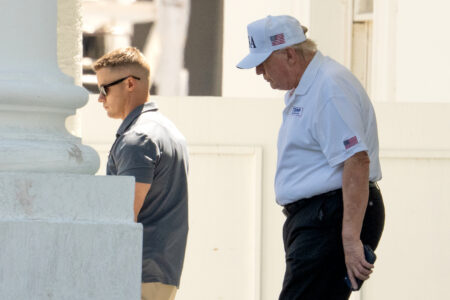
Judge orders Trump administration to restore National Park changes at sites that ‘disparaged’ US
Teens’ reading and math scores have stagnated, US test results show
WASHINGTON (AP) — Younger students have regained ground academically after the pandemic's disruptions while older ...
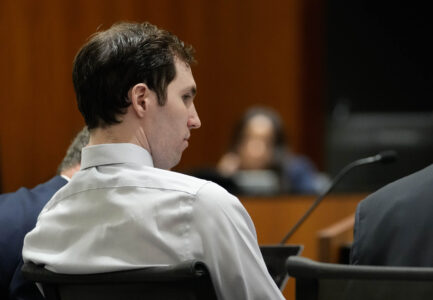
Lawyers for man accused of killing Charlie Kirk try to block death penalty
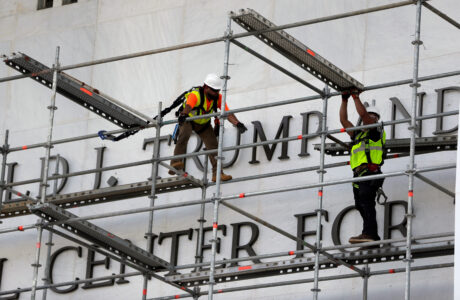
Trump’s name poised to come off Kennedy Center