Stallone returns for final ‘Rocky’
Los Angeles ? Sylvester Stallone is not punch-drunk. He has not taken so many blows to the head while filming “Rocky” movies that he’s unaware of how people are rolling their eyes at the prospect of another.
A 60-year-old in the ring against a heavyweight champ in his prime? Stallone knows what people are saying about “Rocky Balboa,” the sixth – and, he promises – final installment about the Philadelphia street bruiser who makes good.
Stallone conceded that audiences may expect “Rocky Balboa” to be as much of a joke as 1990’s critical and commercial turkey “Rocky V” turned out to be.
“There’s no question about it. It’s ludicrous on the surface,” Stallone said. “It reeks of vanity and lack of self-awareness. I realize that. I told my wife, if I was sitting there listening to this on television, that someone else is doing ‘Godfather 7,’ I’d go, come on.
“But they don’t see it exactly the way I see it. I never saw it as a boxing story. I saw it as an old man characterization of trying to deal with incredible grief and loss.”
In “Rocky Balboa,” Stallone’s Italian Stallion is back in the old neighborhood, running a restaurant called Adrian’s, named after the love of his life (Talia Shire, seen only in flashbacks), who has died of cancer.
Like all the blows he’s taken in his life, Rocky tries to move on, but he’s tethered to Adrian in his mourning, and one last return to the ring becomes a way for him to let go of pent-up anger and emotional baggage.
“Rocky,” an out-of-nowhere low-budget film that won the 1976 best-picture Academy Award, rocketed Stallone to stardom. Inspired by a title fight in which a hopelessly outclassed boxer hung in tenaciously with Muhammad Ali, Stallone wrote the screenplay and held steadfast against studio executives who wanted to cast a big-name actor as Rocky.
The first film had the already aging club fighter go the distance after earning an unlikely bout with the world heavyweight champion. “Rocky II” had him crowned champ in a rematch, while the following movies strained credibility as Rocky faced more preposterous opponents and circumstances.
Stallone thought he was done with the character after “Rocky V,” in which the fighter loses his fortune, sets out to manage a young boxer and ends up in a bare-knuckle street brawl.
The movie left Stallone as unsatisfied as everyone else with Rocky’s fate.
“It was caricaturish, broad acting. It just wasn’t there, and I’ll take responsibility for it,” said Stallone, who wrote all six “Rocky” movies and directed four, including “Rocky Balboa.” “It bothered me immensely, and people weren’t shy about also vocalizing their disenchantment with the final effort.”
“So it ate at me. I’ve had other films that haven’t worked, but this really ate at me. I felt I’d let everyone down.”
About seven years ago, when he was 52, Stallone got the idea of resurrecting Rocky one last time and giving him a better send-off. No one in Hollywood wanted it.
“The quotes were pretty vitriolic about the idea of making the film,” Stallone said.
New management at MGM decided to bite and gave him the go-ahead last year, when Stallone was nearing 60.
Stallone ultimately is pragmatic about why he’s reviving Rocky.
“You give the people what they want,” he said. “That may not be such a popular credo for artists to live by, but I found out the hard way, you give them what you want, they may not come.”
Arts and Entertainment
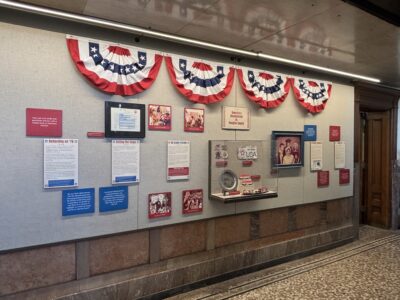
Watkins Museum to open special exhibit detailing how Douglas County celebrated America’s Bicentennial

Go, See, Do: Kaw River Roots Festival, markets and more
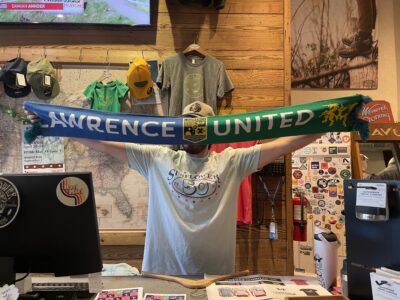
Soccer gear honoring Lawrence history’s all-star team is now on sale as part of city’s public art exhibition

Nominations, call for artists open for Lawrence’s 2026 Phoenix Awards
Go, See, Do: ‘Addams Family’, PRIDE parade and a host of library events among offerings