Iraqi leader: Report dangerous, ‘an insult’
Baghdad ? The Iraqi president on Sunday sharply criticized the bipartisan U.S. report calling for a new approach to the war, saying it contained dangerous recommendations that would undermine his country’s sovereignty and were “an insult to the people of Iraq.”
President Jalal Talabani, a Kurd and one of the staunchest U.S. supporters within the Iraqi leadership, also said U.S. training of Iraq’s army and police had gone “from failure to failure.”
He criticized the recommendation by the Iraq Study Group calling for increasing the number of U.S. troops embedded with Iraqi units to train Iraq’s forces from 3,000 to 4,000 currently to 10,000 to 20,000.
“It is not respecting the desire of the Iraqi people to control its army and to be able to rearm and train Iraqi forces under the leadership of the Iraqi government,” he said during an interview with several reporters in his office in Baghdad.
Talabani was the most senior government official to take a stand against the report, which has also come under sharp criticism from American conservatives who claim it amounts to a veiled surrender in the war against terror.
Outgoing Secretary of Defense Donald H. Rumsfeld, in a surprise farewell visit to U.S. troops in Iraq this weekend, said the consequences of the war’s failure would be “unacceptable.”
“We feel great urgency to protect the American people from another 9/11 or a 9/11 times two or three. At the same time, we need to have the patience to see this task through to success. The consequences of failure are unacceptable,” Rumsfeld said at al-Asad air base in western Iraq. “The enemy must be defeated.”
Rumsfeld returned to Washington on Sunday night.
Talabani said the Iraqi government planned to send a letter to President Bush “expressing our views about the main issues” in the report. He would not elaborate.
Criticism addressed
Meanwhile in Washington, the leaders of the bipartisan panel on Iraq sought to deflect criticism Sunday that their new war strategy endorses defeat, saying the Bush administration must push Mideast diplomacy or face “major-league problems.”
In Sunday appearances, former GOP Secretary of State James A. Baker III and former Democratic Rep. Lee Hamilton shot back at some Republican critics who had denounced the bipartisan panel’s proposals as a “recipe for retreat.”
“We’re not going to win this war militarily; we’re going to win it politically,” Baker said. “There must be a political reconciliation among the warring factions in Iraq or we’re going to continue to have major-league problems.”
Bush already has been publicly cool to the panel’s key proposals – which seek direct engagement with Iran and Syria and a pullback of all American combat brigades by early 2008 – and has suggested the Baker-Hamilton plan falls short of a full victory.
Today, Bush goes to the State Department for a presentation on diplomatic and political options, and then meets in the Oval Office with independent Iraq experts. On Tuesday, the president confers in a video conference with senior military commanders and Ambassador Zalmay Khalilzad, the top U.S. diplomat in Iraq. On Wednesday, he meets with senior defense officials at the Pentagon.
Defining ‘victory’
During their Sunday appearances, Baker and Hamilton acknowledged that their plan seeks to “conclude this war” but that it also supports Bush’s goal of an Iraq government that can defend and sustain itself.
“It all depends on what you mean by victory,” Hamilton said. “What we’re saying in this report is we want to conclude this war. … We do not want American forces involved in sectarian clashes and violence. That’s not our business.”
Hamilton also said that the proposal supported by Sen. John McCain, R-Ariz., to boost combat troops temporarily was unsustainable.
“If you do that, you are going to get the Iraqis to react by saying, ‘Oh, well, let’s let the Americans take it.’ That’s exactly what we don’t want. We want the Iraqis at the point of the spear, not the American forces,” Hamilton said.
National
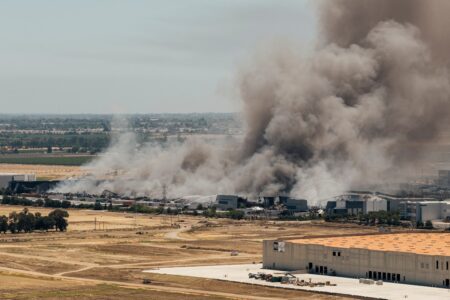
Unhealthy air quality in California city as huge warehouse fire burns for 3rd day
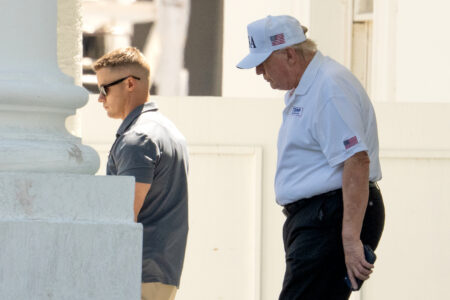
Judge orders Trump administration to restore National Park changes at sites that ‘disparaged’ US
Teens’ reading and math scores have stagnated, US test results show
WASHINGTON (AP) — Younger students have regained ground academically after the pandemic's disruptions while older ...
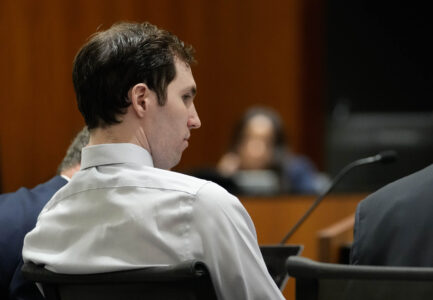
Lawyers for man accused of killing Charlie Kirk try to block death penalty

Trump’s name poised to come off Kennedy Center