Astronauts take stock of shuttle’s heat shield
Houston ? Space shuttle Discovery’s heat shield looks to be in good health so far, NASA managers said Sunday, although it will be at least two days before engineers can rule out any possible damage from the program’s first night launch in four years.
“So far so good,” said lead flight director Tony Ceccacci as Discovery’s astronauts wrapped up a meticulous inspection of the shuttle, looking for any possible damage from liftoff.
As expected, small pieces of foam debris and ice fell off Discovery’s external fuel tank during Saturday night’s launch, but they didn’t appear to strike the shuttle, said deputy shuttle program manager John Shannon, chairman of the mission management team.
Because Discovery was launched in the dark, NASA technicians weren’t able to capture the same sharp photos as they did during last three shuttle launches. Still, they were able to take better than expected images from the illumination of the shuttle’s solid rocket boosters and engines during the first few minutes of flight. They also relied on radar, although one out of the three radars failed during the launch.
NASA may have to wait an extra day to look at images taken from the solid rocket boosters. An accident on one of the two ships used in recovering the boosters from the ocean postponed the retrieval by more than a day.
“The team sees nothing of concern at this time,” Shannon said.
Discovery fired its engines Sunday to raise its altitude to 216 miles above Earth, nearly level with the international space station, where it will dock this afternoon.
Then the real work begins.
The first spacewalk on the 12-day mission will involve installing an $11 million addition to the space lab, while the second and third will be for rewiring the station from its temporary power system to the permanent one. The solar power arrays that were brought up during the last mission will be used for the first time after that reconfiguration is complete.
Discovery’s crew will bring home one of the space station’s three crew members, German astronaut Thomas Reiter of the European Space Agency. American astronaut Sunita “Suni” Williams will replace him, staying for six months.
Robert Curbeam will spacewalk three times. Other crew members are commander Mark Polansky, pilot William Oefelein, and mission specialists Patrick, Williams, Joan Higginbotham and the European Space Agency’s Christer Fuglesang, the first Swede in space.
National
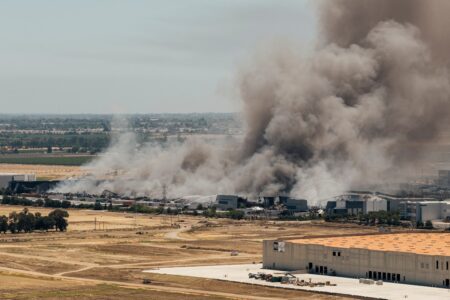
Unhealthy air quality in California city as huge warehouse fire burns for 3rd day
Judge orders Trump administration to restore National Park changes at sites that ‘disparaged’ US
Teens’ reading and math scores have stagnated, US test results show
WASHINGTON (AP) — Younger students have regained ground academically after the pandemic's disruptions while older ...
Lawyers for man accused of killing Charlie Kirk try to block death penalty

Trump’s name poised to come off Kennedy Center