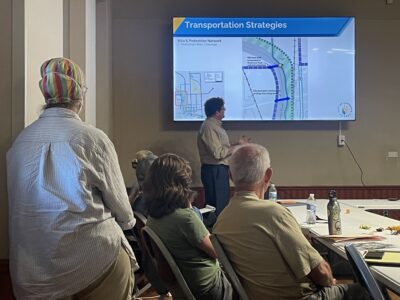
School board considers $10M in maintenance projects
They haven’t picked all the projects yet.
But Lawrence school board members reached a rough consensus Monday evening on a spending lid for capital projects they will finance with a relatively new method – no more than $564,000 a year.
That amount could be leveraged with other revenue sources to pay for about $10 million in building maintenance projects, the board learned during a 90-minute study session.
The next step is for the board to decide what projects will be included.
A list of top projects will be ready for the board to consider at its next regular meeting, which will be at 7 p.m. Monday.
“The administration will give us something we can chew on,” said Sue Morgan, board president.
During the study session, board members agreed that they wanted to use a method of financing called performance contracts to help pay for no more than $7 million of the projects.
Those performance contracts projects, which are tied to energy savings, can be financed at a lower interest rate thanks to a 2002 state law.
Board member Craig Grant said he didn’t want to spend any more than $400,000 a year in performance contract financing. That would generate about $5 million worth of projects.
However, two board members, Rich Minder and John Mitchell, indicated they might be willing to go up to $7 million, depending on the projects.
The “priority one” projects identified by the district’s facilities and operations staff include a security card door access system, upgraded fire alarms, security cameras, upgraded rest rooms and roof repairs.
Board members also said they wanted to look at some of the top priorities of the building principals. The board received a list of about $30 million in projects from principals at its last meeting.
Morgan said performance contracting, plus the use of leftover funds from the 1998 and 2005 bond issues, will allow the district to make “a big dent” in that project list.
Without performance contracting, the district could fund only about $4 million in projects, she said.
“The basic idea is it’s supposed to be budget neutral in that you’re using the operational savings (in energy costs) to pay for the expense of doing a project over the long term,” she said. “It’s a win-win all the way around if you can make this work.”
However, there is one big disadvantage: The board must use its capital outlay budget to make payments on the loan each year, Morgan said.
“I think we’re attempting to do this in a very responsible manner,” she said.
The board will keep its capital outlay fund’s cash reserve at $2 million, she said. And future boards have the option of buying down the term of 19-year loan with balloon payments, she said.
City Government
Developer seeks incentive from City of Lawrence to build 131 units of housing near Wakarusa and Queens

Lawrence city leaders will consider whether to keep Community Building open, make 2 other rec centers free to access
A STAR Bond application raises questions for city leaders about Costco and housing west of the SLT

Soccer gear honoring Lawrence history’s all-star team is now on sale as part of city’s public art exhibition
To honor public servants, Lawrence’s July 4 celebration will have a whole gallery of their photos on display; submissions open now