Embattled Bolton resigns as U.N. ambassador
New York ? Ending weeks of speculation about the future of one of the Bush administration’s most polarizing figures, the White House said Monday that U.N. ambassador John Bolton will leave that post in the coming weeks.
With his nomination stalled in the Senate Foreign Relations Committee because of opposition from Democrats and some Republicans, Bolton has served as the U.S. ambassador since August 2005 under a presidential recess appointment that will expire when the current Congress adjourns, which could happen as early as this week but no later than early January.
The sharp-tongued Bolton, who made many highly critical remarks about the world body before he became U.S. ambassador, submitted a three-paragraph resignation letter to President Bush on Friday. He cited no reason for his decision, saying only that “after careful consideration, I have concluded that my service in your administration should end” when his appointment expires.
Posing with Bolton in the Oval Office, the president said Monday he had accepted the resignation, but added, “I’m not happy about it. I think he deserved to be confirmed.”
Turning to Bolton, Bush said: “You’ve been a stalwart defender of freedom and peace. You’ve been strong in your advocacy for human rights and human dignity. You’ve done everything that can be expected for an ambassador.”
Senate Democrats, who are preparing to take control of that chamber next month as a result of the Nov. 7 elections, immediately called for Bush to nominate a less controversial figure.
“The president now has an opportunity to nominate an ambassador who can garner strong bipartisan and international support,” said Sen. Joseph Biden, D-Del., who will become chairman of the Foreign Relations Committee. “If the president nominates such a person, I look forward to scheduling hearings promptly.”
Among names in circulation as a potential replacement are U.S. ambassador to Iraq Zalmay Khalilzad, former Iowa Republican Congressman James Leach, and Undersecretary of State Paula Dobriansky, who is in charge of Bush’s initiative to foster democracy around the world.
Foreign affairs experts said that with a full agenda of complex issues facing the U.N., the Bush administration could not afford to leave the job vacant for long. In recent months, the U.N. Security Council has juggled the North Korean nuclear test, the crisis in Darfur, the volatile political and military situation in Lebanon, and Iran’s moves to develop facilities that could be used to build a nuclear bomb.
National
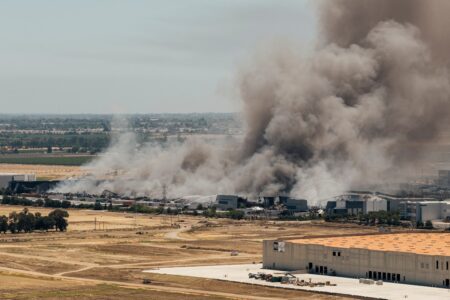
Unhealthy air quality in California city as huge warehouse fire burns for 3rd day
Judge orders Trump administration to restore National Park changes at sites that ‘disparaged’ US
Teens’ reading and math scores have stagnated, US test results show
WASHINGTON (AP) — Younger students have regained ground academically after the pandemic's disruptions while older ...
Lawyers for man accused of killing Charlie Kirk try to block death penalty

Trump’s name poised to come off Kennedy Center