

Univision anchor’s life now an open book
Miami ? Univision nightly news anchor Maria Elena Salinas made a career investigating the lives of others, covering leaders from Pope John Paul II to former Chilean President Agusto Pinochet.
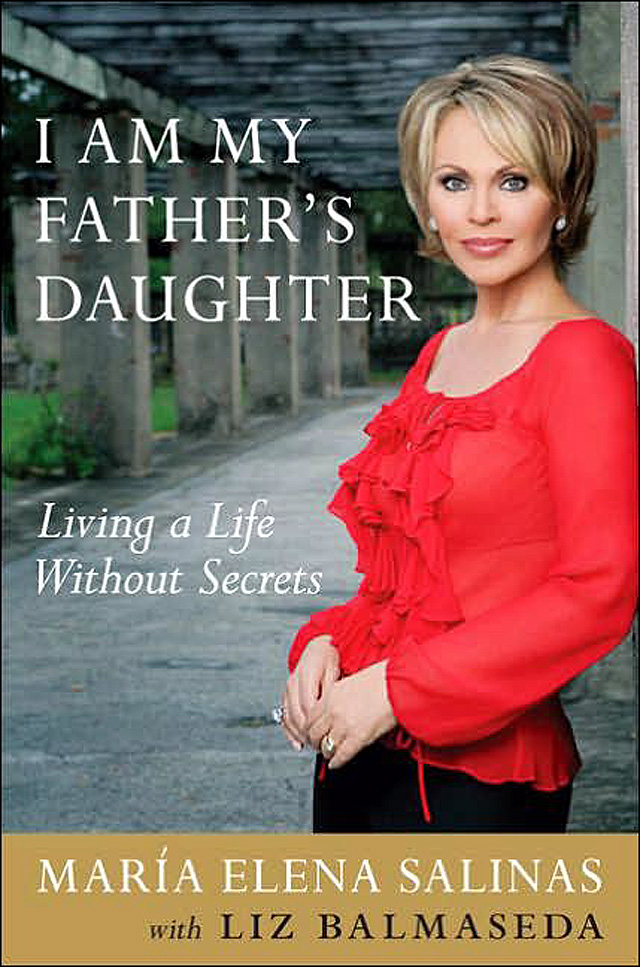
On her 25th anniversary with the top Spanish-language network, the Miami-based Salinasm, who co-anchors with Jorge Ramos, turned her skills inward, offering what is rare in journalism: a look at the person behind the reporter. Salinas’ memoir, “I Am My Father’s Daughter,” will be released May 11.
In the book, Salinas explores her own family’s hidden stories. She describes the discovery that her father, an illegal immigrant, was once a Catholic priest in Mexico and lost his legal status in the United States because he refused to fight during World War II.
She also traces her rise as the youngest daughter in a poor immigrant family in Los Angeles to one of the nation’s top Spanish-language anchors.
Salinas talked with The Associated Press about her decision to share her own story, the current immigration debate and her regrets about her father.
What motivated you to come out with your story now?
I had the idea of writing the book many, many years ago.
After the attacks of Sept. 11, an anti-immigrant wave began to take over the country. And during the beginning of the war (in Iraq), there was also this patriotism, this nationalism. I thought, “I really don’t think it’s time to write this book right now because I want to celebrate my father’s life and the contributions he made to my life. I don’t want this to be a book about an undocumented, immigrant draft-dodger.
Q: What role do you think the Spanish-language media has played in the United States?
A: Spanish language media in general has had a tremendous influence in the growth of the Hispanic community.
In the beginning of my career in 1981, we had little political representation, especially in L.A. At the local level, we had no one in City Hall. When a seat did open up, and I went out to ask people in Lincoln Heights about their vote … 15 out of 16 didn’t even know there was an election. I knew that we in Spanish-language media had to play a big role in helping educate them and helping them see the responsibility they had.
Q: Is that advocacy journalism?
A: I can go out and tell them to vote, but I’m not going to tell them who to vote for. I think there’s a fine line, and you have to know how to balance that line.
Q: Because your father was an illegal immigrant, how do you reconcile your personal feelings when covering the issue?
A: I’ve been covering immigration for 25 years. … I’ve been the daughter of immigrants, one legal and one undocumented, for many, many years. I’ve never really changed my point of view. I don’t think there should be an open border policy. But I cannot imagine how anyone thinks logically that you can round up 12 million people and send them to their countries of origin. I mean there’s over a 1 million undocumented immigrants who come just from Europe.
Q: Have you ever thought about switching over to English broadcast?
A: I’m doing it in print. I have a column that’s distributed by King Features Syndicate, in 55 newspapers, and the majority are in English, and I do analysis on National Public Radio.
Univision has been my home for 25 years. I’ve had the opportunity to travel the world and been a witness to history. I don’t know if I would have had that opportunity if I had been working for an English-language station. … Now you have (ABC’s) Elizabeth Vargas as the first Hispanic anchor – and on top of that she’s a woman – so she’s a double minority anchoring a major newscast. But I’ve been doing that for 25 years.
Q: Your favorite interview?
A: (Zapatista rebel spokesman) Subcomandante Marcos. I was almost on my way to the airport when he finally said “yes.” I did my interview for an hour. We continued for another hour, and in that second hour came the most interesting part.
Q: The one you wish you could do over?
A: Pinochet. This was the last year he was in power. He was about to leave, and he was very cold, he was very sarcastic.
Q: Do you feel you understand your father better after writing the book?
A: I think every family has a secret. They have secrets, and they carry these burdens all their lives. I think that if I would have known my father’s secret, that would have broken the ice, and he would have opened up about so many other things. I think he would have been very proud to know that I cover the world.
Arts and Entertainment
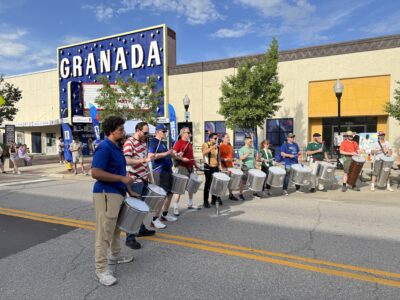
Photos: Lawrence begins World Cup festivities with downtown block party
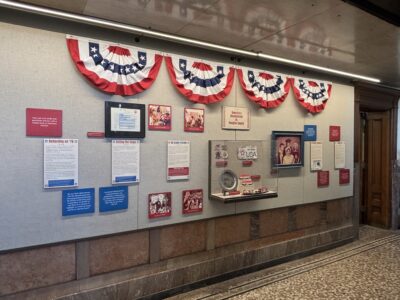
Watkins Museum to open special exhibit detailing how Douglas County celebrated America’s Bicentennial

Go, See, Do: Kaw River Roots Festival, markets and more
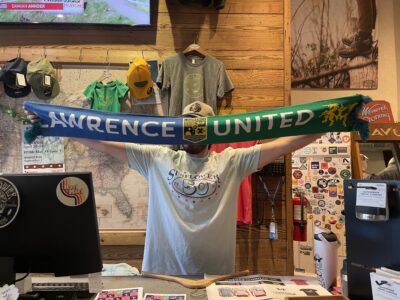
Soccer gear honoring Lawrence history’s all-star team is now on sale as part of city’s public art exhibition

Nominations, call for artists open for Lawrence’s 2026 Phoenix Awards