Volunteers rise to river’s challenge
Fargo, N.D. ? Hundreds of students answered an urgent call for sandbaggers Monday to protect homes from the rising Red River, expected to crest about 20 feet above flood stage this week.
More than 660 students from three high schools joined the sandbagging effort – and did so well, so quickly that they were given the job of piling the sandbags as well as filling them, said Fargo School District spokesman Lowell Wolff.
“I think it’s a heartfelt response on their part, not just trying to get out of school,” he said.
Volunteers of all ages came out to fight flooding in the Red River Valley.
The Red River, which runs north along the North Dakota-Minnesota line, has been swollen by melting snow and heavy rains. The National Weather Service expects it to crest Wednesday in the Fargo area at about 37.5 feet; flood stage is 18 feet. “This has been a very dramatic rise. We have not seen a 5-foot increase (every day) for two or three days – ever,” city Public Works Director Dennis Walaker said.
If the river hits 37.5 feet at Fargo, it would match the level that caused the area’s second-worst flood of the century, in 1969, Walaker said. The worst was in 1997 when the river hit 39.5 feet. In the years since those devastating floods, however, the city has bought up flood-prone land, removed homes and built new levees. In the area the students were filling sandbags to protect, about 75 homes were in danger of flooding.
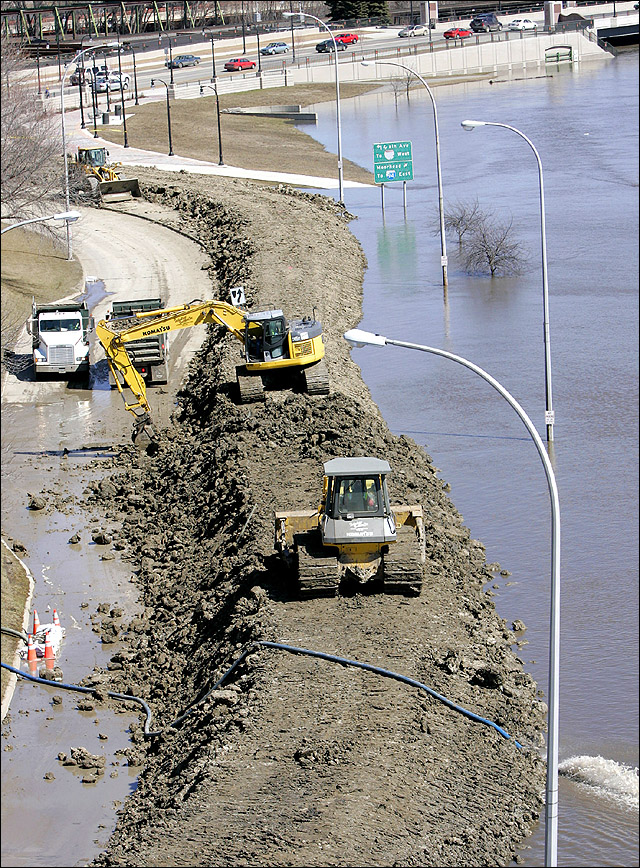
Heavy equipment operators build up a dike near downtown Fargo, N.D., Monday, April 3, 2006 as the city and neighboring Moorhead, Minn., prepare for a crest of about 20 feet above flood stage Wednesday of the rising Red River.
The Red River already crested at Wahpeton, about 50 miles south of Fargo, after reaching 15 feet, about 5 feet above flood stage, the weather service said.
Downstream, it was expected a crest Thursday at 47 feet near Grand Forks, 7 feet above flood stage.
“At 47 or 48 feet, we have no concern,” said Jim Campbell, Grand Forks County emergency manager.
Two of the three bridges between Grand Forks and East Grand Forks, Minn., were closed, leaving only one bridge open between the two cities.
Minnesota Gov. Tim Pawlenty authorized the mobilization of 135 National Guard soldiers to help with the efforts.
National
Unhealthy air quality in California city as huge warehouse fire burns for 3rd day

Judge orders Trump administration to restore National Park changes at sites that ‘disparaged’ US
Teens’ reading and math scores have stagnated, US test results show
WASHINGTON (AP) — Younger students have regained ground academically after the pandemic's disruptions while older ...

Lawyers for man accused of killing Charlie Kirk try to block death penalty

Trump’s name poised to come off Kennedy Center