New claim suggests al-Zarqawi replaced
Cairo, Egypt ? Terror leader Abu Musab al-Zarqawi has sharply lowered his profile in recent months, halting his group’s Internet claims as the number of big suicide bombings in Iraq – his infamous signature form of attack – has fallen.
Now, a man with close ties to Iraqi insurgent groups claims al-Zarqawi was shunted aside as political leader of a recently formed coalition of militants because they were angry at his propaganda efforts and embarrassed by his group’s deadly attack on hotels in Jordan.
But others caution the claim is hard to verify – and that perhaps the insurgents are just changing tactics.
Even if the report is true and al-Zarqawi has a lesser role, that does not mean the deadly violence in Iraq will decrease, Maj. Gen. Hussein Kamal, Iraq’s deputy Interior minister for intelligence affairs, said Monday. “Al-Zarqawi or others have a terror agenda against the Iraqi people. This will not change by changing names and people. They will push ahead with their agenda,” Kamal said in a telephone interview.
Some experts have long cautioned that al-Zarqawi’s role may have been exaggerated and that some of the attacks claimed by his group – or that U.S. and Iraqi officials blamed on him – may have been carried out by others.
Iraq’s insurgency has always been made up of several disparate groups, and some of them, including Ansar al-Sunnah Army and the Islamic Army of Iraq, have been nearly as violent as al-Zarqawi’s al-Qaida in Iraq.
The Jordanian-born militant, however, seized most of the attention because of his relentless Internet propaganda efforts, the brutality of his attacks – including hostage beheading videos put on the Web – and a series of suicide car bombings that targeted mostly Shiites.
Then came a November triple suicide bombing against hotels in Jordan that killed 63 people, mostly Arab Muslims. That sparked a backlash against al-Zarqawi in Jordan, where there had been some sympathy for the insurgency. Even some fellow militants called for halting attacks on civilians.
In January, al-Zarqawi’s group said in a Web statement that it had joined five other Iraqi insurgent groups to form the Mujahedeen Shura Council, or Consultative Council of Holy Warriors. Since then, al-Zarqawi’s group has stopped issuing its own statements, a sharp contrast to its previous frequent postings, and al-Zarqawi has not issued a Web audiotape since January.
Instead, the Shura Council has put out daily statements listing its “operations” – including bombings of U.S. Humvees and trucks, shootings of Iraqi Shiite security forces and assassinations of Sunni Arabs cooperating with the government.
On Sunday, Huthayafa Azzam, believed to have close ties to Iraqi militants, told The Associated Press that al-Zarqawi had been confined to a military role within the coalition, specifically barred from making public statements and from any political or propaganda role.
It was not clear how Azzam, a son of one of Osama bin Laden’s spiritual mentors, had learned the information.
Azzam said Iraqis in the Shura Council had demanded al-Zarqawi give up his political role – particularly in propaganda – because he had “embarrassed” them with beheading videos and statements about regional politics and al-Qaida’s activities. Azzam said al-Zarqawi agreed and “pledged not to target Iraq’s neighbors, mainly his native Jordan, because that has harmed the Iraqi resistance’s relations with the Arab world.”
National
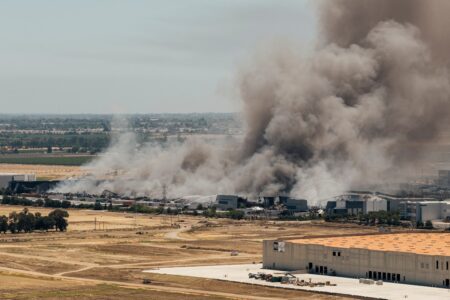
Unhealthy air quality in California city as huge warehouse fire burns for 3rd day
Judge orders Trump administration to restore National Park changes at sites that ‘disparaged’ US
Teens’ reading and math scores have stagnated, US test results show
WASHINGTON (AP) — Younger students have regained ground academically after the pandemic's disruptions while older ...
Lawyers for man accused of killing Charlie Kirk try to block death penalty

Trump’s name poised to come off Kennedy Center