Seized letter outlines al-Qaida objectives
Washington ? Al-Qaida’s top deputy urged the leader of his Iraq branch in July to prepare for the inevitable U.S. withdrawal by carrying out political as well as military actions, and he lectured him that he risked being shunned by an Islamic world angered over his gruesome and not “palatable” killings of fellow Muslims, according to an intercepted letter released Tuesday by the U.S. government.
The 6,000-word letter from Osama bin Laden’s chief lieutenant, Ayman Zawahiri, to Iraqi insurgent leader Abu Musab al-Zarqawi amounts to a detailed portrait of al-Qaida’s long-term goals in Iraq and the Middle East, and includes a striking critique of how al-Zarqawi has gone about waging his war against not only U.S. troops but also Iraqi civilians. The letter was posted Tuesday on the Web site of Director of National Intelligence John Negroponte – www.dni.gov – after senior intelligence officials released excerpts of it last week.
Invoking the specter of the United States abandoning Iraq with Vietnam-like haste, Zawahiri counseled immediate political action: “We must take the initiative and impose a fait accompli upon our enemies, instead of the enemy imposing one on us.”
The missive, dated July 9, also suggests the degree to which al-Qaida’s leadership remains eager to assert its prerogatives with al-Zarqawi, who has become the increasingly public face of the movement when Zawahiri and bin Laden are in hiding.
Throughout, Zawahiri – the Egyptian doctor who fused his own Islamic movement with bin Laden’s al-Qaida in the late 1990s and is believed to operate now as the group’s top commander – comes across as a strategist trying to rein in a guerrilla operating at odds with the movement’s political goals.
“He comes down like a ton of bricks on what has happened tactically,” the official said.
Al-Zarqawi has been high on the list of most wanted insurgents since last year after he pledged allegiance to bin Laden, but in recent months U.S. military commanders have given even greater urgency to disrupting his network of foreign fighters and Iraqi supporters. The network is still thought to constitute only a fraction of the Iraqi insurgency in numbers, but it is credited with carrying out a disproportionately large share of the violence, as a result of suicide bombings often aimed at Shiite civilians to foment sectarian strife.
But Zawahiri urged al-Zarqawi in the letter to change that formula and refocus on politics. When the United States leaves, al-Qaida must be ready to claim as much territory politically in the inevitable void that will arise, he writes. Zawahiri called that stage the setting up of an “emirate,” in as much of Sunni-dominated Iraq as possible, to be followed by the longer-term goal of a “caliphate,” reuniting the historical Islamic empire centered in modern-day Egypt, Lebanon and Israel.
Zawahiri also raised questions about al-Zarqawi’s targeting of Iraqi Shiites, telling him bluntly that the “majority of Muslims don’t comprehend this” and wondering whether such targeting is a “wise decision” given the need to wage war against the United States and the current Iraqi government. And even if Shiite leaders should be targeted, Zawahiri asks, “why were there attacks on ordinary Shia?”
He also told al-Zarqawi that fellow Muslims “will never find palatable” the televised scenes of hostage beheadings that have earned al-Zarqawi the sobriquet “sheik of the slaughterers” among like-minded fighters. In the media battle “for the hearts and minds” of the Islamic world, Zawahiri said, such tactics will not work.
In an unusual reverse, the letter asks al-Zarqawi to send money to al-Qaida, saying many of its “lines have been cut off,” and that “we’ll be very grateful to you” for financial help.
National
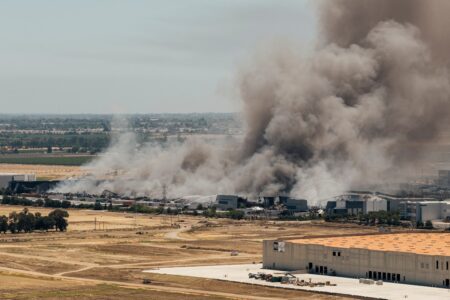
Unhealthy air quality in California city as huge warehouse fire burns for 3rd day
Judge orders Trump administration to restore National Park changes at sites that ‘disparaged’ US
Teens’ reading and math scores have stagnated, US test results show
WASHINGTON (AP) — Younger students have regained ground academically after the pandemic's disruptions while older ...
Lawyers for man accused of killing Charlie Kirk try to block death penalty

Trump’s name poised to come off Kennedy Center