Banned Asian poultry reaching U.S.
Washington ? Chinese-grown poultry, banned in the United States out of fear of spreading diseases, is nonetheless reaching markets and restaurants in the United States after escaping detection at borders.
Outbreaks of bird flu in Asia have led the government to step up its anti-smuggling operations. In a two-month period this fall, the government seized 165,000 pounds of Asian poultry, according to figures compiled in the Department of Agriculture.
No bird-flu virus was found in the prohibited items, which included frozen chickens, ducks, pigeons and poultry parts prized by Asians for cooking. The H5N1 avian influenza virus can stay alive in frozen products, leading some to fear that infected birds could be a conduit for the disease.
That’s why the government is working to shut down pathways by which the disease might enter the United States and pose threats to the nation’s $28.9 billion poultry industry – and potentially to people.
Recent discoveries point to the broad scope of the smuggling problem, according to internal government documents.
Working with the Customs and Border Protection Service, U.S. Agriculture Department agents recently seized 27,000 pounds of smuggled frozen poultry from China in a single operation at Port Elizabeth, N.J.
Sometimes, the poultry arrives in mislabeled containers.
For instance, ducks and chicken products from China seized in New York City in September reached the United States in packages labeled “dried lily flower,” inspection reports show. Duck eggs removed by agents from the same location were labeled “prune slices.”
News of seizures are not made public by the government.
But Scott Sanner, national coordinator of the Agriculture Department’s Smuggling, Interdiction and Trade Compliance program, acknowledged during an interview that his agency has increased its efforts in recent months in response to the spread of the flu virus in Asia.
He described the challenges of stopping the smuggling and said he welcomes tips from the public to a toll-free hotline, (800) 877-3835.
National
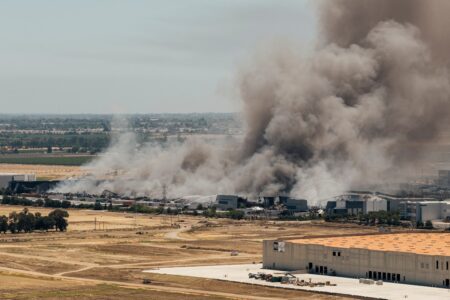
Unhealthy air quality in California city as huge warehouse fire burns for 3rd day
Judge orders Trump administration to restore National Park changes at sites that ‘disparaged’ US
Teens’ reading and math scores have stagnated, US test results show
WASHINGTON (AP) — Younger students have regained ground academically after the pandemic's disruptions while older ...

Lawyers for man accused of killing Charlie Kirk try to block death penalty

Trump’s name poised to come off Kennedy Center