

Native tongue
Arab-American writer's food memoir evokes tastes of the Middle East
Portland, Ore. ? Food memoirs were once the sole province of such confirmed culinary superstars as M.F.K. Fisher, whose prose was filled with tantalizing descriptions of summer picnics and late night tete-a-tetes over cheese and figs.
But these days, as the American obsession with all things free-range, organic, grass-fed and locally harvested spreads from coast to coast, the food memoir has become a genre unto itself, with recipes where pictures used to be.
Some of the efforts emanate from those who have made a career of food, like Gourmet editor Ruth Reichl, whose new “Garlic and Sapphires” is the third in her series of memoirs about a life spent in the kitchen and the dining room. Some are thinly disguised as diet books, such as Mireille Guiliano’s “French Women Don’t Get Fat.”
Others, though, originate from writers who grew up in homes where food was the center of the day, an instrument to coax and infuriate, to flatter and to fatten – like Diana Abu-Jaber, whose childhood, it is clear from her new memoir, “The Language of Baklava,” smelled and tasted like lamb. But not just any lamb – lamb seasoned with rosemary and marinated overnight, cooked until it sizzled in her uncle’s backyard in upstate New York, set to the tune of her Jordanian-born father and uncles, crooning over the food and each other.
Abu-Jaber, who teaches at Portland State University, and lives part-time in Miami, is better known as a novelist. Her first two novels, “Arabian Jazz” and “Crescent,” earned her a measure of fame, and more than her fair share of critics dubbing her “the Arab Amy Tan.”
After “Crescent,” which is set in the Middle Eastern restaurant that her real-life father always wanted but never had, Abu-Jaber was casting about for her next story, when an editor asked her why she didn’t just write about her food-obsessed culture.
“I didn’t think I had enough to say, but once I started, it flowed,” Abu-Jaber says over a carefully arranged cheese-and-hazelnut plate that she pairs with a steaming mug of hot chocolate. She is relaxing in the tea room of The Heathman, a Portland hotel where the doormen dress like London Beefeaters and the chef is tres French.
“I used food as an organizing principle, and it helped me focus, giving me clear, pivotal moments to hinge the story on. Conversations came back to me – memory is such a funny thing.”
“The Language of Baklava” begins in Syracuse, N.Y., where one-by-one, Abu-Jaber’s uncles have congregated and set up house. True to their Bedouin heritage, her father will spend his life traveling between Jordan and the United States, looking for where he belongs, with Abu-Jaber, her American-born mother and her two sisters along for the sometimes funny, sometimes painful ride.
And the reader is along, too, for a day at a Bedouin camp, where the air is heavy with the perfume of pomegranates, and, Abu-Jaber writes, “the goat melts into the rice melts into the sauce and I cannot separate the eating from the food itself.”
We are there when Abu-Jaber’s father, who has taken the laconic American name of “Bud,” bellows at a would-be boyfriend that his daughter is a good Arab girl, and wants no part of him – while, of course, serving the hapless suitor a platter of kibbeh – bulgur and ground lamb mixed with onion and pine nuts.
We meet Abu-Jaber’s auntie, who shows up to make gloriously syrupy baklava and referee the hot-tempered fights between father and daughter, and to dispense wisdom, telling her niece that, “high heels are good, but don’t forget how to run.”
And unlike many memoirists, Abu-Jaber’s book takes us into her adulthood, as she takes up her father’s mantle, and begins looking for ways to reconcile being an Arab with being an American. She finds the answer partly in writing about the question.
Critical reception has been respectful, with Caroline Leavitt in The Boston Globe calling Abu-Jaber’s writing “as bright and tangy as lemon dressing.”
Arts and Entertainment
Photos: Lawrence begins World Cup festivities with downtown block party
Watkins Museum to open special exhibit detailing how Douglas County celebrated America’s Bicentennial
Go, See, Do: Kaw River Roots Festival, markets and more
Soccer gear honoring Lawrence history’s all-star team is now on sale as part of city’s public art exhibition
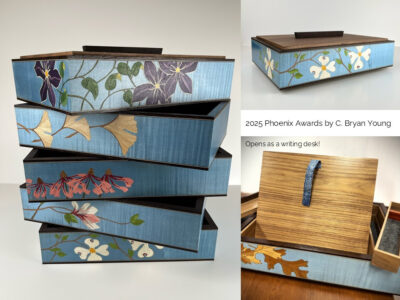
Nominations, call for artists open for Lawrence’s 2026 Phoenix Awards