

Hemingway pal recalls his old friend
Westport, Calif. ? More than 40 years since Ernest Hemingway took his own life, A.E. Hotchner has forgotten nothing about his old friend and father figure: his books and the sound of his voice, the way he would put his hand over his mouth when he laughed.
Feminists, animal rights advocates and others have taken on Hemingway, but for Hotchner, the author remains the ideal as both man and writer, someone who burned the fat off American prose and made a religion out of experience and adventure.
“He’s the bellwether,” the 85-year-old Hotchner says during a recent interview. “He’s the bar that’s too high to jump, but nevertheless you know that somebody once jumped it. His lust for life, his embracing of so many layers of living was just incredible.”
If Hotchner’s steady admiration seems out of fashion, his place within the Hemingway universe has long been just as uncertain. Scholars have dismissed Hotchner, who has written books about Sophia Loren and Doris Day, as a celebrity seeker. They also questioned the accuracy of his 1966 best seller, “Papa Hemingway,” which angered Hemingway’s widow, Mary Hemingway, by contradicting her assertion that her husband had only accidentally shot himself.
But Mary Hemingway later acknowledged that he did commit suicide, and the Hemingway community softened on Hotchner, who met Hemingway in the late 1940s and remained close to him until his suicide, in 1961. Their bond appears in letter form this fall when the University of Missouri Press releases “Dear Papa, Dear Hotch,” which comprises their correspondence.
“They were real and bona fide friends,” says the book’s editor, Al DeFazio, an adjunct professor of English at George Mason University. “Hotchner has been maligned as an opportunist, someone who just hobnobs with celebrities, but I think these letters show they had a strong relationship.”
In one letter, Hemingway praises Hotchner as “my soundest and truest friend,” and elsewhere the two display a great deal of camaraderie and backslapping. They exchange thoughts about women and the good life, remarks at the expense of gay author Gore Vidal and a battery of nicknames and sports metaphors, with Hemingway praising Hotchner for his “double play loyalty” and Hotchner invoking the pigeon-hunting team of “Hemingsling and Hotchplotch.”
But for all the tough and manly talk – “let’s check the gloom, we always have,” Hotchner advises – there’s a classical tension as Hemingway contends with the intrusions of fame and eventually succumbs to physical and emotional breakdown. Hotchner dates his final descent from 1960, when the author became irrationally angry over a bullfighting picture that appeared in Life magazine.
“Hemingway’s obsession with that bullfight photograph is the first solid instance that he had lost control of his persona,” Hotchner says. “He no longer believed he was in control of events around him.”
Hotchner appears much calmer and more settled than Hemingway, and he has lived far longer. Remarkably fit and active, preparing to go on safari to Botswana, Hotchner recently discussed Hemingway and his own eventful life as he lunched on a turkey sandwich and iced tea in his glassed-in porch. An African parrot named Ernie kept silent company nearby.
“This will be the first time I’ve gone on safari since he (Hemingway) died. I just felt the time had come and I had to do it,” he says. “It’s not time to slow down. The minute you tell yourself you should slow down, you’ll slow down.”
Arts and Entertainment
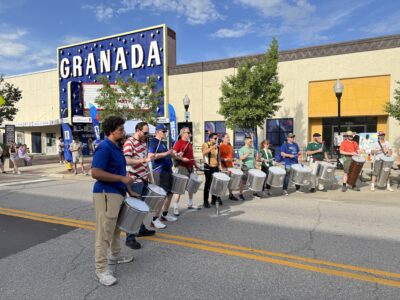
Photos: Lawrence begins World Cup festivities with downtown block party

Watkins Museum to open special exhibit detailing how Douglas County celebrated America’s Bicentennial

Go, See, Do: Kaw River Roots Festival, markets and more
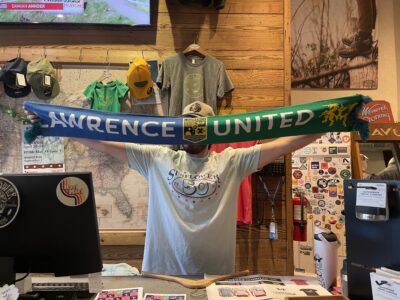
Soccer gear honoring Lawrence history’s all-star team is now on sale as part of city’s public art exhibition

Nominations, call for artists open for Lawrence’s 2026 Phoenix Awards