Iraqi forces launch new security operation aimed at militants
Baghdad, Iraq ? Gunmen killed at least 24 police, soldiers and government workers in Iraq on Monday, and an Iraqi general said about 50 suspected insurgents were captured in the first days of a new security operation in Baghdad.
An Iraqi general, who spoke on condition of anonymity for security reasons, told The Associated Press that Operation Thunder began last week on the west side of the Tigris River, which divides the city.
He said about 50 suspected insurgents, including two Syrians, were captured in the opening days of the operation, which will be expanded over the next few days.
Al-Qaida in Iraq reported Monday that one of its “field commanders” had been killed by coalition forces in western Iraq, the terror group purportedly said in a statement posted on a Web site used by militants. The statement did not say when the man, Abi Salih al-Ansar, was killed.
Security has deteriorated steadily since Prime Minister Ibrahim al-Jaafari announced his Shiite-dominated government April 28. Most of the insurgents are Sunni Arabs, who enjoyed considerable prestige in Iraq during the rule of Saddam Hussein.
A lawyer for Saddam said that the insurgency had made Baghdad far too dangerous a venue for the former leader’s trial, and that the proceeding should be moved to another country.
“Do you fancy spending a year or more in Baghdad, going to court five days a week? Would you feel safe there? ” lawyer Giovanni di Stefano asked Monday.
“Baghdad couldn’t even prevent the recent kidnapping and killing of the Egyptian ambassador. There are also many Iraqis who want to see Saddam executed and many others who want to see him freed. That means the defense and prosecution would both be in danger there,” di Stefano said.
He said Saddam’s defense team had contacted the Swedish government about the possibility of holding such a trial in Sweden. But in Stockholm on Monday, Swedish Justice Ministry spokesman Alexander Valentin said that he was not aware of any official request.
The deteriorating security situation has also alarmed Iraq’s most powerful Shiite clergyman, Grand Ayatollah Ali al-Sistani, whose tacit endorsement was crucial in the Shiite victory in the Jan. 30 elections.
Following a weekend meeting with al-Sistani in Najaf, Vice President Adil Abdul-Mahdi, a top Shiite politician, said the cleric had urged the government to protect the people in “this genocidal war.”
However, another leading Shiite cleric, Muqtada al-Sadr, blamed the violence in Iraq on the presence of U.S. and other foreign forces.
“The occupation in itself is a problem,” al-Sadr told the British Broadcasting Corp. in a broadcast Monday. “Iraq not being independent is the problem. And the other problems stem from that – from sectarianism to civil war, the entire American presence causes this.”
National
Lawyers for man accused of killing Charlie Kirk try to block death penalty
Trump’s name poised to come off Kennedy Center

Suspect in Texas shooting had fired at police days earlier, officials say
Man pleads guilty to killing a top Minnesota Democrat and her husband
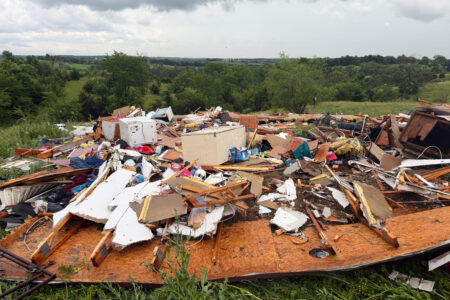
New tornadoes outside Chicago as severe storms pummel the Midwest