Iraq reconstruction lags stubbornly
Basra, Iraq ? The United States has yet to spend almost 60 percent of its pledged $21 billion in reconstruction money for Iraq, even as the country struggles through a third summer of sporadic electricity and limited clean water.
Many schools have been built, water plants started and power stations finished – especially in the relatively peaceful south. But frustration is high.
Iraqis in the south look with envy at the Green Zone in Baghdad, with its air conditioning and hundreds of soldiers and police for security, while they don’t have water, engineer Haider Albalhary told U.S. officials visiting his project site last week.
“Six months ago with no electricity, we said OK,” Albalhary said. “One year, two years, now three years – enough … My friend, three years is a long time.”
Iraq’s ongoing violence has been one factor, both delaying projects by keeping U.S. engineers huddled on bases far from project sites and eating into the pledged American money, taking up between 20 percent to 23 percent of project costs, according to the Project Construction Office.
In addition, billions of dollars worth of projects await approval by the U.S. bureaucracy, and hundreds of millions are tied up in stalled contract negotiations with U.S. companies.
At a donors’ meeting in Jordan, Iraqi Planning Minister Barham Salih expressed frustration Monday at what he called Iraq’s lack of control over reconstruction priorities and the pace of actual work – and said Iraq desperately needs power, clean water and improved sewage plants.
“The aspirations of the Iraqi people for a better life cannot be delayed much longer,” Salih said.
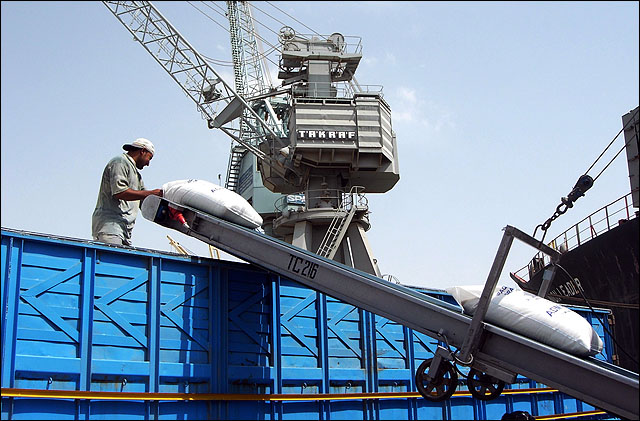
Bags of rice purchased from the United States are moved by Iraqi workers at the southern Iraq seaport terminal at Um Qasr. The port has been refurbished as part of a multimillion-dollar U.S. project. Only 42 percent of a 1 billion reconstruction program has been spent so far in Iraq, and the county remains in sore need of additional water-treatment and electricity plants.
Some critics say the window for the U.S. government to make a positive impression on Iraqis has long closed.
But even the most skeptical acknowledge tangible progress, particularly in the Shiite south and the Kurdish-controlled north, which elected leaders from their dominant groups to top posts in the new government.
More than 3,000 schools have been renovated nationwide, according to the Iraqi Reconstruction Management Office, and 40 new buildings have gone up in the south to replace mud huts that served as schools.
At least three water treatment plants, including an enormous project near Nasiriyah, are scheduled to open in the south in the next year. They will supply clean water to more than a half-million people.
More than 70 electricity projects have been completed, officials say. But a surge in demand has made power less available to many than before the 2003 invasion, and officials are eager to start work on at least three southern power plants in the next year to serve over 400,000 households.
Many Iraqis pin their hopes for rapid development on the vast southern oil fields, source of the bulk of Iraqi petroleum exports. But talks on refurbishing the oil wells are deadlocked over liability issues between the U.S. government and KBR, a subsidiary of Halliburton, said Raymon Sundquist of the U.S. Army Corps of Engineers.
Overall, the U.S. reconstruction program is run by fewer than 1,000 American civilians who farm out most of the work to Western corporations stationed on U.S. bases.
Most of the onsite labor is local: nearly 200,000 Iraqi workers have been hired, infusing money into the local economy, according to USAID and the Project and Contracting Office.
The U.S. military has focused on curbing the Iraqi insurgency. That means American engineers must hire private guards to visit project sites, hampering their ability to verify that work is completed satisfactorily.
The reconstruction program has accelerated recently, and is now spending an average of $178 million a week for completed work, according to Iraq’s reconstruction office. But progress is uneven, and key infrastructure sites are several months or even years from completion.
The Basra airport and the Um Qasr sea port, for example, are each at least a year away from international accreditation, U.S. officials say.
National
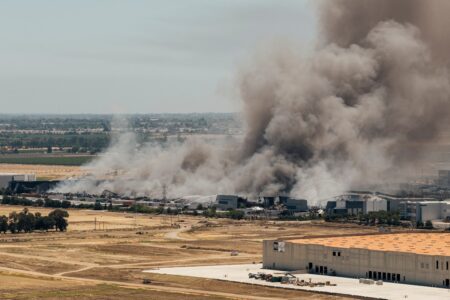
Unhealthy air quality in California city as huge warehouse fire burns for 3rd day
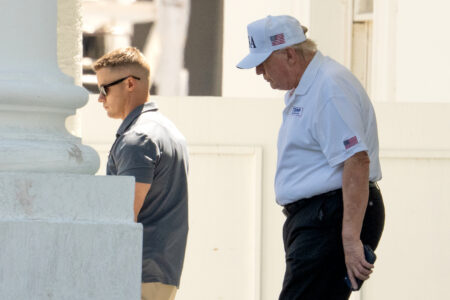
Judge orders Trump administration to restore National Park changes at sites that ‘disparaged’ US
Teens’ reading and math scores have stagnated, US test results show
WASHINGTON (AP) — Younger students have regained ground academically after the pandemic's disruptions while older ...
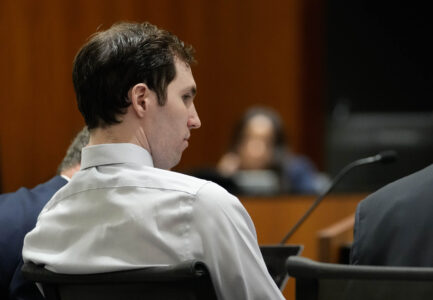
Lawyers for man accused of killing Charlie Kirk try to block death penalty
Trump’s name poised to come off Kennedy Center