

Review: ‘Number’ a lyrical equation
Anjou Lovett is standing on a front porch in a village near Philadelphia, and she is asking questions of a total stranger.
“How many people live in your home?” she wants to know. “What are their names? Can you spell that? Their ages, please?”
And, she asks, “How much would you do for love?”
Anjou is not an ordinary name, and she, quite obviously, is no ordinary census taker.
But questions – some ordinary, some profound, many disconcerting – are what she has, and answers are what she needs.
Anjou, named for the pear tree under which she was conceived, has been searching for answers all her life. Why, for instance, did her father, Jack, who most certainly loved her and her sister Stella and their mother, move out to live with his mistress and then move back in again, over and over and over, as the girls grew up? And why did her mother let him?
And why did Anjou, who stopped speaking to her father for 17 years after her mother died, nevertheless risk her own heart for a man who also believed in the multiplicity of love?
In her debut novel, “The Number We End Up With” (Counterpoint/Perseus, $24), Beth Goldner has created a quixotic and touching woman whose penchant for counting everything and making lists of questions and squirreling away notes and bits of conversations scribbled on scraps of paper are her ways of trying to impose order on a universe that doesn’t make sense.
They help somehow when she has to deal with the soul-shaking grief that comes when her lover walks out and then, a scant three days later, dies in an accident, as we learn on page 2 of the book.
What keeps Anjou from cracking apart – and she comes very close – are the few strong connections this strange, shy woman has made. But none of them, singly or together, can make up for the loss of Quinn, the handsome professor who divorced his wife, Lily, for Anjou, and several years later left Anjou for yet another love, Grace.
Goldner, whose novel is as melancholy as a cello sonata and just as lovely, brings Anjou toward resolution, which culminates in a kind of rebirth in the very grotto her father sang about. With a command of language that is lyrical yet precise and a sure grasp of emotions, Goldner here displays a talent that should attract a discerning audience.
Arts and Entertainment
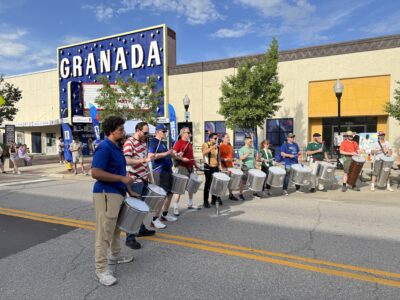
Photos: Lawrence begins World Cup festivities with downtown block party

Watkins Museum to open special exhibit detailing how Douglas County celebrated America’s Bicentennial

Go, See, Do: Kaw River Roots Festival, markets and more

Soccer gear honoring Lawrence history’s all-star team is now on sale as part of city’s public art exhibition
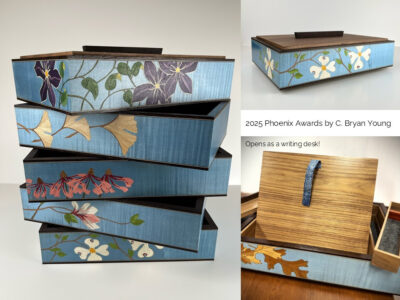
Nominations, call for artists open for Lawrence’s 2026 Phoenix Awards