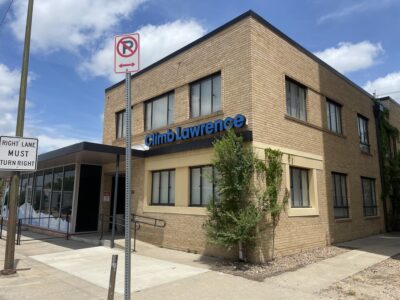
CASA seeks more advocates for children in foster system
The job doesn’t pay a dime, and it’s not for everybody. But the rewards are there for those who want to help kids in trouble and can spare three to five hours a week.
“Gosh, I’ve been doing this for eight or nine years, and I truly believe I’ve gotten more out of it than I put in,” said Anne Poggio, a volunteer Court Appointed Special Advocate with Douglas County Juvenile Court.
“I know I’ve made a difference in the lives of children — children who, through no fault of their own, needed someone to make a difference in their life,” Poggio said.
The National CASA Assn., based in Seattle, is supported through the U.S. Department of Justice through its Office of Juvenile Justice and Delinquency Prevention.
In Douglas County last year, 76 children entered the state’s foster care system after officials confirmed allegations of abuse, neglect or both. Most were assigned a CASA.
CASAs make sure all children have a say in how their cases are handled.
“Once a child is in the system, they’re assigned a SRS worker, a case worker from the foster care contractor — Kaw Valley, usually — and a guardian ad litem attorney,” said Kerry Gaines, executive director of the Douglas County CASA office in the courthouse.
“They all want what’s best for the child,” Gaines said. ‘But they all have lots of cases and they’re focused on a lot of different issues. The child’s voice can get lost, which is where the CASA comes in.”
Each CASA is assigned only one case, usually involving one child. When a case involves a sibling group, a CASA typically will not be assigned more than three children.
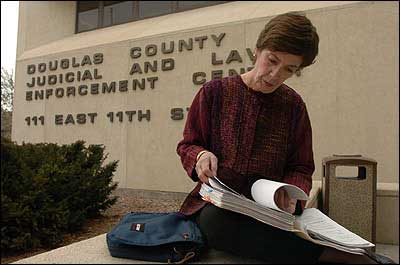
Anne Poggio, a volunteer for CASA, is one of about 40 volunteers who help with cases involving children in Douglas County's foster care system.
“We are the information gatherers,” Gaines said. “We speak to the teachers, the social workers, the therapists … foster parents, biological parents, family members, and, of course, the child.”
When something’s not right — say, for example, the parents don’t follow through on court-ordered alcohol and drug rehabilitation — a CASA files a report, letting the court know.
Other times, Gaines said, a CASA’s role in looking out for the child may be “as simple as saying ‘I want to stay at Grandma’s’ or ‘I want to go back to Mom or Dad.'”
Currently, the Douglas County CASA organization includes about 40 CASAs. It could handle 53.
“We’re looking for volunteers,” Gaines said. CASAs undergo 24 hours of training, four hours of home study and two hours of in-court hearings. Classes are on Tuesday and Thursday evenings at Lawrence Memorial Hospital.
Would-be volunteers must be at least 21 years old and able to spend at least one year on a case. They will be subjected to a background check.
This year’s training sessions begin Feb. 15.
| The Douglas County Court Appointed Special Advocate program, 1100 Mass., trains community volunteers to advocate for the best interests of abused and neglected children brought before the court. CASA volunteers gather information, make recommendations to the court, and monitor the situation until the child finds a safe, permanent home.For more information or to volunteer, contact Executive Director Kerry Gaines at 832-5172 or e-mail casa@douglas-county.com. |
“We need more men and more minorities,” said Judge Jean Shepherd, who was instrumental in getting Douglas County CASA started in 1991.
“But more than anything, we need dependable adults,” she said. “The kids we see haven’t had a lot of dependable adults in their lives.”
Volunteers are supervised and backed by a support staff.
“I’ve gotten three of my friends to become CASAs,” Poggio said, “and none of them say they regret it. It’s a wonderful, worthwhile experience.”
City Government
A STAR Bond application raises questions for city leaders about Costco and housing west of the SLT
Soccer gear honoring Lawrence history’s all-star team is now on sale as part of city’s public art exhibition
To honor public servants, Lawrence’s July 4 celebration will have a whole gallery of their photos on display; submissions open now
North Lawrence study consultants look at possibilities for a grocery store, food truck park, traffic calming and more
Algerian ambassador gives Lawrence a gift for supporting national team – a piece of art