Books explore friendship and freedom
Readers from 7 to 17 can explore what life has been like for black Americans by turning to current books that offer both fact and fiction, presented in hard-to-put-down story lines.
“Harriet Tubman: A Woman of Courage,” by the Editors of TIME for Kids (with Renee Skelton), tells early- and middle-graders the story of the legendary former slave who helped hundreds of her peers escape bondage through the Underground Railroad.
The profusely-illustrated volume (HarperCollins, $14.99), which features amazing historical photographs from the 1800s, describes in detail how Tubman escaped from a plantation, only to return from her safe home in the North to make sure others were fortunate enough to share in that freedom.
This easily-read book is full of information; children will find it a story of adventure and, as the title says, a story of courage.
“The Power of One: Daisy Bates and the Little Rock Nine” (Clarion Books, $19) is horrifying and inspiring. Written by Judith Bloom Fradin and Dennis Brindell Fradin, the book for pre- and early teens offers an extremely detailed account of school integration in Little Rock, Ark. — an account that will make readers cringe as they encounter the cruelty and bigotry that pervaded Southern school systems in the late 1950s.
Focusing on civil right leader Daisy Bates, who fought ceaselessly to end segregated schools, the authors spare no punches as they describe how her house was attacked, she and her husband were threatened and her family’s newspaper was destroyed by those who wanted to maintain the status quo.
Finally Daisy Bates prevailed, and reading how she did it will show all children how important fighting for equality was and is.
For teens, both boys and girls, the novel “Brother Hood,” by Janet McDonald, is a wake-up call. Set alternately at a ritzy private suburban New York prep school and in the streets of Harlem, the book (Farrar, Straus & Giroux, $16) flows effortlessly, at once a good read and a very good lesson in morality.
An extraordinarily ambitious novel, “Brother Hood” tackles everything from interracial friendships, to the acceptability or unacceptability of nonviolent crime, to gay relationships, to sibling rivalry. In 166 pages, it covers all the bases and comes up with surprisingly strong statements.
Though crime by a likable black youth is first tolerated by his honest friend, in the end that friend doesn’t get a free pass because of racial disadvantage. McDonald spells out right and wrong gradually but inexorably. Harlem’s children only triumph if they rise above their neighborhood’s reputation to seek a life of education and very hard work.
It’s not the white world that triumphs, but the ideal world, where what you choose to do and who you choose to be can offer personal satisfaction in addition to success. White youths as well as black will get the message that being a good guy is a lot better than being a “hood.”
Arts and Entertainment
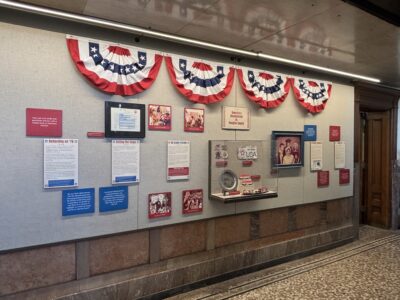
Watkins Museum to open special exhibit detailing how Douglas County celebrated America’s Bicentennial

Go, See, Do: Kaw River Roots Festival, markets and more
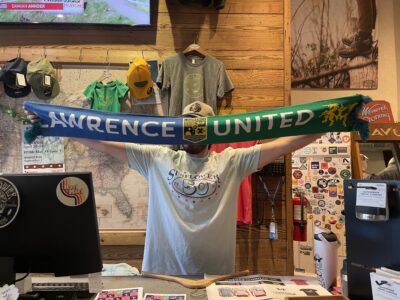
Soccer gear honoring Lawrence history’s all-star team is now on sale as part of city’s public art exhibition

Nominations, call for artists open for Lawrence’s 2026 Phoenix Awards
Go, See, Do: ‘Addams Family’, PRIDE parade and a host of library events among offerings