Rumsfeld warns of Islamic superstate if U.S. leaves Iraq too soon
Washington ? If U.S. forces leave too soon, Iraq will become a haven for terrorists and the base of a spreading Islamic superstate that would threaten the rest of the world, Secretary of Defense Donald Rumsfeld said Monday.
Speaking at Johns Hopkins University’s Paul H. Nitze School of Advanced International Studies, Rumsfeld warned that al-Qaida leaders such as Abu Musab al-Zarqawi and Osama bin Laden would seize power in the wake of an American withdrawal and turn Iraq into the kind of terrorist safe haven that Afghanistan was before the Sept. 11, 2001, attacks.
Moreover, Rumsfeld said: “Iraq would serve as the base of a new Islamic caliphate to extend throughout the Middle East, and which would threaten legitimate governments in Europe, Africa and Asia. This is their plan. They have said so. We make a terrible mistake if we fail to listen and learn.”
The Bush administration has been warning of the dangers of a new caliphate – an Islamic superstate based on Islamic laws with religious and political authority over much of the Muslim world – to bolster waning support for its policy in Iraq.
The message is similar to the domino theory that U.S. officials used 40 years ago to muster support for the Vietnam War by arguing that abandoning South Vietnam would allow the communists to conquer neighboring countries such as Malaysia, Thailand and Indonesia.
Much as the original domino theory overlooked the tensions between the Soviet Union and China, the power of nationalism and the appeal of prosperity, Rumsfeld’s remarks neglected the deep animosity between Sunni Muslim extremists such as bin Laden and Iraq’s Shiite majority. It also discounts the differences among predominately Muslim countries from Morocco to Indonesia.
A Sunni-dominated caliphate is unlikely in Iraq, where Shiites make up 60 percent of the population, said Akbar Ahmed, the chair of Islamic Studies at American University, and a former Pakistani ambassador to the United Kingdom. While fundamentalists on both sides say they like the idea of clerical government, Iraqi Sunnis and Shiites have been fighting one another.
“It’s like saying the Christians will be united under one banner,” said Ahmed. “It sounds nice, but whose banner will it be?”
Ahmed said he believes that U.S. troops should stay in Iraq, but should pull out of most cities and towns.
If U.S. troops leave Iraq to its fate, the biggest beneficiary of the U.S.-led 2003 invasion could be Iran, Iraq’s Shiite neighbor to the east, whose fundamentalist regime Bush four years ago branded as part of an “axis of evil” along with Iraq and North Korea, he said.
“In the present situation, I don’t see a caliphate at all. What I do see is a strong Islamic Shiite government in Iraq making overtures to Iran, and that will have long-term implications for U.S. interests in the Middle East,” Ahmed said.
National
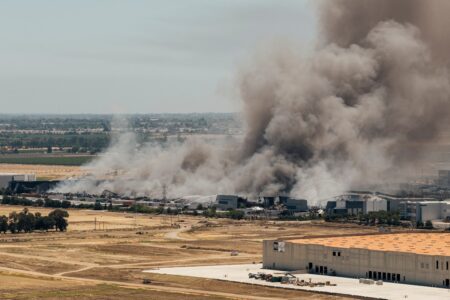
Unhealthy air quality in California city as huge warehouse fire burns for 3rd day
Judge orders Trump administration to restore National Park changes at sites that ‘disparaged’ US
Teens’ reading and math scores have stagnated, US test results show
WASHINGTON (AP) — Younger students have regained ground academically after the pandemic's disruptions while older ...
Lawyers for man accused of killing Charlie Kirk try to block death penalty

Trump’s name poised to come off Kennedy Center