

Northwest goes through first weekday test during workers’ strike
Minneapolis ? Business travelers got their first taste of a strike at Northwest Airlines on Monday as the nation’s fourth-largest carrier flew its busiest day since mechanics walked off the job.
Operations were largely normal, although industry observers said the airline saw more delays and cancellations than usual.
The company estimates it will complete 96 percent of its flights during the strike’s first seven days. That would equal more than 300 cancellations, based on about 9,900 flights Northwest has said it planned this week. During the same week last year it canceled 125 flights.
Northwest has refused to release statistics on delays or cancellations since the strike began Saturday. At midday Monday, a check of the airline’s video screens at its Detroit hub showed delays for 23 out of 120 departures – about normal. At its Memphis, Tenn., hub later in the day, the screens showed seven of more than 120 flights canceled, none delayed.
Meanwhile, an independent travel expert found widespread delays in the strike’s first two days.
Joe Brancatelli, who publishes a business travel Web site, sampled 99 of Northwest’s 1,381 Sunday flights and found that 53.5 percent them left on-time, according to Northwest’s Web site, he said Monday. Using that method on Saturday, he found that only 46.5 percent of the sampled Northwest flights were on time. The airline has about 1,470 weekday flights.
Company spokesman Kurt Ebenhoch derided Brancatelli’s numbers, but refused to say how many flights had been delayed or canceled. During August 2004, 17.6 percent of Northwest flights were late and 1 percent were canceled, according to the Transportation Department.
“The survey was unscientific and completely random, and included markets that could have been affected by weather or air traffic which impact the operations of all airlines, not just Northwest,” Ebenhoch said.
Eagan-based Northwest has also said that a slowdown by the Aircraft Mechanics Fraternal Association just before the strike began on Friday caused a spike in the number of planes out of service or with minor mechanical write-ups.
“We have brought those numbers down substantially during the course of the weekend, and continue to make progress in reducing both numbers,” he said. “Our operating performance since AMFA called their strike has been similar to other weekends and Mondays during the month of August.”
About 4,400 Northwest unionized mechanics, cleaners and custodians walked off the job Saturday morning.
No new talks are scheduled between Northwest and the union, which is refusing to take pay cuts and layoffs that would have reduced their ranks by nearly half. The mechanics averaged about $70,000 a year in pay, and cleaners and custodians made around $40,000. The company wants to cut their wages by about 25 percent.
Anticipating the strike, Northwest switched to its fall schedule Saturday, a week earlier than planned, lightening its domestic schedule by about 17 percent.
Northwest also spent 18 months preparing for the strike, arranging for about 1,900 replacement workers, vendors and managers.
National

Suspect in Texas shooting had fired at police days earlier, officials say

Man pleads guilty to killing a top Minnesota Democrat and her husband
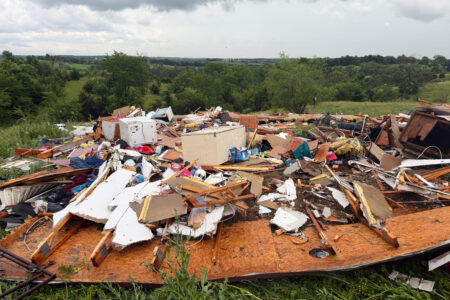
New tornadoes outside Chicago as severe storms pummel the Midwest

Feds won’t seek death penalty in plea deal with man accused of killing top Minnesota Democrat

NASA unveils astronauts to test tech for future moon landing
Social Security’ fund faces shortfall one year earlier than expected
WASHINGTON (AP) — Social Security 's retirement trust fund is projected to face a funding shortfall in 2032, a ...