

Despite safe landing, future of shuttle still up in the air
Edwards Air Force Base, Calif. ? Safely back on Earth, though not quite home. Now the shuttle faces an uncertain future.
Signaling its arrival with two thunderous sonic booms, Discovery hurtled out of a black desert sky to a smooth touchdown Tuesday after scrapping four landing attempts at its Florida base because of rain and lightning. The landing at a backup site was met with cheers and palpable relief after a tense two-week mission that raised fears of a Columbia-like disaster.
“Congratulations on a truly spectacular test flight,” Mission Control said after Discovery came to a stop on the concrete runway at 5:11 a.m. PDT. “Welcome home, friends.”
The mission exposed how vulnerable the shuttle fleet remains, despite a tremendous amount of money and effort invested in the first U.S. manned space mission in the 2 1/2 years since the Columbia tragedy.
Shortly after liftoff July 26, a 1-pound chunk of foam insulation fell from the fuel tank – the very thing that doomed Columbia – but it missed Discovery. Still, NASA grounded all shuttle flights until engineers fix the problem.
“We’re going to try as hard as we can to get back in space this year,” NASA Administrator Michael Griffin said at a post-landing news conference. “But we’re not going to go until we’re ready to go.”
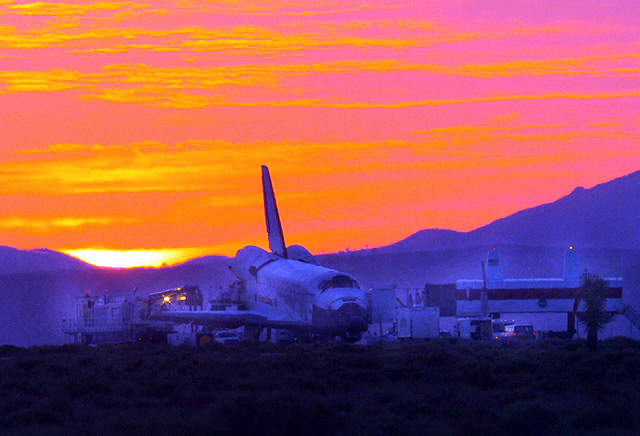
The sun rises over the space shuttle Discovery as it sits on runway 22 after an early Tuesday morning landing at Edwards Air Force Base, Calif. Edwards ended up being the alternative landing site because of bad weather at Cape Canaveral in Florida.
Shuttle managers freely acknowledged the foam mistake, while stressing that the inspection, photography and other shuttle data-gathering systems put in place for this flight worked well. What’s more, NASA officials said no severe damage was detected on Discovery while it was in orbit.
The Columbia disaster weighed heavily on everyone’s minds as the shuttle made its descent to Earth. Co-pilot James Kelly said he was “honestly hoping that we’d make it farther than they did. And I wished that they had made it all the way home.”
Commander Eileen Collins said the United States should continue launching shuttles until the scheduled completion of the international space station in 2010.
National

Suspect in Texas shooting had fired at police days earlier, officials say
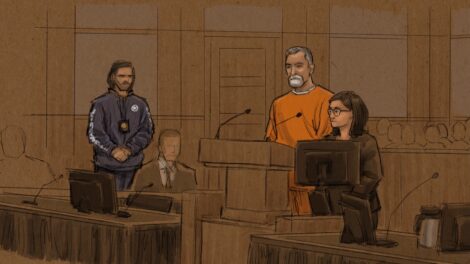
Man pleads guilty to killing a top Minnesota Democrat and her husband
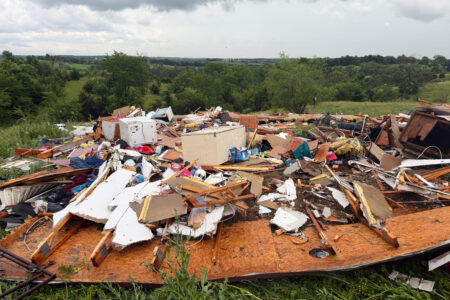
New tornadoes outside Chicago as severe storms pummel the Midwest
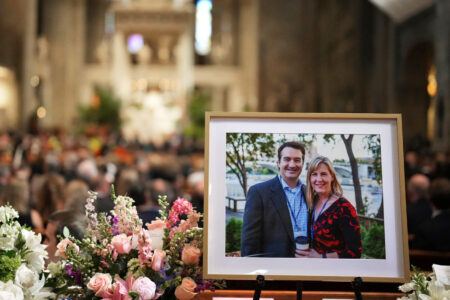
Feds won’t seek death penalty in plea deal with man accused of killing top Minnesota Democrat
NASA unveils astronauts to test tech for future moon landing
Social Security’ fund faces shortfall one year earlier than expected
WASHINGTON (AP) — Social Security 's retirement trust fund is projected to face a funding shortfall in 2032, a ...