Shiite leaders seek key support for constitution
Political leaders try to quell frustrations over negotiations
Baghdad, Iraq ? With negotiations for a new constitution entering a tense final stage, Iraq’s Shiite Muslim political leadership ventured out Friday to rally support for the country’s government.
Prime Minister Ibrahim al-Jaafari traveled to the holy city of Najaf to meet with Grand Ayatollah Ali al-Sistani, the senior cleric whose support for any government initiative is crucial. Al-Jaafari later said the two discussed issues relating to the constitution, but he declined to go into detail.
However, the mere involvement of al-Sistani, whose word is law for millions of Iraqi Shiites, should be an important boost for al-Jaafari’s government, which faces intensive last-minute negotiations over the constitution amid mounting criticism and public frustration.
The diplomatic overture took place as a 1,000-strong force of U.S. and Iraqi soldiers stepped up an offensive against insurgents centered around the city of Haditha, northwest of Baghdad. Witnesses reported intense fighting as residents fled a city cut off from water and electricity and increasingly encircled by U.S. and Iraqi forces.
Al-Sistani’s backing in January’s parliamentary elections helped al-Jaafari’s Shiite alliance capture a majority share of the votes. But al-Sistani also is rumored to be frustrated with the government’s performance, and al-Jaafari’s visit may also have been a gesture to mollify the reclusive cleric.
Aides close to al-Sistani were cryptic about his views on the current government, stopping short of an endorsement. Spokesman Hamid Khalaf refused to comment, and a source in Najaf close to al-Sistani said, “I don’t know whether he is satisfied or not with the performance of the government, but he is always asking the government to offer the public services and security. . . . He is asking for these vital things to be offered to all Iraqis.”
Al-Jaafari also met with Muqtada al-Sadr, the rebellious young Shiite cleric who is a street-level rival of al-Sistani.
“The Sadr movement has a lot of supporters around the country, and we wanted from the start to hold it close to enrich the political process,” al-Jaafari said.
Al-Sadr, a staunch opponent of the U.S. military presence in Iraq, said he supported the political process but planned to personally stay away from the writing of the constitution due to “the presence of the occupation.”
A planned Friday meeting between al-Jaafari and other competing political party leaders to hammer out remaining obstacles in the constitution was delayed until Sunday. The leaders and the members of the parliamentary constitutional committee have until Aug. 15 to agree on a final document after refusing to request a deadline extension.
The drafting process remains deadlocked over a number of issues, such as the prominence of Islamic Sharia in civil law, distribution of oil profits and the Kurdish desire for a decentralized federal system that would preserve their decade-old autonomy.
Protracted negotiations between Shiite Muslim, Sunni Arab and ethnic Kurdish factions have fed simmering discontent among an Iraqi populace enduring its third straight summer of insufficient electricity, tattered infrastructure and steady insurgent attacks.
National
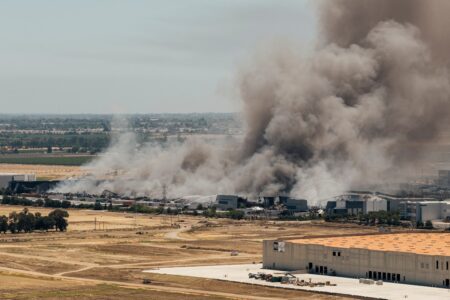
Unhealthy air quality in California city as huge warehouse fire burns for 3rd day
Judge orders Trump administration to restore National Park changes at sites that ‘disparaged’ US
Teens’ reading and math scores have stagnated, US test results show
WASHINGTON (AP) — Younger students have regained ground academically after the pandemic's disruptions while older ...
Lawyers for man accused of killing Charlie Kirk try to block death penalty
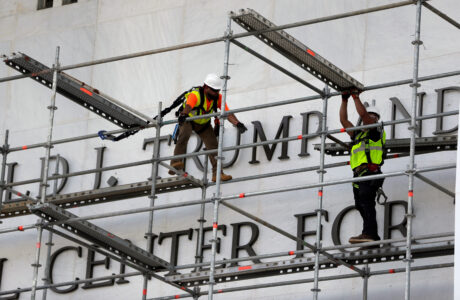
Trump’s name poised to come off Kennedy Center