Rape case details provide sentencing insights
On Dec. 3, 2003, a young man convicted of having sex with a child under 14 — that’s rape under Kansas law — stood up in Douglas County District Court and asked a judge for leniency.
Under state sentencing guidelines, he was facing at least 13 years in prison even though he had no felony record.
“Please give me another chance at my life,” 19-year-old William N. Haney, of Lawrence, said to Judge Paula B. Martin. “Don’t take a huge chunk of it away.”
What follows is a detailed summary of five key sentencing hearings and court documents on which Martin based her decisions to grant probation sentences, not prison, in the case of Haney and a co-defendant, 20-year-old Brian K. Ussery, of Tonganoxie.
Martin also granted a lighter sentence for a third defendant, Michael J. Rayton, 28, who entered a plea to a lesser charge.
Critics of Martin’s decisions are asking voters to remove the judge from the bench Nov. 2 when she appears on the ballot for retention. Others have come to the judge’s defense, saying it was proper for her to distinguish between statutory rape and physically forced rape.
For the first time, all documents and transcripts of hearings related to the sentencings of William Haney and Brian K. Ussery are available online at www.ljworld.com.
A summary of what appears in those documents and an effort to put the proceedings in context appears below:
Nov. 24, 2003. “Aggressive Acts”
The rapes happened June 14, 2003, after the girl sneaked out of her home and began drinking at a central Lawrence apartment.
Requests for judges to break with state sentencing guidelines — an actual grid that combines the defendant’s criminal history with the severity level of the crime — are common statewide. Under state law, judges can give a lesser sentence if they find “substantial and compelling reasons.”
Following Haney’s conviction in a jury trial, his attorneys, John J. Ambrosio and Kathleen Ambrosio, of Topeka, filed a written motion asking Martin to depart from sentencing guidelines.
They cited Haney’s lack of criminal history and the fact that he was seven months past his 18th birthday when the crime happened. They wrote that he’d undergone a psychological evaluation that found he had attention-deficit and hyperactivity disorder, escalating alcohol abuse, immaturity and past head injuries, and felt significant guilt and shame for what he’d done.
 DocumentsWarning: Some material in these documents describes explicit sexual acts.
 State of Kansas vs. Brian K. Ussery sentencing motion
 6News video: Groups clash over campaign to oust judge (10-07-04)
They also pointed out that it wasn’t a “physically forced sexual encounter.”
“The aggressive acts of a young victim can be considered in imposing punishment on this type of charge,” they wrote.
Dec. 3, 2003: “Please give me another chance”
Haney’s sentencing hearing began with Martin saying she’d read the Ambrosios’ motion, the psychological evaluation, and letters from the victim’s mother, the victim, a juror, and a juror’s neighbor.
George Hough, the psychologist who evaluated Haney, took the stand and summarized his findings. He described Haney as a follower who was still finding his way in life.
“I saw him in many respects as still a kid,” Hough said. “This is a young man who needs to find a way to restore his self-esteem and to find a way to feel that he can earn back the respect from his family and from the community.”
Hough testified he thought the rape was “a context-specific, one-time-only behavior” and said a sexual-history questionnaire found Haney to be “very conventional.” Later, though, Hough testified it would be good for Haney to take a sex-offender class as part of probation to help him work through “what may well be some aberrant attitudes around sexuality.”
When Kathleen Ambrosio asked what kinds of attitudes, the doctor said, “the assumption perhaps that women want to have sex when maybe they don’t.”
Deputy Dist. Atty. Shelley Diehl asked Hough whether ADHD made Haney more susceptible to breaking the law and whether there was any evidence head injuries affected Haney’s actions the night of the rape. Hough said “no” to both.
Diehl asked, “He certainly didn’t tell you that he was intoxicated on the 14th of June, did he?”
“No. In fact, he tried to minimize that,” Hough said.
Kathleen Ambrosio argued to Martin that the case was different from other rapes, such as a 30-year-old man having sex with an 8- or 9-year-old child or a man armed with a knife attacking a stranger.
“This is a young woman who was admittedly engaging in activity inappropriate for her age,” Ambrosio said. “She was out all night. She was drinking. She went home. For some reason … the first thing that happened when she got home was she was accused of being out having sex. I don’t know what that means.”
Haney then stood up in court and said he wished he could have gone back to that night and done the right thing. He asked Martin for another chance.
The victim’s mother read a letter from her daughter describing how she had been diagnosed with post-traumatic stress disorder. The letter said that instead of worrying about which shirt to wear the girl had to worry about what time to meet her therapist.
“The defendant is not sorry,” the mother said after reading the letter. “By his own statement to Detective Lance Flachsbarth, he knew it was wrong and he did it anyway.”
Diehl conceded in her argument that the girl shouldn’t have been drinking. But she said Martin shouldn’t ignore that the girl was just three months into her 13th year.
“He was the adult. He was in control of his actions that night, not his ADHD, not his escalating alcohol usage, not his multiple head injuries, not his depression that he suffers now,” Diehl said. “This young man knew she was intoxicated. According to his statement and the testimony, he considered her ‘piss drunk.'”
Martin said she needed more time to decide the matter.
Jan. 8, 2004: ‘Go for it.’
Michael Clarke, the attorney for co-defendant Ussery, filed a motion similar to the Ambrosios’. But this one argued just two reasons for a lesser sentence: The victim was a “willing participant,” and the degree of harm was less than for a typical victim of the same crime. Both of those factors are mentioned in Kansas statutes as things a judge may consider at sentencing.
Clarke wrote that the victim “willingly” engaged in intercourse. He pulled snippets from police reports saying the girl told the men to “go for it” if they had condoms, made encouraging comments during sex, and asked if anyone wanted “seconds.”
He wrote that she “voluntarily consumed a relatively large amount of alcohol in a short period of time in an obvious effort to become intoxicated and lose her inhibitions.” But given that she was able to remember some details of the night, Clarke claimed she was exaggerating the effects of the alcohol.
“Of course, (the victim) has obvious motives for hiding the fact that she willing (sic) engaged in sexual intercourse with four males in a single evening,” Clarke wrote.
He wrote there was no physical harm to the victim and pointed out that she admitted that later that morning when she was more alert she had “consensual” intercourse with 17-year-old Dana Jackson.
Jan. 9, 2004: Oldest child, youngest adult
Martin laid out the reasons for her decision at Haney’s sentencing hearing.
She started by saying it was proper to consider the sentence given to the fourth co-defendant, Dana Jackson, who was 17 years old at the time of the rapes. Jackson entered a plea to attempted rape and got a 30-month sentence in a juvenile-correction facility from a different judge. Unlike in Jackson’s case, prosecutors didn’t give Haney any plea-bargaining opportunities, Martin said.
Martin found that Haney, even though he was older, was less culpable than Jackson because he didn’t make plans to have the girl come to the apartment, didn’t furnish her with alcohol and only had sex with her once.
“Certainly the facts of this case are less shocking than of the other possible scenarios” under the rape statute, Martin said. Had the victim been nine months older, Martin said, the crime would have been a level 8 felony, “unlawful voluntary sexual relations,” with presumed probation for Haney.
“Here we have the oldest child and the youngest adult to which this statute applies,” she said.
She also said she had to look at the involvement of all participants.
“On the night of his incident, the victim was drinking,” Martin said. “She was not an inexperienced drinker by her testimony… The evidence shows the victim to be an active participant. There were no threats. There was no force. There were no weapons used. There was no cajoling. The victim requested a condom be used and condoms were produced and used.”
She found the harm was less than typical to rape victims. She said she’d also considered Hough’s findings that Haney poses no threat to society and is immature and impulsive. She pointed out that one goal of the sentencing guidelines is to reserve prison space for violent offenders to reduce overcrowding.
Jan. 16, 2004: ‘As if nothing happened’
At Ussery’s sentence, attorney Clarke told Martin he was aware of Haney’s sentence and hoped it would be similar.
He put on three witnesses: a friend of the family, Ussery’s sister and Ussery’s mother. All three testified in support of Ussery, saying he was a good son and a hard worker.
“I know he has high respect for women and I don’t think he would have done this intentionally, and I don’t think he needs to go to prison,” Ussery’s sister, Holly, said.
Ussery’s mother, Carol, told Martin, “I know in the eyes of the law that this was a heinous crime and should be punished, but sending Brian to prison would not benefit anyone. Brian is a productive citizen with a full-time job. He knows what he did. I love my son dearly and hope you will consider punishment other than prison.”
Ussery read a statement apologizing to the victim, saying he took full responsibility for his actions and it never should have happened.
Clarke said Ussery and the victim should be considered part of the same peer group. There already have been consequences for Ussery, Clarke said, such as public humiliation and embarrassment.
“If the court sentences Brian to 13 years, as I expect the state will argue, the deterrent effect of that will probably be over in less than a week because he’ll be out of mind, out of sight and no one will hear of it again other than his immediate family,” Clarke said.
The victim’s mother then read a letter from her daughter to Ussery that said, “You will forget about this after your sentencing is over. I have to live with this for the rest of my life. I pray every night that you will feel the pain I feel and will always feel.”
The mother then read a letter she’d written that said she’d seen three of the four defendants out in public since the rape “as if nothing happened.”
“One I’ve seen downtown. One I’ve seen riding in a car with his bare feet propped up on the dashboard, and one I’ve seen having dinner in a local bar and grill,” she said.
Diehl, the prosecutor, again argued against the lightened sentence, saying, “He was responsible for his actions. This 13-year-old shouldn’t have to be responsible for his actions as well.”
Martin then gave her decision, in language almost identical to that she used in Haney’s sentencing.
The men are still on probation and will be for five years. If they violate terms of probation, they’ll face 30 months in prison.
City Government

Algerian ambassador gives Lawrence a gift for supporting national team – a piece of art

Lawrence City Commission approves incentives for Alarm.com’s office project in downtown building
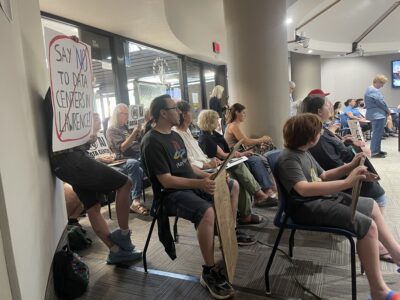
Lawrence City Commission interested in a moratorium on data center development
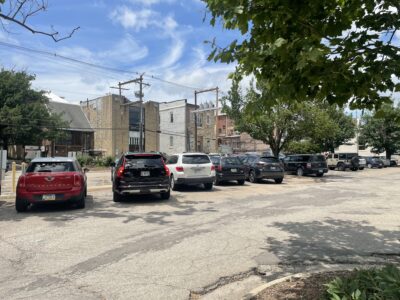
Lawrence city leaders defer decision on selling downtown parking lot for senior housing project
Majed Al-Ghafry selected as Lawrence’s new city manager; he says he plans to ‘hit the ground running’