

Boston museum exhibits Art Deco
Art Deco was the name given, long after the fact, to the brazenly commercial, streamlined style that emerged in Europe, primarily Paris, prior to World War I.
Spreading around the globe, it dominated architecture and decorative arts during the 1920s and ’30s. Art Deco designers embraced machinery and power.
Using modern materials such as plastic and chrome, opulent fabrics and precious gems, their designs were replete with geometric patterns, classical motifs, bright colors and just about anything that hinted of speed. There is pizazz and energy in Art Deco, as well as glamour and luxury.
By the end of World War II, Art Deco had come to be seen as too frivolous for a world in shock from death and destruction. But in the past quarter century, critics and scholars have taken up the style and preservationists have saved its buildings from the wrecking ball.
Perhaps the most comprehensive exhibition ever of Art Deco artifacts and images is on view at the Museum of Fine Arts, Boston, through Jan. 9, 2005. First mounted last year by the Victoria & Albert museum in London, the show features more than 240 works: diamond and onyx jewelry from Cartier, a 1935 Auburn 851 Speedster, evening gowns by a host of French couturiers, travel posters by the Ukrainian-born French designer known as Cassandre and furnishings from the lavishly decorated grand salon of the 1925 world’s fair of design in Paris.
It is from that fair, the Exposition Internationale des Arts Decoratifs et Industriels Modernes, that Art Deco takes its name. Mounted on 55 acres in the heart of Paris, it hosted pavilions displaying the decorative arts of some 20 countries. But the fair’s main intent was to promote the work of new French designers. More than 16 million people visited over the six months it was on view.
Although the Swiss architect Charles-Ãdouard Jeanneret, better known as Le Corbusier, had designed a pavilion sponsored by L’Esprit Nouveau, a decorative arts magazine he had founded, he disdained most of the works in the exposition. In a series of articles he wrote for the magazine, he called them too decorative, too luxurious and too expensive, mocking them as mere “arts deco,” from the title of the fair. But Le Corbusier’s coinage did not catch on at first.
Over the years, the style acquired several names. Some called it “Jazz Modern” or “Zig-Zag Modern.” Others referred to it as “Moderne.” When critics, historians and curators began to take renewed interest in the style in the late 1960s, they focused on the 1925 Paris fair as its launchpad. Some picked up Le Corbusier’s “arts deco” to describe the style — this time admiringly. British art historian Bevis Hillier dropped Le Corbusier’s “s” for his 1968 book, “Art Deco of the 20s and 30s,” and the Minneapolis Institute of Art followed in 1971 with an exhibition called “The World of Art Deco.”
“The genie was out of the bottle,” Ghislaine Wood, curator of the Victoria & Albert show, told Smithsonian magazine for the November issue. The name stuck. Art Deco made its mark in many fields, from architecture to fashion, film to furniture, graphic arts to dishware, even in the design of trains, planes, automobiles and ocean liners. Such variety makes the style hard to define. But there is one key element. “In Art Deco,” Wood says, “decoration is more important than anything else.”
Arts and Entertainment

Photos: Lawrence begins World Cup festivities with downtown block party
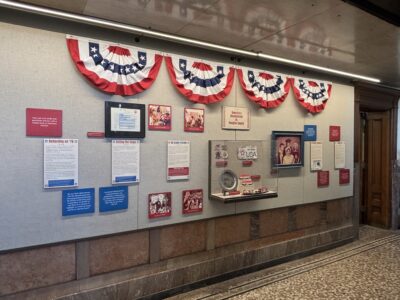
Watkins Museum to open special exhibit detailing how Douglas County celebrated America’s Bicentennial

Go, See, Do: Kaw River Roots Festival, markets and more

Soccer gear honoring Lawrence history’s all-star team is now on sale as part of city’s public art exhibition
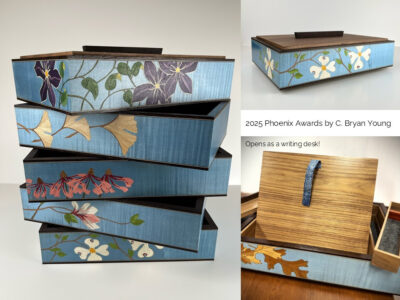
Nominations, call for artists open for Lawrence’s 2026 Phoenix Awards