

250,000 tons of weapons believed still at large
Vienna, Austria ? From the deserts of the south and west to the outskirts of Baghdad, Iraq is awash in weapons sites — some large, others small; some guarded, others not. Even after the U.S. military secured some 400,000 tons of munitions, as many as 250,000 tons remain unaccounted for.
Attention has focused on the al-Qaqaa site south of Baghdad, where 377 tons of explosives are believed to have gone missing.
But with the names of other sites popping up everywhere — al-Mahaweel, Baqouba, Ukhaider, Qaim — experts say the al-Qaqaa stash is only a tiny fraction of what’s buried in the sands of Iraq.
“There is something truly absurd about focusing on 377 tons,” said Anthony Cordesman, a defense analyst and Iraq expert with the Washington-based Center for Strategic and International Studies. He contends Iraq’s prewar stockpiles “were probably in excess of 650,000 tons.”
Underscoring the depth of Iraq’s militarization before the March 2003 invasion, the Pentagon says U.S.-led forces have destroyed 240,000 tons of munitions and have secured another 160,000 tons that is awaiting destruction.
Through mid-September, coalition forces inspected and cleared more than 10,000 caches of weapons, U.S. arms hunter Charles Duelfer said in a recent report. But up to 250,000 tons remains unaccounted for, according to military estimates, much of it in small stashes scattered around the country.
“I caution that there is a lot that we probably don’t know about, because this was a country, as the inspectors acknowledged, that was awash in weapons,” Pentagon spokesman Lawrence Di Rita said Friday in Washington.
The 377 tons that Iraq says vanished from Al-Qaqaa sometime after the April 9, 2003 fall of Baghdad represents just “one 1,000th of the material that we are aware of,” Di Rita said.
The Bush administration has touted the thousands of tons of explosives it did find after the March 2003 invasion as a sign of success, and officials argue that U.S. forces pushing to Baghdad to topple Saddam Hussein could not stop to secure every cache.
The issue is sharpened by the possibility that whatever munitions were unsecured may since have fallen into the hands of Iraqi insurgents staging attacks on U.S. forces.
National

Suspect in Texas shooting had fired at police days earlier, officials say

Man pleads guilty to killing a top Minnesota Democrat and her husband
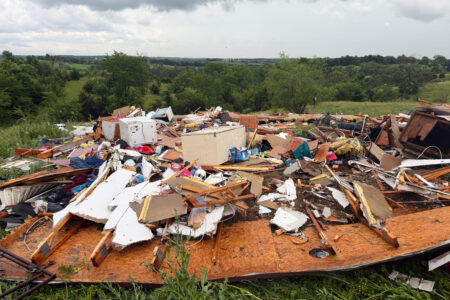
New tornadoes outside Chicago as severe storms pummel the Midwest

Feds won’t seek death penalty in plea deal with man accused of killing top Minnesota Democrat

NASA unveils astronauts to test tech for future moon landing
Social Security’ fund faces shortfall one year earlier than expected
WASHINGTON (AP) — Social Security 's retirement trust fund is projected to face a funding shortfall in 2032, a ...