

Briefly
Wichita
Wet fields continue to plague wheat harvest
Rain continues to plague the wheat harvest in southern Kansas, making fields muddy and wheat too wet to cut.
The Two Rivers Co-op in Arkansas City told the association rainfall in the area Wednesday night was enough to keep producers from getting into the field the next day. Only a couple of farmers had been test cutting before then.
The Hunnewell Elevator in Hunnewell also still was waiting for fields to dry. It had gotten eight loads before the rain.
Anthony Farmers Co-op said there wasn’t much cutting going on there either. And the Cairo Co-op Equity Exchange reported it was expecting rain over the weekend and did not expect cutting to get seriously under way until this week.
Kansas City, Kan.
Program takes on lead poisoning
With more than 85 percent of the city’s homes built before lead-based paint was banned in 1978, Kansas City, Kan., officials are starting a three-year program to head off lead poisoning in children.
The federal Centers for Disease Control and Prevention estimate 900 children in Kansas City, Kan., have lead poisoning.
Friday, local, state and federal leaders announced a $3 million grant that will test for and remove lead from 250 low-income households with children. The program, called Project Lead Safe, also will teach parents how to avoid lead poisoning, which can slow a child’s mental development and damage motor skills.
Salina
Highway Patrol nears full trooper strength
The Kansas Highway Patrol graduated 24 new troopers last week, bringing the force to 95 percent capacity.
Two years of 7.5 percent pay raises under Gov. Kathleen Sebelius have brought salaries on par with surrounding states and helped attract new recruits, patrol superintendent Col. William Seck said.
Starting pay for the new troopers is $35,568, and they will spend the next 50 to 70 days patrolling with a training officer.
Atchison
Scientists follow trail of Lewis and Clark by air
Using planes and helicopters, more than two dozen scientists from across the country are following Lewis and Clark’s historic path to see how the environment has changed.
On Friday, the group flew into Amelia Earhart Airport in Atchison, a quarter of the way through their journey, which began Tuesday in Clarksville, Ind., and is scheduled to end in Astoria, Ore. on June 13.
Using Lewis and Clark’s journals of their trip 200 years ago, the scientists are collecting samples of present-day soil, animals and plants. Some material will later be given to the Smithsonian Institution.
The $50,000 trip is being partly funded through grants from the Alfred L. and Constance C. Wolf Aviation Fund.
State Government
State legislators push back against federal energy regulators ending competitive bids
TOPEKA — Two Kansas legislators asked federal energy regulators to ensure competitive bidding occurs on ...
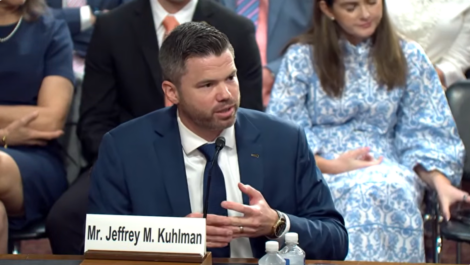
Senate confirms 1st of 3 Kansas nominees to U.S. District Court
Corporate income tax collections falling sharply in Kansas; Republican, Democratic leaders disagree on what it means
TOPEKA — Corporate income tax collections in Kansas have almost halved since last year, while other sources trend ...
Candidate’s campaign manager created website with documents used to attack rival
TOPEKA — Kansas U.S. Senate candidate Patrick Schmidt’s campaign manager left his digital footprint on ...

GOP secretary of state files to run for governor
