

Children’s titles explore the fantastic, serious
From absolutely wacked-out, to absolutely serious, these two children’s books won’t soon be forgotten by kids or by the adults who introduce them to lucky adolescents.
Both books are composed predominantly of pictures, but that doesn’t mean they’re necessarily meant solely for small children.
Berkeley Breathed’s “Flawed Dogs” ($18.95, Little, Brown and Co.) is so wildly imaginative and the humor is so offbeat that parents will appreciate its wit while children giggle at the green-toothed, chartreuse-spotted apparition that is the opening vision in this volume.
Aptly subtitled “The Year-End Leftovers at the Piddleton ‘Last Chance’ Dog Pound,” this book by cartoonist Breathed, who created the strip “Bloom County,” features dogs that look like creations out of an opiate vision. One is tattooed, another horned like a rhinoceros, and there’s a bulldog that’s been crossed with a poodle.
The pictures and accompanying verse are clever and crazy and ultimately bring compassion for the “leftovers” of nature — as Breathed undoubtedly intended. Though no dogs like these have been seen in real life, most kids and adults alike have encountered maladjusted mutts in reality. This book ultimately makes adoption of one infinitely more appealing for all concerned.
Far at the other end of the spectrum is Toni Morrison’s “Remember: The Journey to School Integration” ($18, Houghton Mifflin Company), with its solemn array of photographic history. It is a book especially important for local readers because it deals with the Supreme Court’s Brown v. Board of Education case, which was named for black parent Oliver Brown, of Kansas.
Morrison’s words and the photographs, which are credited in the back of the book, are equally effective in recreating the 50-year-old story of how hard it was to get a good education when segregated children didn’t have a “real desk.”
And the cover photo tells it all: a small black girl and a white one stare at each other uncertainly in an integrated classroom. Inside the book, the photo is repeated with an accompanying text that reads “I think she likes me, but how can I tell? What will I do if she hates me?”
Most of the pictures and text are equally sad but eye-opening. It makes children wonder why people hate and feel sorry that they do. Looking at and reading this book is an important step in the right direction when it comes to making racial hatred, or any other kind of hatred, for that matter, obsolete.
Arts and Entertainment
Photos: Lawrence begins World Cup festivities with downtown block party
Watkins Museum to open special exhibit detailing how Douglas County celebrated America’s Bicentennial
Go, See, Do: Kaw River Roots Festival, markets and more
Soccer gear honoring Lawrence history’s all-star team is now on sale as part of city’s public art exhibition
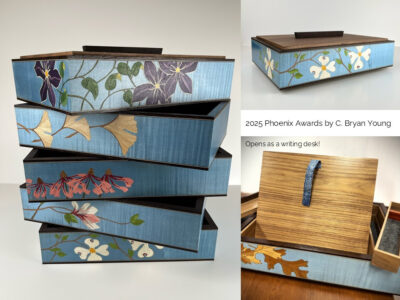
Nominations, call for artists open for Lawrence’s 2026 Phoenix Awards