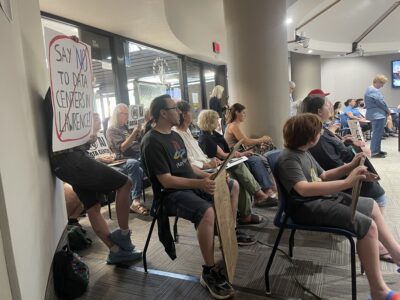
School ruling puts spotlight on lawmakers
When it comes to K-12 education issues, Lawrence Supt. Randy Weseman said he’s not expecting much more than political posturing from the 2004 Kansas Legislature.
Weseman said he was convinced too many legislators would rather make re-election year boasts about cutting school budgets than vote to better fund schools.
“These political trade-offs occur at the expense of children,” Weseman said. “I’ve seen no evidence they’re willing to change their approach.”
But this year, pressure to spend more on schools isn’t coming only from school superintendents.
Shawnee County District Judge Terry Bullock issued a preliminary order in December that declared the school-finance system unconstitutional. He gave lawmakers until July 1 to fix it. Bullock estimated the state was shortchanging public schools, especially minority and disadvantaged students, by about $1 billion.
He also chided the state for claiming that classroom achievement wasn’t tied to money.
“Money doesn’t matter? That dog won’t hunt in Dodge City!” Bullock wrote.
Gov. Kathleen Sebelius has promised to unveil a school-finance proposal when the Legislature convenes Monday. Her plan supposedly would increase state school funding, but she has declined to provide details.
Sebelius said she was concerned the Kansas courts could take over the state’s public schools if she and the Legislature fail to adopt a school-finance plan in the upcoming session.

 6News video: School officials wrangle with legislators for funding
 School ruling puts spotlight on lawmakers
“I think we should roll up our sleeves and go to work,” Sebelius said.
Sen. Mark Buhler, R-Lawrence, said Bullock’s order would force lawmakers to focus on school funding.
“We will have to sort out what choices we have,” Buhler said.
Rep. Paul Davis, D-Lawrence, said Sebelius and legislative leaders should get behind a tax-increase to boost spending on education from kindergarten through college.
“Even if the governor proposes it and gets behind it, it’s going to be a tough row to hoe,” Davis said. “There are a significant number of legislators who won’t support a tax increase under any circumstances.”
And some lawmakers already are predicting there will be no 2004 tax increase, judge or no judge.
“The votes are not there for a tax increase,” said House Speaker Doug Mays, R-Topeka.
The state spends $2.6 billion, about 52 percent of its total annual budget, to educate nearly 470,000 students. A $1 billion increase would require a tax increase equivalent to a 3-cent increase in the state sales tax, significant budget cuts or a combination of both.
If legislators don’t revamp the school-finance system, Weseman said he would like them to allow a special election in Douglas County so voters here can decide if they want a half-cent increase in the county sales tax.
Money from that tax increase — an estimated $5.8 million annually — would be pumped into eight Douglas County school districts. The Lawrence district’s share would be $4.1 million a year.
Sue Morgan, a Lawrence school board member, said voters should reserve judgment on the sales tax plan until they’ve studied how the money could be spent. It might be used to trim student fees, offer all-day kindergarten or bolster after-school programs.
Without more funding from the state or a Douglas County tax increase, Morgan said the Lawrence district would expect to face more than $1 million in cuts for the 2004-2005 school year.
| “State of the State: The Issues” is a 10-day series of Journal-World and 6News stories to help you understand the key issues facing the governor and Legislature. It leads up to live 6News coverage and analysis of the governor’s State of the State address Monday.SundayJ-W: After years of cuts totaling millions of dollars from higher education budgets, university employees and executives alike are hoping to get a bigger slice of the pie.MondayJ-W: When lawmakers return to the Capitol, they’ll have several judges looking over their shoulders to oversee funding of major portions of state government.6News: Beginning at 7 p.m., live broadcast of the governor’s speech and the Republican response, followed by a roundtable discussion analyzing the address. |
City Government

Soccer gear honoring Lawrence history’s all-star team is now on sale as part of city’s public art exhibition
To honor public servants, Lawrence’s July 4 celebration will have a whole gallery of their photos on display; submissions open now
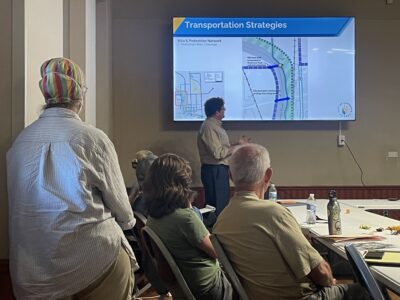
North Lawrence study consultants look at possibilities for a grocery store, food truck park, traffic calming and more
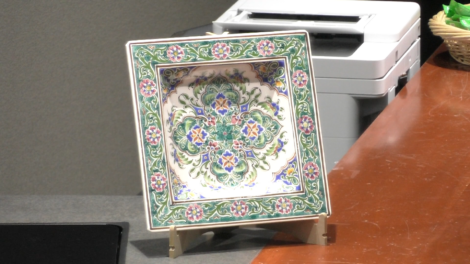
Algerian ambassador gives Lawrence a gift for supporting national team – a piece of art

Lawrence City Commission approves incentives for Alarm.com’s office project in downtown building