Proposal offsets limitations of growth area
Plan encourages building homes in 'clusters'
Douglas County commissioners say they are willing to loosen limits on the number of homes rural landowners can build south of the Wakarusa River, part of an effort to win support for extending urban regulations into the area.
Commissioners suggested a plan Wednesday night for “cluster” development. The concept would give landowners more freedom to build more homes on their land, provided the new homes would be arranged so that city sewers, streets and more homes could be added five, 10 or 20 years down the road.
The idea is part of the county’s effort to garner support for extending Lawrence’s “urban growth area” to land south of the Wakarusa River, where an additional 20,000 residents are expected during the next 25 years.
“It seems, to me, to be a workable problem,” Commissioner Charles Jones said. “We need to try to provide incentives to prompt good things to happen, rather than create a whole lot of regulations to prevent bad things from happening.”
Commissioners are looking to offset the loss of development flexibility that would be suffered by landowners in the expanded growth area. Such properties would have to conform to tighter development restrictions.
Among them would be loss of the county’s “five-acre exemption,” a regulation that allows owners to split their land into five-acre parcels for construction of new homes without platting the land for future sewers, roads or other public infrastructure.
Commissioner Jere McElhaney, a former Lawrence-Douglas County planning commissioner, said that encouraging “clusters” could mitigate the unwelcome effects of the growth area. “It’s going in the right direction,” he said. “It’s what we need to do.”
Jones suggested allowing the owner of a 10-acre parcel to build three homes, each on adjacent one-acre lots. That would leave seven acres to accommodate installation of septic systems, which could be removed in future years to allow for construction of new homes, roads and sewers.
Commissioners instructed two staffers — Linda Finger, city-county planning director; and Richard Ziesenis, director of environmental health for the Lawrence-Douglas County Health Department — to come up with regulatory options for accomplishing the commission’s goals without threatening public health. Their report is expected soon after Jan. 1.

 6News video: New waste treatment site will be on Wakarusa River
City Government
A STAR Bond application raises questions for city leaders about Costco and housing west of the SLT
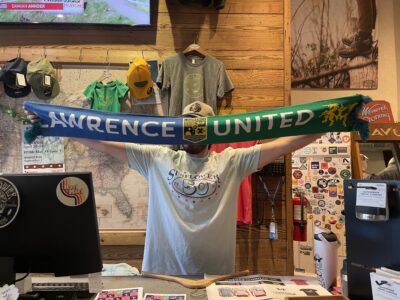
Soccer gear honoring Lawrence history’s all-star team is now on sale as part of city’s public art exhibition
To honor public servants, Lawrence’s July 4 celebration will have a whole gallery of their photos on display; submissions open now
North Lawrence study consultants look at possibilities for a grocery store, food truck park, traffic calming and more

Algerian ambassador gives Lawrence a gift for supporting national team – a piece of art