

Exhibit of Egyptian art opens in Fort Worth
Fort Worth, Texas ? When Ramesses II ruled Egypt in the 13th century B.C., he ordered artisans to carve his likeness on a massive statue of the head of a previous ruler, Senusret I.
The red granite sculpture — nearly 3,800 pounds and 8 feet tall — has barely visible lines where workers cut down the face to reshape the eyes and lips to suit the new ruler.
“It wasn’t that he didn’t like Senusret, but he thought that by changing his statue, he could use Senusret’s power and be a more powerful pharaoh himself,” said Nicole Atzbach, an assistant curator at the Kimbell Art Museum.
The statue is among more than 100 items, including a replica of a pharaoh’s burial chamber, in “The Quest for Immortality: Treasures of Ancient Egypt.” The exhibit is on view at the Kimbell through Sept. 14.
Most of the collection, now on a five-year tour of North America, has never been shown outside Egypt. It is being hailed as the most important exhibit on ancient Egypt since one the King Tutankhamun exhibition in the 1970s.
“It’s significant because it doesn’t just show the gold and opulence of the rulers but how people actually lived and prepared for the afterlife,” Atzbach said.
One room of the museum has been transformed into the tomb of Thutmose III, ruler of Egypt in the 15th century B.C. The walls are covered with a replica of the Amduat, which describes — in hieroglyphs — the 12-hour journey through the afterworld that ends with the pharaoh’s resurrection as the sun god Re.
In another gallery stands a nearly 6-foot-tall red granite statue of Thutmose III. Experts believe it originally depicted his stepmother, Hatshepsut, who ruled with him when he was young but then declared herself the pharaoh. The left arm and base containing inscriptions have been cut off, which experts believe was intentional.
“After her death, the statue could have been mutilated to assert his sovereign power,” Atzbach said.
Another highlight of the exhibit is an elaborately painted wooden coffin with inner board and lid from the 21st Dynasty reign of High Priest Pinudjem II, around 990-970 B.C. It was found in 1891 in Deir el-Bahari.
Another stunning piece is the sarcophagus of Khonsu, found in the tomb of his father Sennedjem at Deir el-Medina. It is covered with painted scenes of the afterlife, and it contained two coffins, one inside the other.
Colorful, richly detailed jewelry is on display: Princess Neferuptah’s gold and turquoise collar necklace and Queen Ahhotep’s lapis vulture bracelet and pendants depicting flies, a symbol of military valor. The queen’s gold fan and mirror, from her tomb uncovered in 1859, also are on display.
The exhibit includes the fully intact gold funerary mask of Wenudjebauendjed, a military leader who was buried in the tomb of Psusennes I, who ruled from 1039-991 B.C.
Arts and Entertainment

Photos: Lawrence begins World Cup festivities with downtown block party
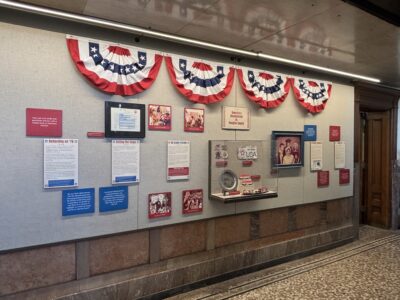
Watkins Museum to open special exhibit detailing how Douglas County celebrated America’s Bicentennial

Go, See, Do: Kaw River Roots Festival, markets and more

Soccer gear honoring Lawrence history’s all-star team is now on sale as part of city’s public art exhibition
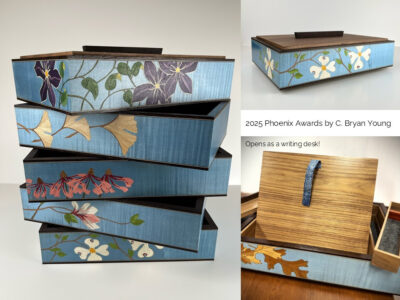
Nominations, call for artists open for Lawrence’s 2026 Phoenix Awards