Dozens of U.S. troops injured in separate attacks
Talafar, Iraq ? Suicide bombers, one in a car and another on foot, blew themselves up at the gates of two U.S. military bases on Tuesday, wounding 61 American soldiers but failing to inflict deadly casualties on the scale of recent attacks in Iraq.
Most of the soldiers were slightly hurt by debris and flying glass, indicating that massive defenses — sand barriers, high cement walls and numerous roadblocks leading to the entrances of bases — are effective in protecting American troops occupying Iraq.
At the same time, the decision of the suicide bombers to test U.S. defenses reflected the tenacity of an enemy that seeks to undermine American resolve by inflicting mass casualties with a single strike.
The image of U.S. soldiers increasingly hunkered down in fortified bases could also undermine their efforts to befriend Iraqis as a U.S.-led coalition tries to rebuild Iraq and introduce democracy while fighting a persistent insurgency in some parts of the country.
On Tuesday, a U.S. Army observation helicopter took fire and made an emergency landing west of Baghdad, and the two crew members walked away with “minimal injuries,” the U.S. military said. Residents said the helicopter was hit by a rocket-propelled grenade.
In the larger of the two suicide bombings, a man drove up to the gate of a base of the 101st Airborne Division in Talafar, 235 miles northwest of Baghdad, at 4:45 a.m. Tuesday, the military said. Guards at the gate and in a watchtower opened fire and the vehicle blew up, leaving a large crater at the gate’s entryway.
A statement from Central Command said 31 soldiers were wounded, but Maj. Trey Cate, a division spokesman, put the number at 59. Both said most of the injuries were minor.
“Eight soldiers were medically evacuated, of which four were sent to Baghdad,” Cate said. The other 51 soldiers were slightly wounded by debris and flying glass, he said.
Later Tuesday, a man acting suspiciously walked toward the gates of a U.S. base in Husseiniya, 15 miles northeast of Baghdad, said Maj. Josslyn Aberle, a U.S. military spokeswoman. When military police opened fire, he activated an explosive device and blew himself up. Two soldiers were slightly wounded.
| Tokyo (krt) — Japanese Prime Minister Junichiro Koizumi brushed aside widespread public skepticism Tuesday as his Cabinet approved the dispatch of 1,000 troops to Iraq, in what promises to be the largest deployment of Japanese troops overseas since World War II.Japan’s Self-Defense Force will head to southern Iraq, possibly next month, for humanitarian and reconstruction work. The deployment is premised on the condition that Japanese troops won’t enter combat situations. |
National
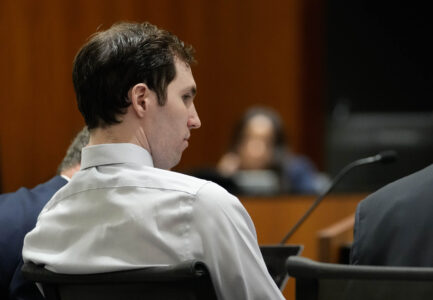
Lawyers for man accused of killing Charlie Kirk try to block death penalty
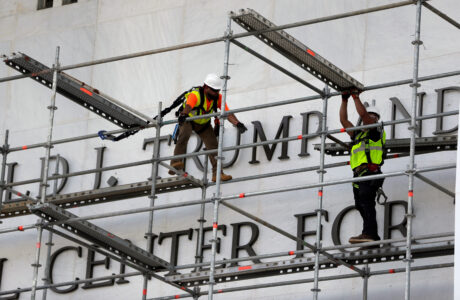
Trump’s name poised to come off Kennedy Center
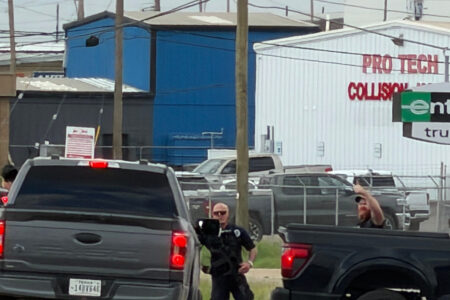
Suspect in Texas shooting had fired at police days earlier, officials say
Man pleads guilty to killing a top Minnesota Democrat and her husband
New tornadoes outside Chicago as severe storms pummel the Midwest