Wittig-Westar timeline
1977 — David Wittig, a Shawnee Mission East High School alumnus from Prairie Village, graduates with honors from the Kansas University business school. He joins the Kansas City brokerage firm that later becomes Kidder Peabody.
1978 — After moving to Kidder’s New York headquarters for training, Wittig is asked to stay. He eventually becomes chief of mergers and acquisitions.
1986 — Wittig lands on the cover of Fortune magazine, ballyhooed for his success as an investment banker.
1989 — Wittig joins Salomon Smith Barney. Two years later he is named managing director of mergers and acquisitions.
1995 — Wittig returns to Kansas to join the Topeka-based utility company now known as Westar Energy Inc.
2002
Sept. 24 — Westar announces revision of compensation plans for Wittig and other executives.
Sept. 26 — State regulators signal they will order unprecedented restructuring of Westar, a development that could remove Wittig and other executives from direct oversight of the utility.
Sept. 27 — Westar reports it is being investigated by a federal grand jury for documents and testimony related to the annual shareholder meeting and use of aircraft leased by its subsidiaries.
Nov. 7 — Wittig and his personal banker are indicted by a federal grand jury on bank fraud charges. Wittig is placed on administrative leave without pay.
Nov. 12 — John C. Dicus, chairman of Capitol Federal Financial and a KU alumnus, resigns from the board of directors.
Nov. 19 — Wittig and his banker plead not guilty to bank fraud charges.
Nov. 22 — Wittig resigns as president and CEO of Westar. He is replaced by Jim Haines, a former Westar executive.
Dec. 6 — Executive Vice President Douglas T. Lake is put on indefinite leave without pay and resigns as board chairman of Protection One Inc., the security alarm firm.
Dec. 10 — Westar discloses Wittig and Lake could receive nearly $58 million from the company under employment agreements.
2003
January — A class-action lawsuit is filed on behalf of Westar stockholders charging the company and its top executives knowingly issued false and misleading statements about the company’s finances.
April — A federal filing shows Westar could owe as much as $81.6 million in compensation and severance to Wittig and Lake.
April 24 — A federal judge refuses to dismiss charges against Wittig and his banker.
May 9 — Gene Budig, a former Kansas University chancellor, and Frank Becker, a high-profile KU alumnus and former member of the Kansas Board of Regents, resign from the company’s board of directors to pursue personal interests.
May 15 — An internal Westar report finds Wittig was a conniver who spied on his own employees, muscled out boardroom opponents and misused lavish company jets to ferry family and friends on jaunts to Palm Beach, Fla., Europe and sporting events. The report also indicates political contributions made to federal candidates by former Westar executives may have been illegal.
June — Two Republicans in Congress say they will give away campaign donations from Wittig. Several other recipients declined to do so, saying the contributions had already been spent.
June 26 — The Citizens’ Utility Ratepayer Board says board chairman Charles Q. Chandler IV and directors R.A. Edwards and John C. Nettels Jr. should be removed from Westar’s corporate board for participating in past company mismanagement.
July 1 — A national political watchdog group calls on Westar to release more documents related to the company’s alleged efforts to influence federal legislation through campaign contributions to key congressmen and their allies.
July 14 — Wittig is found guilty by a jury of conspiring with his personal banker to conceal a loan payment in an effort to ensure financing in a company Wittig wanted to create from Westar’s assets.
Aug. 15 — Wittig seeks a new trial or acquittal, claiming his trial was riddled with errors.
Oct. 20 — Sentencing for Wittig and his banker postponed to Dec. 1.
Nov. 13 — Sentencing postponed to Feb. 27.
Dec. 4 — Wittig, Lake indicted on federal fraud charges.
2004
Feb. 27 — Wittig is sentenced Friday to more than four years in prison for his part in the loan-conspiracy case.
March 30 — U.S. District Court Judge Julie Robinson grants Wittig’s motion to remain free while on appeal.
Oct. 19 — The federal fraud trial against Wittig and Lake begins. Each man faces 40 charges, including conspiracy, wire fraud and falsifying records.
Dec. 8 — Jury deliberations begin.
Dec. 20 — U.S. District Judge Julie Robinson declares a mistrial after jurors fail to reach a verdict on more than half of the charges. The jury deadlocked on a single charge of conspiracy, and several counts of wire fraud and circumventing internal accounting controls.
2005
Feb. 1 — Prosecutors announce their intentions to retry the pair.
June 22 — The retrial of the federal fraud case against Wittig and Lake begins.
Aug. 25 — Jury deliberations begin.
Sept. 12 — A federal jury finds Wittig and Lake guilty of conspiracy, wire fraud, money laundering and circumvention of internal controls.
Sept. 15 — The jury requires that Wittig forfeit his Topeka home, the historic Landon Mansion, thousands of shares of stocks, a split-dollar life insurance policy and $9.7 million in bonuses and other payments made while working at Westar. Lake was ordered to turn over $2.5 million in stock dividends and sales, as well as several thousand stock shares.
Oct. 8 — Westar files a suit asking the court to determine whether the company should have to pay Wittig and Lake’s legal fees.
Dec. 13 — Wittig’s attorney begins appeal of the verdict requiring the seizure of his Topeka mansion and other assets.
2006
Jan. 17 — Wittig sent to federal prison.
April 1 — Wittig, Lake ordered to forfeit a total of $53.554 million to Westar.
April 4 — U.S. District Court Judge Julie Robinson sentences Wittig to 18 years in prison and former executive vice president Douglas Lake to 15 years, describing the Westar scandal as “worse than Enron.”
2007
Jan. 5 — Wittig and Lake’s convictions are overturned by the 10th U.S. Circuit Court of Appeals.
Feb. 12 — David Wittig is released from prison on bond after serving 13 months, pending the outcome of an appeal.
2008
September — Wittig is set to be retried. However, the trial is postponed to 2010.
2009
Jan. 10 — Wittig returns to prison to complete his sentence.
Feb. 12 — Wittig pays $1 million fine associated with his federal conviction.
April 20 — The U.S. Supreme Court rejects Wittig’s appeal of his 24-month prison term.
2010
Aug. 20 — Federal prosecutors dismiss all charges against Wittig and Lake.
City Government
A STAR Bond application raises questions for city leaders about Costco and housing west of the SLT
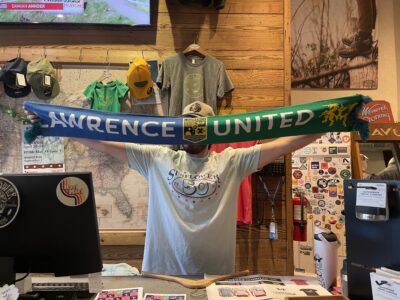
Soccer gear honoring Lawrence history’s all-star team is now on sale as part of city’s public art exhibition
To honor public servants, Lawrence’s July 4 celebration will have a whole gallery of their photos on display; submissions open now
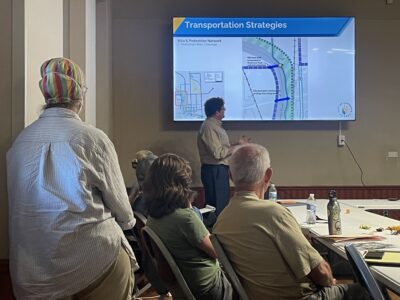
North Lawrence study consultants look at possibilities for a grocery store, food truck park, traffic calming and more

Algerian ambassador gives Lawrence a gift for supporting national team – a piece of art