Rumsfeld: Cleric leadership ‘isn’t going to happen’ in Iraq
Washington ? The United States will not allow an Iran-style religious government to take hold in Iraq, Defense Secretary Donald H. Rumsfeld said Thursday in an interview with The Associated Press. He also said Syria and others in the region would not be permitted to influence Iraq’s future.
“If you’re suggesting, how would we feel about an Iranian-type government with a few clerics running everything in the country, the answer is: That isn’t going to happen,” he said.
Shiites in Iraq are the majority Islamic sect, and they disagree on whether to embrace a secular government or an Iran-style theocracy. Some U.S. officials worry that the Islamic government in Iran, which is predominantly Shiite, may seek to influence Iraq’s postwar reshaping.
Rumsfeld also said U.S. and British forces were searching for many more former members of the Saddam Hussein government than the 55 on a “most wanted” list.
“In fact we have a list of some 200,” he said. “That original list was purposely kept low at the outset because we wanted to separate the worst people from the regime, hoping that others would come forward.”
Rumsfeld said more of the top 55 had been captured in the past day or so than have been announced. He gave no details and said that once the identities were verified they would be made public.
Rumsfeld said the Iraqi people, after decades of political repression, needed time to adjust to a new reality and to determine for themselves how to organize a new government and elections.
Rumsfeld, who is scheduled to visit Iraq soon, painted a mostly upbeat picture of progress in stabilizing the country and moving it toward establishing a new government.
As evidence of progress, he said humanitarian aid groups that specialize in emergency care were now leaving Iraq “because there is not an emergency” in terms of food and water supplies.
As for outside countries, he said neither Syria nor Iran should try to meddle in Iraq.
“What you want to try to do is have external influences muted or eliminated to the extent possible,” he said. “The Iraqi people I think over time will not want influence from Iran in their country.”
He would not predict how long U.S. and allied military forces would remain in Iraq.
On the war on terrorism, Rumsfeld said the al-Qaida terrorist network headed by Osama bin Laden posed a real but diminished threat. “There’s no question but that the intelligence community broadly feels that al-Qaida has been significantly weakened.”
National
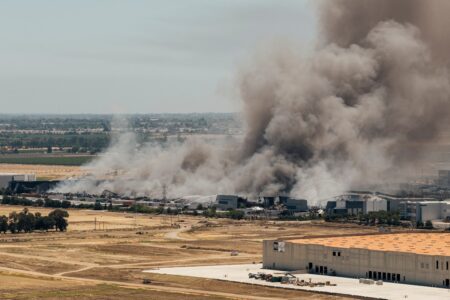
Unhealthy air quality in California city as huge warehouse fire burns for 3rd day
Judge orders Trump administration to restore National Park changes at sites that ‘disparaged’ US
Teens’ reading and math scores have stagnated, US test results show
WASHINGTON (AP) — Younger students have regained ground academically after the pandemic's disruptions while older ...
Lawyers for man accused of killing Charlie Kirk try to block death penalty

Trump’s name poised to come off Kennedy Center