Four-year degree programs help boost Haskell numbers
A year ago, Haskell Indian Nations University officials announced plans to cancel summer classes.
It wasn’t a popular decision for students who needed one or two classes to graduate. But as Marvin Buzzard, vice president of university services, explained, there simply wasn’t enough money in the post-9-11 budget to do everything that had been done before.
This year’s budget appears to be in a little better shape.
“There will be summer school this year,” Buzzard said during a recent interview. “It’ll be streamlined version — I suspect there won’t be as many courses and instead of eight weeks, it’ll probably be condensed to four.”
Also, the university’s cafeteria might close for the summer.
“The jury’s still out on that one,” Buzzard said.
Last year, the U.S. Bureau of Indian Affairs set aside $8 million for Haskell, about $250,000 more than the year before. Buzzard said he expected this year’s budget to come in around $9 million.
“We’re not anticipating a cut,” Buzzard said, “but things are still going to be tight” because the university’s costs rise faster than the budget.
Salaries, health insurance and technology are still the primary cost-drivers, Buzzard said. But increases in enrollment, he said, aren’t far behind.
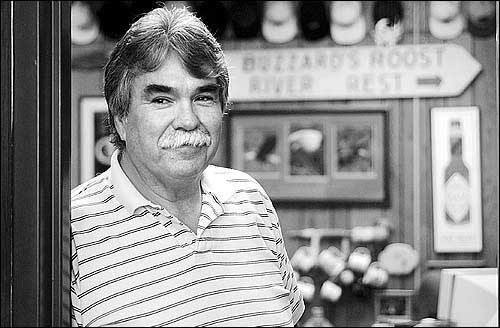
Marvin Buzzard, Haskell Indian Nations University's vice president of university services, says HINU will provide summer school this year. The summer program was dropped last year because of budget cuts.
Historically, Haskell’s numbers in the spring semester have been lower than the fall semester, a phenomena that helped officials reduce spending. That changed last year, when both spring and fall numbers remained even.
This year, spring-semester numbers actually topped the fall-semester numbers.
“As far as any us know, that’s the first time that’s happened,” Buzzard said.
Last month, 1,024 students were enrolled at Haskell — that’s 140 more than first semester.
“Two things are going on,” Haskell registrar Manny King said. “A lot of students are in one of the four-year degree programs and they’re really motivated to stay and pursue their degrees. The other thing is we’re doing a lot better job advising students. We’ve really made a lot of progress in that area over the last three years, and I think it’s starting to show.”
Haskell offers four-year, baccalaureate degrees in elementary education, business administration, environmental studies and American Indian studies. The institution wants to offer more four-year degrees, but until the budget woes are worked out and the current offerings mature, Buzzard said expansion was unlikely.
“We really need to nurture what we have — keep in mind, the programs we have are, for the most part, only four years old,” Buzzard said.
Still, Buzzard said some of the baccalaureate programs would likely evolve into offering different emphases. “Like in environmental studies,” he said, “there could be a degree with an emphasis on water quality.”
In the meantime, Haskell officials are working with three tribes — Winnebago Tribe of Nebraska, Sisseton Wahpeton Sioux and Pottawatomie — on offering much-needed college-level courses via satellite or over the Internet.
“It’s a way we can expand our student population without taking on a lot of the additional cost,” Buzzard said. “We don’t have to take on the expense of feeding and housing them, and they don’t have to be away from their family and community. We see it as a win-win situation.
“We think distance learning is going to be a big part of our future.”
City Government

Soccer gear honoring Lawrence history’s all-star team is now on sale as part of city’s public art exhibition
To honor public servants, Lawrence’s July 4 celebration will have a whole gallery of their photos on display; submissions open now
North Lawrence study consultants look at possibilities for a grocery store, food truck park, traffic calming and more
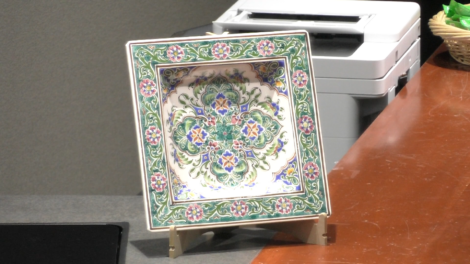
Algerian ambassador gives Lawrence a gift for supporting national team – a piece of art
Lawrence City Commission approves incentives for Alarm.com’s office project in downtown building