WTC scrap metal ends up near where hijackers started
Banting, Malaysia ? In a twist of commercial fate, metal chunks from New York’s fallen twin towers are being melted down and recycled at a Malaysian factory an hour’s drive from a site where some of the Sept. 11 hijackers plotted.
At the huge Megasteel mill in Banting, outside Malaysia’s largest city, Kuala Lumpur, shredded pieces of World Trade Center steel are among scrap headed for furnaces to be rolled into coils of flat steel, a base product used to make automobile panels and pipe, among other products.
There is no suggestion that the delivery of trade center scrap to Malaysia is anything more than irony. One town over from the mill lies an apartment where senior al-Qaida figures, including two Sept. 11 hijackers, met in the year before the attacks.
The apartment is a recurring site in several strands of evidence in the investigation of the Sept. 11 plot, and ties in to the exposure of an Islamic extremist network in Southeast Asia with al-Qaida links.
The apartment in Kajang, about 25 miles from the mill, is owned by a former Malaysian army captain who let senior al-Qaida figures use it for a meeting in January 2000.
Those at the meeting included Khalid al-Mihdhar and Nawaf al-Hazmi, who 20 months later hijacked the plane that crashed into the Pentagon.
Authorities allege the former captain, Yazid Sufaat, is a member of Jemaah Islamiyah, an Islamic group that officials allege has cells in Indonesia and the Philippines and plotted to bomb the U.S. Embassy and other targets in Singapore.
Megasteel Sdn. Bhd., a subsidiary of the Lion Group one of Malaysia’s largest conglomerates, received some of the World Trade Center scrap.
The company that filled Megasteel’s order, Hugo Neu Schnitzer East of Jersey City, N.J., said it handled 250,000 tons of scrap and shipped it to 11 countries, including Malaysia, China, South Korea and Japan.
The firm’s general manager, Bob Kelman, said debris from the twin towers was sliced into pieces with industrial guillotines or blow torches and thrown in with other scrap before being shipped.
But the twin towers scrap was distinctive because it was “the heaviest steel ever used in a building,” with some from the exterior skeleton of the towers in sections 2 feet thick, Kelman said.
Megasteel workers were ambivalent about the metal’s presence.
“What is there to be sentimental about?” Thamarav Selvam said. “Scrap is scrap.”
Co-worker Mohamad Faris said: “It doesn’t make a difference to my job if the scrap came from the towers or elsewhere. It all ends up in the furnace.”
National
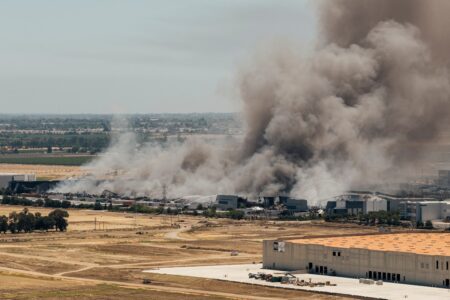
Unhealthy air quality in California city as huge warehouse fire burns for 3rd day
Judge orders Trump administration to restore National Park changes at sites that ‘disparaged’ US
Teens’ reading and math scores have stagnated, US test results show
WASHINGTON (AP) — Younger students have regained ground academically after the pandemic's disruptions while older ...

Lawyers for man accused of killing Charlie Kirk try to block death penalty
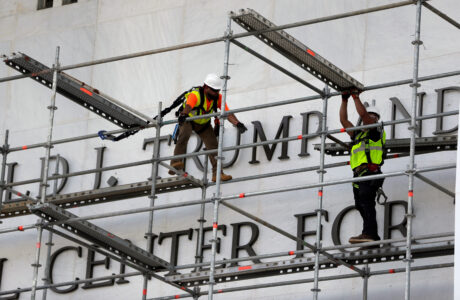
Trump’s name poised to come off Kennedy Center