

Gimme a D! ‘Debbie’ does Off-Broadway
New York ? In the past few years, New York theater has found inspiration in the unlikeliest of sources: the comic films of Mel Brooks and John Waters, the animated films of Walt Disney, the music of ABBA and Billy Joel.
Now “Debbie Does Dallas” has raised its curtain having a source even unlikelier still: an infamous ’70s porn movie.
But “Debbie,” which opened Tuesday at the Jane Street Theater, is not a salacious spectacle replete with whips and waterbeds. Rather, it’s a cheery sendup of the American Dream, in which innocents awaken to discover the true meaning of supply and demand.
The action revolves around Debbie and her four cheerleader girlfriends in a Midwest high school. Debbie is enthralled when she gets a shot to become a pro cheerleader in Dallas with the Cowgirls.
Only problem is, Debbie’s parents are against her going and she doesn’t have the money to make the trip. The can-do quintet eventually stumbles onto, well, other ways for young women to make a quick buck.
“A friend of mine was saying that, after seeing it, she could really relate to Debbie,” says Sherie Rene Scott, who was in “Aida” and “Tommy” on Broadway before doing Debbie. “And she was saying, ‘I’m Debbie, you’re Debbie, he’s Debbie, the Enron guys are Debbie.”‘
The play has its roots in a 2001 New York Fringe Festival production, conceived by Susan Schwartz. Schwartz took the dialogue from the film verbatim, and presented it as pure comedy.
“I called the porn company,” recalls Schwartz, “and said, ‘Hi, I’m interested in the theatrical rights to your film.’ And (one executive) said, ‘Hon, you do know it’s porn, don’t you?’ They were so sweet every time I called, they were like, ‘Oh, it’s the nice girl from New York!”‘
Word about the show was so positive, it became the first Fringe production to have an advance sellout. Executives with the Araca Group quickly signed on.
They turned the reins over to director Erica Schmidt, who expanded and developed the film’s rudimentary script to a full-length play, with such nonporn pastiches as dramatic conflict and musical numbers.
“It was a long process,” Schmidt admits. “In the film, everything is repeated a lot, and the actors (accidentally) call people by the wrong name. Almost every single thing had to be rewritten. To keep the audience compelled, we couldn’t just do ‘scene, sex, scene, sex.”‘
Arts and Entertainment
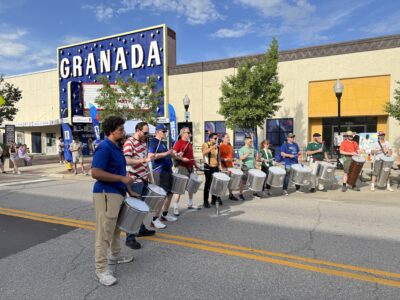
Photos: Lawrence begins World Cup festivities with downtown block party
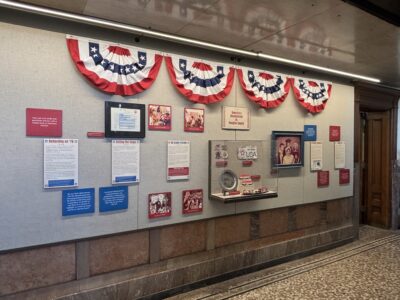
Watkins Museum to open special exhibit detailing how Douglas County celebrated America’s Bicentennial

Go, See, Do: Kaw River Roots Festival, markets and more

Soccer gear honoring Lawrence history’s all-star team is now on sale as part of city’s public art exhibition
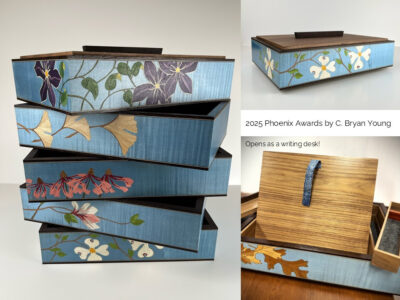
Nominations, call for artists open for Lawrence’s 2026 Phoenix Awards