

Pakistan withdrawals could force change in U.S. Afghan operations
BAGRAM AIR BASE, Afghanistan ? U.S.-led forces trying to stop al-Qaida and Taliban fighters from entering Afghanistan may have to change tactics with Pakistan’s withdrawal of troops from its side of the border, the new commander of the Afghan campaign said Friday.
Lt. Gen. Dan K. McNeill takes command of a U.S.-led campaign that has grown more difficult: Many, if not all, of the top al-Qaida and Taliban leaders are thought to have fled into Pakistan. Those left in Afghanistan are laying low in small groups.
To make the hunt more complicated, mounting threats of war between India and Pakistan have prompted Islamabad to announce it will pull out troops patrolling the Afghan border. Doing so would open up the tribal regions of western Pakistan as a safe haven for al-Qaida and the Taliban to operate.
McNeill, who likely was to take command later Friday, avoided commenting on the possibility of the United States expanding its search in Pakistan. But he said Pakistani withdrawals could lead to changes in his operations in Afghanistan.
“We will determine what it means to us, if indeed there are withdrawals,” he told The Associated Press in an interview. “And if we need to make adjustments because of anything that’s occurred in Pakistan, we will do so.”
Secretary of Defense Donald H. Rumsfeld _ who travels to the region next week to try to quell the India-Pakistan crisis _ said Thursday that so far, no Pakistani withdrawals have been seen.
British troops have made four major sweeps for al-Qaida and the Taliban in the southeast region of Khost near the Pakistani border since March _ without finding any fighters. The most recent British search, codenamed Operation Buzzard, was launched this week.
U.S. special forces have been searching in smaller groups in several border provinces. But whether they have been any more successful in finding hidden fighters is unclear.
They have uncovered weapons caches and “items of intelligence value,” McNeill said. Asked if they have found al-Qaida or Taliban fighters, he said, “They probably have,” but he could not give any numbers.
Still, the special forces’ hunt remains for now the best way to deal with an “elusive enemy,” unlikely to make themselves a target by massing in large groups, McNeill said.
“The unconventional warfare operations will apply to this nicely,” he said. “It requires almost detective-like work to amass many clues, to sift through these clues for what’s good and what’s not, to piece them together and act on those clues.”
The general would not say how many al-Qaida or Taliban fighters were thought to still be in Afghanistan, saying only, “We still have work to do.”
Bagram air base’s outgoing commander, Maj. Gen. Franklin Hagenbeck, has said virtually all the top leaders and 100 to 1,000 fighters are in Pakistan.
The arrival of McNeill, head of the 18th Airborne Corps, elevates the command at Bagram, a former Soviet base north of Kabul that is now the center for U.S.-led operations in Afghanistan. McNeill’s headquarters will run all aspects of the ground campaign and report directly to Florida-based U.S. Central Command.
National

Suspect in Texas shooting had fired at police days earlier, officials say

Man pleads guilty to killing a top Minnesota Democrat and her husband
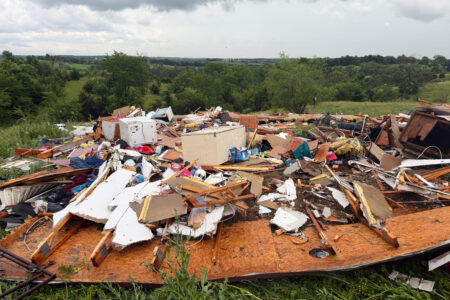
New tornadoes outside Chicago as severe storms pummel the Midwest

Feds won’t seek death penalty in plea deal with man accused of killing top Minnesota Democrat

NASA unveils astronauts to test tech for future moon landing
Social Security’ fund faces shortfall one year earlier than expected
WASHINGTON (AP) — Social Security 's retirement trust fund is projected to face a funding shortfall in 2032, a ...