

Earning a gold star
Juliana Hatfield returns after a decade of chaos
“Not everyone’s goal getting into this business is instant fame and acceptance and money,” said Juliana Hatfield. “Sure, everyone probably dreams of being a rock star, but that doesn’t mean that everyone REALLY wants the dream to literally come true.”
Case in point: Juliana Hatfield.
By the mid-’90s, the singer-songwriter had entrenched herself as one of the leading female voices in alternative rock. Originally coming to prominence in the underground Boston trio The Blake Babies, Hatfield went solo in 1992 with “Hey Babe” the album that first led to widespread critical acclaim and her face being plastered on the covers of national magazines.
Subsequently picked up by Atlantic Records, Hatfield issued “Become What You Are.” The disc effectively showcased her “girlie” singing voice, blistering guitar playing and contemplative lyrics via the standout singles “My Sister” and “Spin the Bottle.” By 1995’s follow-up “Only Everything” (featuring the amiable hit “Universal Heartbeat”), Hatfield had seemingly cornered the college-rock market of radio and MTV.
Then things changed overnight.
Atlantic shelved her next album and she asked to be released from her contract. Consequently, her days of getting sunburned in the media glare abruptly came to a halt.
“I had enough sense to realize fame and fortune was not the answer to all my problems,” she said. “Clearly it wasn’t, because I was more miserable than I ever had been when ‘Only Everything’ came out. I was so depressed when that tour started.”
Part of that was due to Hatfield’s near drowning in a sea of publicity.
“My problem was that I didn’t know what I was trying to present to people,” the singer recalled while speaking from the unlikely locale of Wendover, Utah, where she’d stopped during a tour trek from Denver to San Francisco. “I didn’t have an image. I didn’t realize that I was supposed to think about those things and precalculate how I was going to present myself to the world.”
“It wasn’t really the record company that was trying to market me different. They were doing their best to figure out what I wanted to be. The problem was with the media certain photographers, stylists, the whole image-making machine.”
 MP3 excerpts from “Gold Stars” MP3 excerpts from “Gold Stars” |
 My Sister
The fallout remains. These days the easy-on-the-eyes Hatfield still takes the majority of her own press photos using the old slumber party trick of holding the camera at arm’s length.
“It’s almost like I get physically ill when I try to do something that feels like a compromise or feels the slightest bit unnatural,” she explained. “It’s almost an affliction of mine. Being true to my instincts is the No. 1 thing I have to do, rather than try to gain the acceptance of anybody.”
Career resurgence
But the star-making/back-turning music business also is disarmingly cyclical.
Currently, Hatfield has two new projects that have put her back on the pop-culture map. Zoounder Records just unleashed “Gold Stars 1992-2002: The Juliana Hatfield Collection.” The 20 tracks (seven of which are new or previously unavailable) chronicle the artist’s commercial highs and lows, from her hit singles to excerpts from “God’s Foot,” the album that Atlantic never released.
Hatfield got to hand-pick what tunes made it onto “Gold Stars.” Although in retrospect she has a few regrets.
“I feel I slighted the first album,” the 35-year-old musician said. “I probably should have put another song from ‘Hey Babe’ on there. But I couldn’t go back and listen to it, and I sort of forgot what was on there. So I just chose the single (“Everybody Loves Me But You”). It’s kind of hard for me to listen to that record. There’s something about the sound of my voice and the lyrics that are so intense and too open. It kind of makes me cringe.”
The other project that has Hatfield facing a new wave of publicity is that she’s touring with Some Girls, a trio formed with bassist Heidi Gluck and Blake Babies drummer Freda Love. After a short-lived reunion of her original band last year which resulted in the EP “God Bless the Blake Babies” Hatfield and Love decided to keep the collaboration intact. An album is already in the can, and Some Girls has spent all of August on the road.
“It feels better now,” she said of touring in comparison to her first solo excursion a decade ago. “I feel like I’m more in control of what I’m doing. I’m more confident. I didn’t know what I was doing at the beginning.
“I’m still confused, but I’m not thoroughly confused like I used to be.”
Hatfield hardly has been dormant since the pinnacle of her popularity circa “Only Everything.” She’s released eight solo albums in 10 years, including two separate ones on the same day in 2000 (the winsome pop collection “Beautiful Creature” and the distorted rocker “Total System Failure”). While her period of college radio dominance is apparently behind her, the talented Hatfield is still willing to tackle whatever musical whim she can.
“I feel that it’s my duty to embarrass myself,” she said. “It’s like a good actor will put himself out there and not be afraid to look stupid, because that’s the only way to achieve little moments of transcendence. That’s what this job is all about. It’s not just about being cool and presenting this fully calculated, perfectly seamless thing. It’s more about capturing something that might not be pretty but is real.
“And if I embarrass myself, I would hope it’s endearing.”
|
Audio excerpts from Entertainment Editor Jon Niccum’s interview with Julian Hatfield
How different does it feel touring now compared to when you first went solo? You’ve implied that in the mid-’90s the label tried to market you as something you weren’t. What was their image of you, versus what yours really was? Now that it’s out, how do you feel about the song selection on “Gold Stars? I’ve heard stories that you got the name Blake Babies from William Burroughs. Is that true? You mention in your “Gold Stars” bio that when “Only Everything” came out you felt you hadn’t earned the fame yet. At this point in your career do you think you’ve earned it? What’s your ultimate goal in music? |
Arts and Entertainment
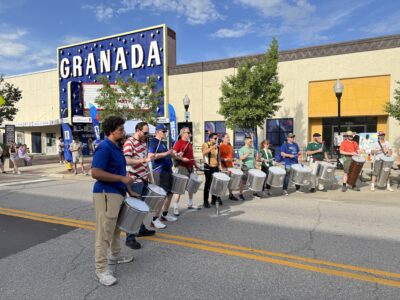
Photos: Lawrence begins World Cup festivities with downtown block party
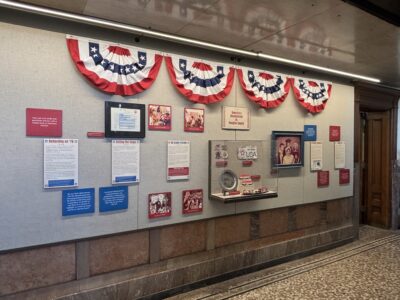
Watkins Museum to open special exhibit detailing how Douglas County celebrated America’s Bicentennial

Go, See, Do: Kaw River Roots Festival, markets and more
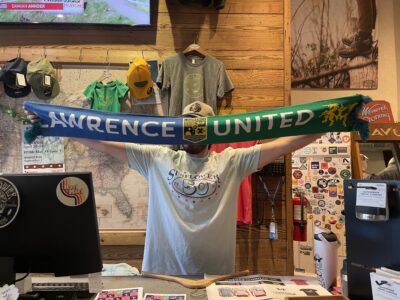
Soccer gear honoring Lawrence history’s all-star team is now on sale as part of city’s public art exhibition
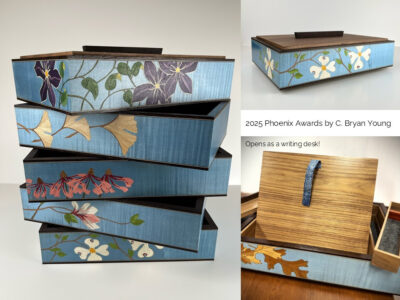
Nominations, call for artists open for Lawrence’s 2026 Phoenix Awards