

Lincoln Center president aims to raise $1 billion
New York ? After much upheaval, the Lincoln Center for the Performing Arts has a new president who promises to help raise $1 billion as the world’s biggest arts complex is renovated over the next 10 years.
“If we can bring off this decade-long project well, we’ll have a sparkling campus in which some of the greatest artistic companies and artists in the world can perform,” said Reynold Levy, the president and chief executive officer of Lincoln Center Inc.
The one-time president of a refugee relief organization and former Harvard Business School lecturer runs the daily operations of a compound that annually draws 5 million people to performances by the Metropolitan Opera, the New York City Opera, the New York Philharmonic and the New York City Ballet, as well as chamber music, jazz, theater and film.
Levy, 57, became president in May, after a year of infighting over a redevelopment plan for the 40-year-old, 16-acre complex that would revamp everything from marquees to the outdoor plazas and the Met backstage.
Besides economic woes after the Sept. 11 terrorist attacks, ego-driven bickering and management turmoil threatened to destroy the fledgling plan to spruce up the place.
Nathan Leventhal, president for 17 years, left last year. His successor, Gordon Davis, resigned in September after nine months, and an interim executive, Janice Price, departed in February.
Caught in this “dysfunctional family” as many insiders called it the center’s chairwoman, one-time diva Beverly Sills, retired in May. Advertising executive Bruce Crawford, a former Met board president, is Sills’ successor.
“I think things are much calmer,” Levy said in an interview in his office overlooking Lincoln Center. “Every discussion I’ve been involved with has been characterized by civility, and by a desire to reach the best solutions for Lincoln Center.”
Grounded in the arts
Levy has commissioned a feasibility study on fund-raising goals, scheduled to be done by summer’s end.
He has led a number of nonprofit organizations most recently, as president of the International Rescue Committee, a refugee relief organization. He helped raise tens of millions for the IRC, which was founded by Albert Einstein to help Europeans flee from the Nazis. Among them was artist Marc Chagall, whose mammoth murals grace the Met’s facade.
“That’s what I see every morning when I come to work,” said Levy.
His grandmother fled the Nazis and settled in Brooklyn’s Brighton Beach Russian Jewish neighborhood, where she raised three daughters working as a baker. Levy’s father was a fine tap dancer who taught him to tap for fun.
“My parents took me to the theater, played music at home, and opened my senses to the extraordinary contributions of the arts to understanding the world around us,” he said. “And so, I see the way audiences are exhilarated by what they see, and the transforming capacity of art to help us understand one another better.”
Levy is paid about $500,000 to run a cultural conglomerate that spends close to $500 million a year 60 percent coming from tickets sales, and the rest raised privately, with some government support. He’s confident the needed funds can be raised because the past decade “witnessed the largest aggregation of private wealth in the history of this country.”
Setting objectives
Levy intends to stay as president until the project is completed. Marshall Rose, the real estate mogul who spearheaded early efforts on a renovation plan, called Levy “terrific.”
“He’s smart, conciliatory, and has a vision,” Rose said.
Sills who after months of administrative strife said, “I was dead in my tracks” thinks Levy’s strength is that “he’s totally unflappable. He knows what his job is the renovation and that it’s not going to happen for a long time.”
Levy taught a Harvard course on leadership in social enterprise, writing a 1999 book titled, “Give and Take: A Candid Account of Corporate Philanthropy.”
The key, he said, “is how to set objectives and realize them, whether they’re personal objectives or fund-raising objectives or artistic objectives. Then build teams that support the objectives and see them happen, day by day, brick by brick, contribution by contribution.”
A Columbia Law School graduate with a doctorate in government and foreign affairs, Levy also headed New York’s 92nd Street Y and its artistic, social and educational programs. At AT&T, he directed government relations and a foundation that promotes arts projects worldwide.
Levy calls himself “a working-class kid” and no elitist a response to criticisms that Lincoln Center caters mostly to an upper-crust crowd. Its arts education programs reach 300,000 New York schoolchildren a year, he said.
He wants Lincoln Center to be “as warm and hospitable as possible a place where New Yorkers and tourists really feel comfortable.”
Arts and Entertainment

Photos: Lawrence begins World Cup festivities with downtown block party
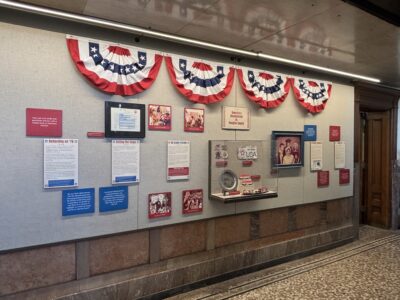
Watkins Museum to open special exhibit detailing how Douglas County celebrated America’s Bicentennial

Go, See, Do: Kaw River Roots Festival, markets and more

Soccer gear honoring Lawrence history’s all-star team is now on sale as part of city’s public art exhibition

Nominations, call for artists open for Lawrence’s 2026 Phoenix Awards