

Despite declining overall child death rate, youth suicides on the rise in Kansas
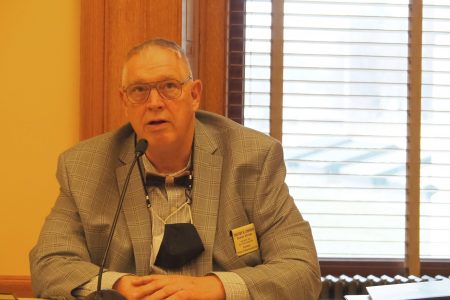
photo by: Noah Taborda/Kansas Reflector
Rep. Timothy Johnson, R-Bonner Springs, said work being done by the Kansas State Child Death Review Board is not enviable, but critical to the well-being of Kansas children.
TOPEKA — Despite a declining overall death rate among Kansas children, an annual report indicates the state saw an almost 10% increase in the number of youth suicides in 2018.
The Kansas State Child Death Review Board, part of the Kansas Attorney General’s Office, is charged with “identifying risk factors in deaths of children from birth through 17 years of age.” The board’s 2020 report, which compiled statistics from two years prior, indicates 35 children died by suicide in 2018. In 2017, 32 children died by suicide, and in 2016, the number was 20 children.
The report garnered strong reactions when it was presented to the House Committee on Children and Seniors. Rep. Timothy Johnson, R-Bonner Springs, said he left the criminal justice field in part because of the harrowing nature of child death investigations.
“When it comes to children, it takes special skills, and I can tell you many law enforcement officers tremble at the thought of having to deal with a child death. It’s just an incredibly emotional experience,” Johnson said. “I’m just so thankful that in the last 20 years, we’ve got the (review) board. It was critical.”
In 2018, Kansas had 414 child fatalities overall, the majority of which were from natural causes. The remaining deaths included 44 from motor vehicle crashes, 13 from sudden infant death syndrome, 28 from unintentional injuries other than motor vehicle crashes and 20 from homicide.
Presenting before the committee Tuesday, Melissa Johnson, chairwoman of the board, offered several policy recommendations she believed could improve the work the board does and potentially aid in investigating child deaths.
Increasing the thoroughness and depth of child suicide investigations was among those recommendations. The chairwoman said officers often will determine the death was a suicide but not dig much deeper.
“Unfortunately, we don’t always get a lot of social history or the mental health history, because law enforcement is really focused on dealing with the incident … but not necessarily all of the reasons why or any factors that can be identified that can lead us to help prevent suicides in the future,” Melissa Johnson said.
The report included a series of general safety recommendations as well, including educating parents on safe sleep for their children, safe driving awareness, and strengthening requirements for personal flotation devices in public waters.
The Child Death Review Board’s biggest request was that the Legislature amend the current statute to allow the board to disclose information to certain entities, including professional licensing organizations and district attorneys, if deemed necessary.
This would allow the board to join the National Child Death Review Case Reporting System, a tool available to states “as a mechanism to enter case data and to complete data analysis to develop recommendation specific to child deaths.”
Abby Collier, director of the National Center for Fatality Review and Prevention, said there are currently 47 states using the case reporting system.
“The goal of the case reporting system is to collect aggregated, de-identified information on risk and protective factors surrounding child deaths to inform and support prevention,” Collier said. “It is organized by cause of death, and significant effort is put into reducing users’ data entry burden.”
Collier said the national center is also charged with providing technical assistance to make the onboarding process and data entry smoother.
A bill heard by the committee after the report would amend the current statute to allow an exception for legislators, statistics entities and law enforcement and criminal justice workers, if necessary.
The same bill was proposed previously but died in a Senate committee after passing through the House unanimously.
“Communication and streamlining the investigation process would both be life-saving,” said Rep. Jarrod Ousley, D-Merriam.
If passed, the legislation would go into effect July 1, 2022.
— Noah Taborda is a reporter for Kansas Reflector.
State Government

GOP’s highest profile figures are on rescue mission in once-reliable Kansas

In debate, Marshall says the Ukraine war, not the Iran war, has caused high diesel prices
Candidates lean on their prominent supporters in District 2 race
TOPEKA — Democrat Don Coover and Republican Derek Schmidt stood with partisan allies as their congressional race ...
Funding for new Chiefs stadium moves forward, setting sales tax revenue district
TOPEKA — State officials answered a key question this week underpinning the complex financing of the Kansas City ...
Voters Guide: A look at the candidates seeking to become Kansas Insurance Commissioner
The Kansas Department of Insurance regulates insurance companies that sell policies in Kansas. Voters will decide ...
Voters Guide: A look at the candidates seeking the job of Kansas State Treasurer
In the Nov. 3 election, Republican Kansas Treasurer Steven Johnson faces two challengers for his job as the chief ...