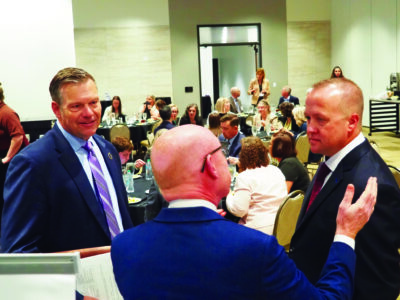
Area legislators gather ahead of next week’s session with concerns of balancing money, human services
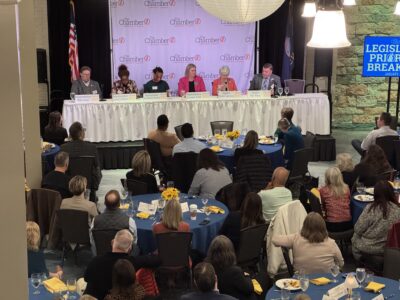
photo by: Chad Lawhorn/Journal-World
Six area legislators participated in The Chamber's annual Legislative Priorities Breakfast on Jan. 9, 2026.
When the Kansas Legislature convenes next week, the topics largely will fall into one of two big buckets — money or people.
A Lawrence chamber of commerce crowd of more than a hundred heard from Douglas County’s longest-serving legislator that she continues to worry that the people issues are losing out too often in Topeka.
“We have an obligation to take care of our brothers and sisters, and we can’t decide to defer it,” Rep. Barbara Ballard, D-Lawrence, told the crowd attending the chamber’s annual Legislative Priorities Breakfast on Friday morning at Maceli’s Banquet and Catering Hall in downtown Lawrence.
The biggest applause line of the event came when Ballard said everyone should be thankful that Gov. Laura Kelly was able to maneuver the process so that Kansans received SNAP payments — often called food stamps — in more complete and timely manners than residents of many other states.
“I think you should applaud the governor for that because otherwise what were those people going to do?” Ballard said.
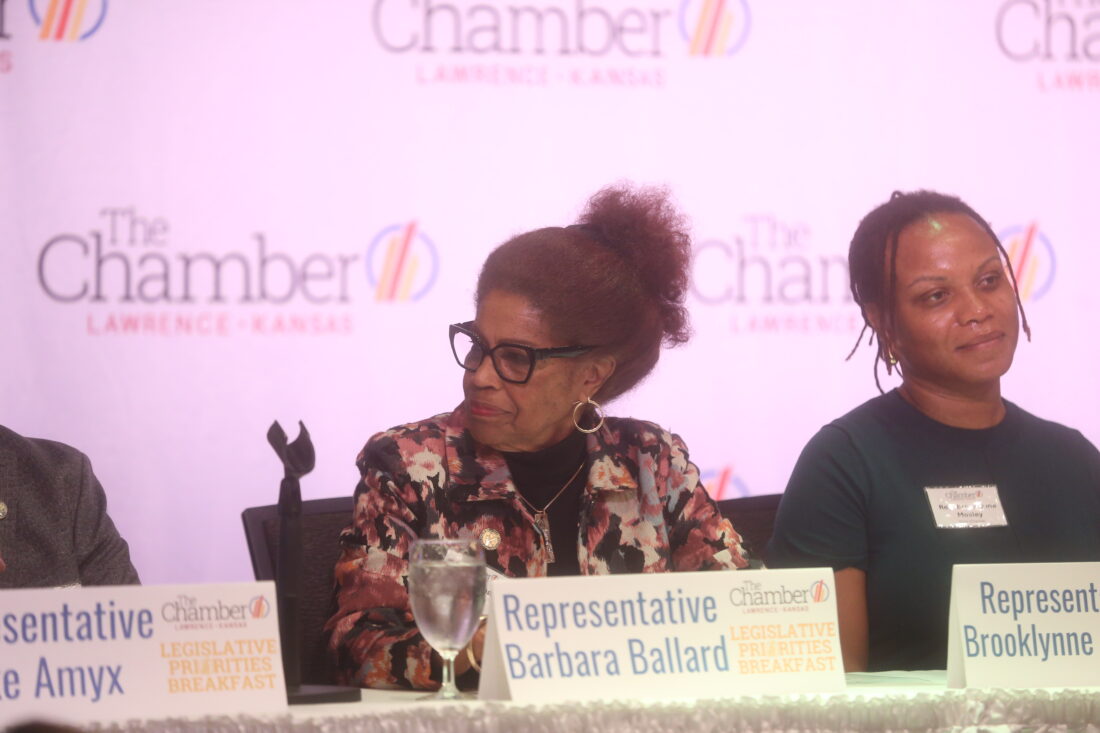
photo by: Chad Lawhorn/Journal-World
Rep. Barbara Ballard participated in The Chamber’s Legislative Priorities Breakfast on Jan. 9, 2026.
Sen. Rick Kloos — who represents parts of west Lawrence, in addition to portions of Shawnee, Franklin and Osage counties — was the only Republican legislator to participate in the event. He said his role as a founder of a Topeka nonprofit made him well aware of the tensions between managing money and serving people.
“As a nonprofit, you have to find a balance in your budget about where it is about service but it also is fiscal,” Kloos said. “If you are all about service, you are going to run out of money. But if you are all about the fiscal aspect you forget who you serve.”
Kloos said he thinks the Kansas Legislature is trying to strike that balance, and it is doing it in a more responsible way than the federal government, which is doing so through deficit spending.
“What kind of Kansas outlook will we leave our kids?” he asked.
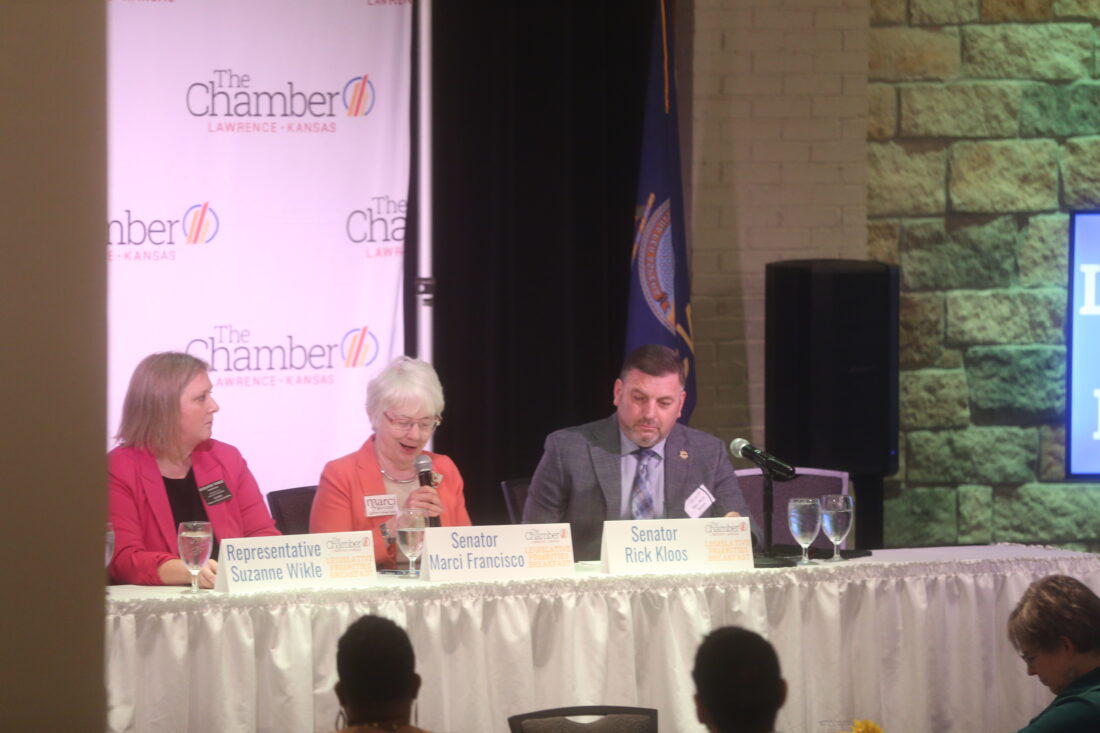
photo by: Chad Lawhorn/Journal-World
Rep. Suzanne Wikle, and Sens. Marci Francisco and Rick Kloos participated in The Chamber’s Legislative Priorities Breakfast on Jan. 9, 2026.
Friday’s legislative panel didn’t come to a consensus on that outlook, but most legislators agreed that the upcoming session will be contentious.
Both Ballard and Sen. Marci Francisco, D-Lawrence, pointed to the budget process the Republican-controlled Legislature has decided to use. Last year was the first for the Kansas Legislature to craft its own budget for the body to consider. In previous years, the governor was solely responsible for presenting a budget to the Legislature, which is one of the constitutionally required duties of the governor.
Ballard, though, said the governor’s budget got little debate in the Legislature last session, which she said is a shame because the governor’s budget is crafted after talking with all state agencies. Ballard said that’s not the case with the budget crafted by the Legislature.
Francisco said the process is not off to any better of a start this year. She said the Legislature’s special interim budget committee has been having hearings ahead of the session, but they don’t go into any depth, and the most recent recommendation from the group was simply to take last year’s budget totals and approve them again, with perhaps some wage increases for state employees and other budget enhancement debated later in the session.
But how much time there will be to debate any programs of substance is unclear to Francisco. She said the 90-day legislative session used to generally mean 90 days that the Legislature actually met and conducted business. Now the 90-day session includes meeting days and breaks, she said.
“It is awkward for committees to be able to have the time to schedule hearings and work a bill,” Francisco said.
Other state legislators who participated in Friday’s legislative breakfast included:
• Rep. Mike Amyx, D-Lawrence, who said he expects to be involved in important legislative issues regarding higher education, given his position as the ranking minority member of the House Committee on Higher Education Budget.
He said education funding of all types remains a priority for him.
“We have excellent teachers throughout the university and USD 497,” Amyx said. “Let’s fund them and give them the support they need.”
• Rep. Brooklynne Mosley, D-Lawrence, who said she really wants the state to not only focus on attracting jobs, but also on improving quality of life for communities across the state. She said addressing the issue of wages and the state’s minimum wage of $7.25 per hour would be a good starting point.
“There is nowhere in our state,” Mosley said, “where someone can rent an apartment on that wage … I think for us to have people not only live in our community but thrive in our community, we really need to look at that minimum wage and get that up.”
• Rep. Suzanne Wikle, D-Lawrence, who said she expects to have opportunities to work on health policy issues given her background and committee assignments. She said she is among the legislators working to pass a bill that would increase access to naloxone, which is a medication that helps reverse opioid overdose symptoms.
Wikle said she’s also hearing from many constituents who are university employees that are expressing concerns about restrictions that the Republican lawmakers are placing on diversity, equity and inclusion efforts on campus. Wikle said she will work to beat back any new efforts aimed at the university.
“I will, of course, oppose any efforts that would restrict what they can teach in their classrooms, and other attacks on DEI,” Wikle said.
Both the House and Senate will start the 2026 legislative session on Monday, and the governor will deliver her State of the State Address on Tuesday evening.
State Government
Opinion: The Lawrence man seeking to break the power of Republican, Democratic parties this election
State tax receipts top estimate by $147M for quarter
TOPEKA — The state of Kansas collected $147 million more in taxes than anticipated during the first quarter of ...
Rep. Tracey Mann to skip candidate forum in Lawrence; spokesman scarce on details

Kobach, Mann debate criminal justice priorities at Tuesday event as they campaign in attorney general race
Kansas must count mail ballots that arrive three days after November election, appeals court rules