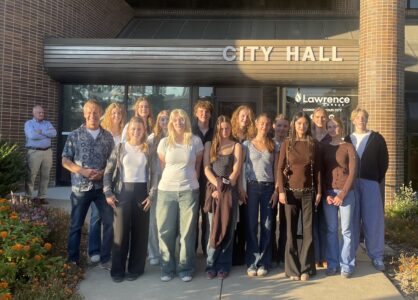
School board votes against adopting health department’s COVID-19 guidance, will craft its own version with different criteria

photo by: Mackenzie Clark/Journal-World File Photo
The Lawrence Board of Education meeting room at district offices, 110 McDonald Drive, is pictured in this file photo from Feb. 25, 2019.
Story updated at 11:19 a.m. Wednesday
The Lawrence school board has voted to not adopt the local health department’s school coronavirus guidance, and it intends to create its own version with more criteria to consider.
On Monday, the board voted 4-3 against adopting Lawrence-Douglas County Public Health’s school virus guidance, which would have given Superintendent Anthony Lewis the authority to close schools when the guidance recommends it. Board members Kelly Jones, Shannon Kimball, G.R. Gordon-Ross and Carole Cadue-Blackwood voted against adopting the guidance. Board members Erica Hill, Melissa Jones and Paula Smith voted in favor of adopting the guidance.
After the proposal to adopt the guidance failed, the board decided to not consider a similar item that would have applied to athletics and activities.
The board members who voted against adopting the guidance Monday said they wanted to add additional criteria for the district to consider, such as specific guidelines around incidence rates for the virus in the community.
An incidence rate tracks the number of COVID-19 cases in a community over a certain period of time. However, the health department uses a different kind of measurement for its guidance: an average positivity rate, which measures the percentage of virus tests in the community that come back positive. Board members had some concerns about that, specifically that the number of people being tested in the community has not been consistent.
“I’ve been perfectly open and clear that I don’t like the positivity rate,” Gordon-Ross said. “I don’t like the numbers (and) the percentage in itself is not a valid number because it can’t be related to anything.”
The health department also uses the 14-day average of new cases in the county as part of its guidance criteria.
Kimball said she thought the health department’s guidance was “incomplete” without the use of incidence rates. She noted that other counties and school districts had added incidence rates to their criteria.
“It doesn’t provide a full enough picture of the risk of exposure (to COVID-19) for our staff and our students,” Kimball said of the local health department’s guidance.
While the local health department’s guidance doesn’t use incidence rates, the Kansas State Department of Education’s guidance does. That guidance says that when a community has more than 100 new cases per 100,000 people over the prior two weeks, then schools should consider moving middle and high school students to remote learning. If the community passes 150 new cases per 100,000 people during that two week period, the guidance recommends all schools move to remote learning.
If the state’s guidance were used, Lawrence schools would seem to be in the all remote learning tier. According to the Kansas Department of Health and Environment’s website, Douglas County reported 802 new cases in the most recent two-week period from Nov. 8 to Nov. 21. With a population of about 122,000, the county would have an incidence rate of 656 new cases per 100,000 people in the last two weeks. Even when looking at a much smaller time period, such as over the weekend when the county reported 220 new cases, the incidence rate would still exceed the remote-learning threshold, with roughly 183 new cases per 100,000 people over those few days.
Kimball said she wanted the district’s version of the guidance to include specific levels at which schools’ instructional methods would change, such as outlining how many cases of the virus among students and staff would require the district to shut down schools. She also wanted the new guidance to take into account the local hospital’s capacity to treat cases of the virus.
The board directed the district’s administration to work with the health department to develop new guidelines that include the consideration of incidence rates. It also scheduled a meeting for Dec. 3 to consider adopting the newly developed version of the guidance.
In the meantime, the board also agreed to continue following the health department’s current guidance until a new version is adopted.
The health department’s color-coded guidance, which is updated weekly, is meant to help county school districts navigate reopening schools and conducting activities as the pandemic continues during the fall semester.
However, the health department recently changed the details of the guidance, allowing schools to continue using hybrid in-person learning when the guidance reaches the orange tier. The orange tier originally called for schools to move to fully remote learning.
The change came the day the guidance reached the orange tier for the first time this fall. Board members expressed frustration with the health department’s decision when they met with officials during a special meeting to discuss the changes.
Jones said she felt blindsided by the changes because the health officials had previously told her weeks prior that they stood by the guidance as originally written.
“I want to follow your direction and make sure kids are in schools but what you are saying contradicts what you told me weeks ago,” Jones said at the time.
Clarification: This story has been edited to clarify information about the state’s guidance on incidence rates. The state department of education uses a two-week time period to measure its incidence rate. Using that measurement, Douglas County has had an incidence rate of 656 new cases per 100,000 people in the most recent two-week period where data is available, Nov. 8 to Nov. 21.
Lawrence Public Schools Board of Education Meeting | November 23, 2020
K-12 Education
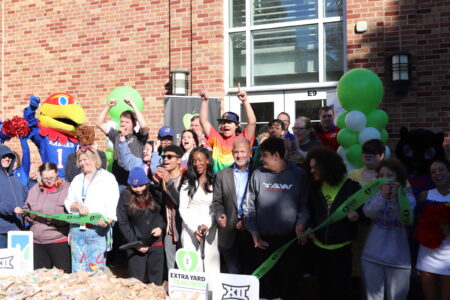
Student-run coffee shop opens at Community Connections at Pinckney, teacher receives surprise $1,000 award
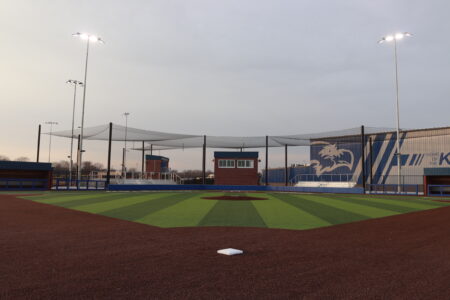
Perry-Lecompton voters to weigh new joint recreation system funded by property tax levy
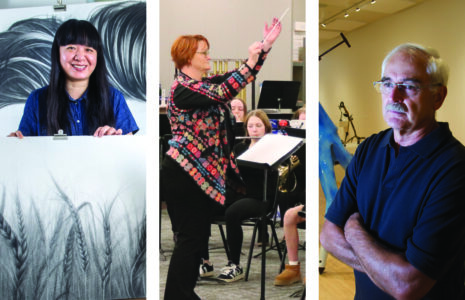
KU professors, middle school band director, radio personality among this year’s Phoenix Award honorees: ‘It’s a cool mix’
Baldwin High already has won $25K and is competing for $1M through national sports program
A student-run coffee shop will open at Community Connections at Pinckney next week