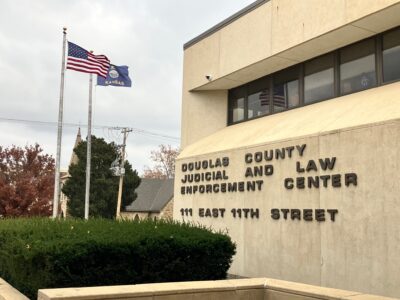

‘Restoring important people in our community’: Veterans Court nearing capacity as it celebrates 1st anniversary

photo by: Kahner Sampson
Judge Amy Hanley holds a flag that was flown over the U.S. Capitol and that was presented to the Veterans Treatment Court by Col. Paul Cope Monday, Oct. 26, 2026, on the court's one-year anniversary.
After operating for one year, Douglas County’s newest collaborative approach to criminal justice has helped seven military veterans get back on their feet after run-ins with the law – run-ins that, under other circumstances, could easily have sent them into a downward spiral with little hope of recovery.
“We are restoring important people in our community and giving them a second chance,” Judge Amy Hanley told an audience Monday as she honored those veterans and their support team during a special anniversary session of Veterans Treatment Court in the county’s historic courthouse.
Hanley said that although she had been a legal professional for 24 years, presiding over the specialty court has been her first opportunity “to become deeply involved with treatment and recovery in the criminal justice system.”
In a traditional criminal case, she would typically hear evidence, render rulings and hand down a sentence in a largely impersonal procedure. But in Veterans Court, the defendant is front and center and is surrounded by team members who are not just rooting for success but who are actively engaged in that outcome – helping veterans locate mental health and addiction resources, getting them to appointments, mentoring them, monitoring drug test results and generally assisting with day-to-day needs, like employment support, that provide a foundation for recovery and a bulwark against recidivism.
It’s not hand-holding, though, and it’s neither fast nor easy. No one has yet graduated from the year-old program, which is generally expected to take a person 15 to 18 months and which involves frequent court appearances – weekly at first – plus in-depth accountability through progress reports and drug tests.
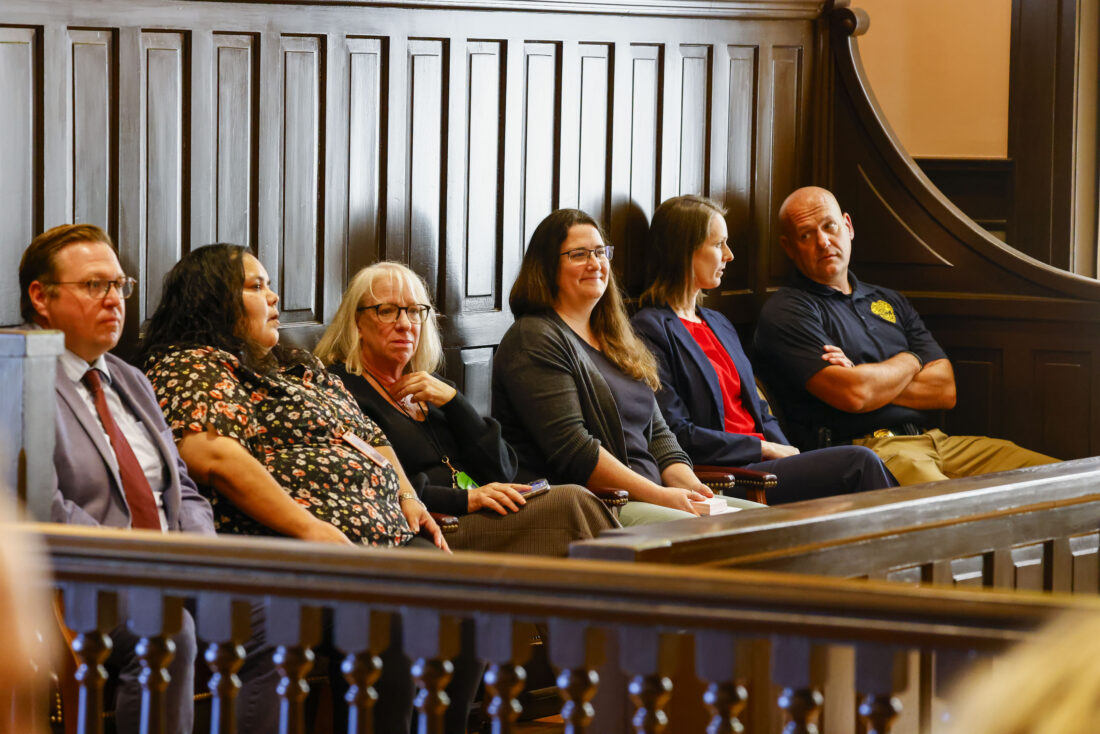
photo by: Kahner Sampson
Members of the Veterans Treatment Court team are pictured Monday, Oct. 26, 2026, on the court’s one-year anniversary.
“They are all doing really well,” Hanley said of the seven participants in the court, which currently has capacity for 10 veterans.
The two participants who have been with the program the longest have now reached the third of five required milestones and are on track to graduate in coming months.
Both have experienced ongoing challenges, such as battling the temptation to drink, which they can candidly discuss with the team and with each other. Judge Hanley frequently reiterates during court sessions that “communication is key.” One man even acquired new criminal charges early on and was faced with the possibility of not continuing in the program.
At that difficult hearing last winter, though, Hanley pointedly asked him if he was giving up. He thought about it, then said no.
“We are not giving up on you,” Hanley replied matter of factly, which, coming from a person with a black robe and a gavel, may have surprised the man. “We recognize that there are going to be setbacks.”
Since then, with an emphasis on progress rather than perfection, the man has seemingly thrived, gaining employment and moving into a healthier social circle.
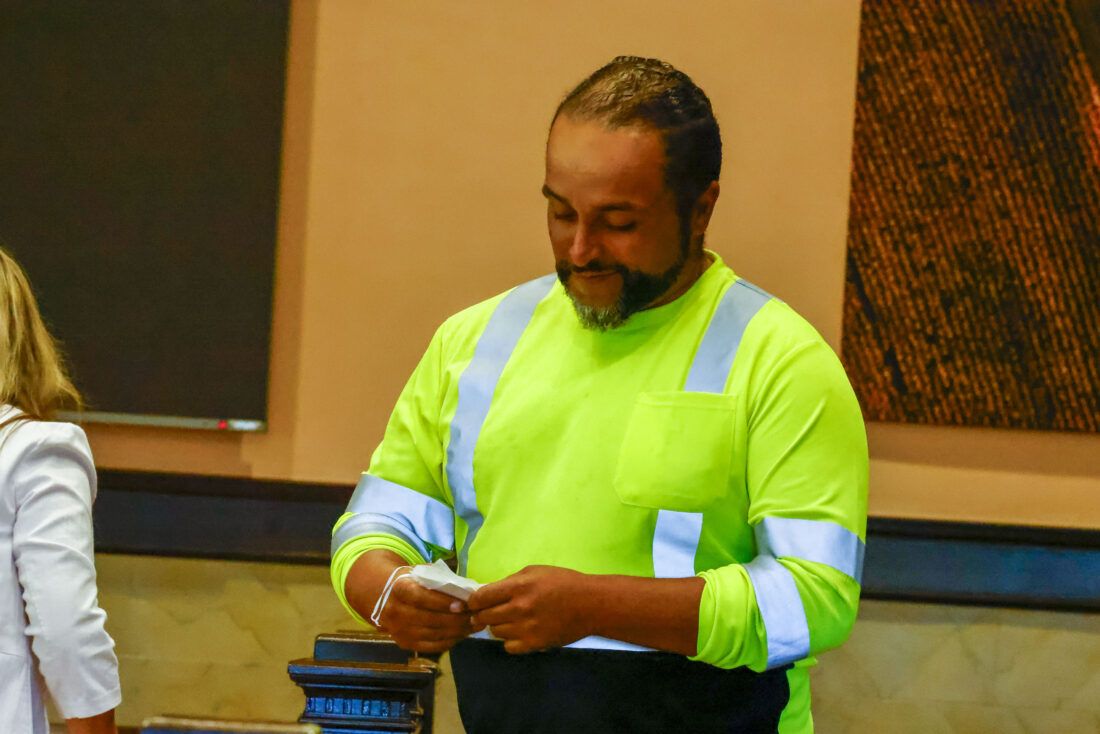
photo by: Kahner Sampson
A participant in Douglas County’s Veterans Treatment Court is pictured on Monday, Oct. 26, 2026, on the court’s one-year anniversary.
If he and the others complete all the milestones, their convictions – generally for misdemeanors and low-level felonies – will be expunged, allowing them a fresh start.
In addition to benefiting veterans and enhancing community safety by reducing recidivism, Hanley said her interactions with the veterans and the support team had made her a better public servant.
“It is meaningful, impactful and a privilege,” she said, noting that Douglas County has been a leader in the justice system through its specialty courts. The other two specialty courts here are Behavioral Health Court and Drug Court.
The Veterans Treatment Court, the sixth such court in Kansas, was made possible by a $1 million federal grant in 2024, which will fund the program for four years.
The court would like to have a veteran mentor for every participant in the program. Veterans can contact court coordinator Stephanie Ruszczyk at (785) 330-2870 if they are interested in helping another veteran succeed.
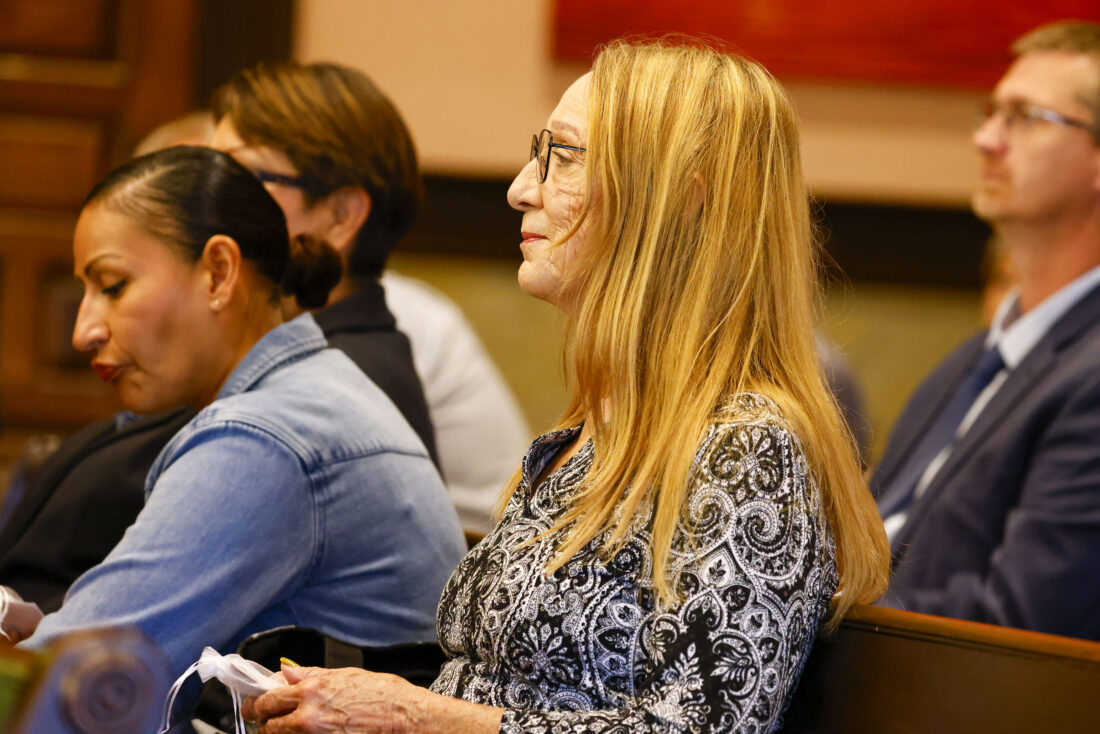
photo by: Kahner Sampson
Participants in Douglas County’s Veterans Treatment Court are pictured on Monday, Oct. 26, 2026, on the court’s one-year anniversary.
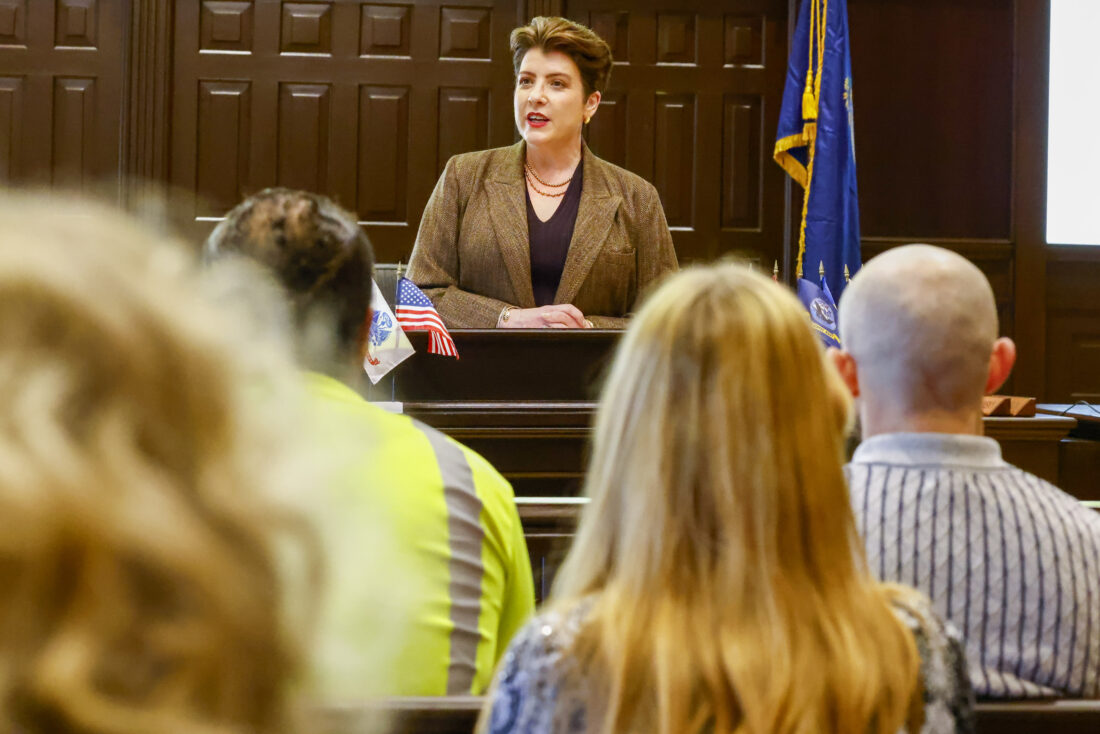
photo by: Kahner Sampson
Judge Amy Hanley speaks at the one-year anniversary of Douglas County’s Veterans Treatment Court on Monday, Oct. 26, 2026.
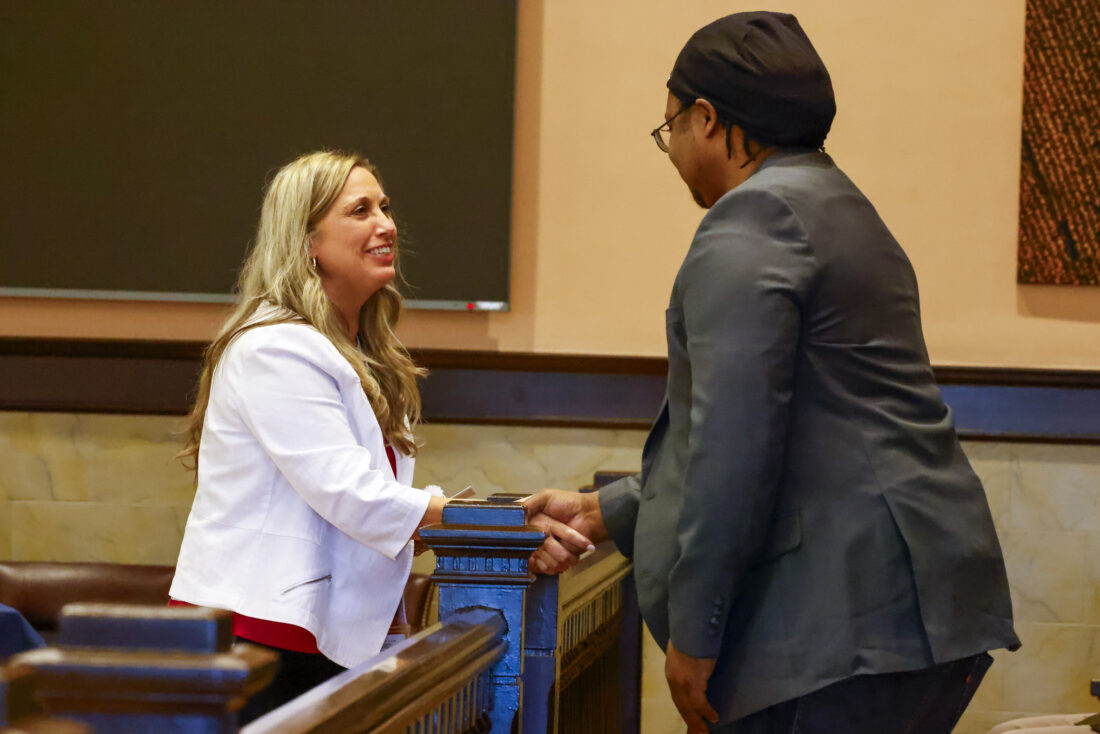
photo by: Kahner Sampson
A participant in Douglas County’s Veterans Treatment Court is pictured on Monday, Oct. 26, 2026, on the court’s one-year anniversary. Veterans Treatment Court Coordinator Stephanie Ruszczyk is at left.
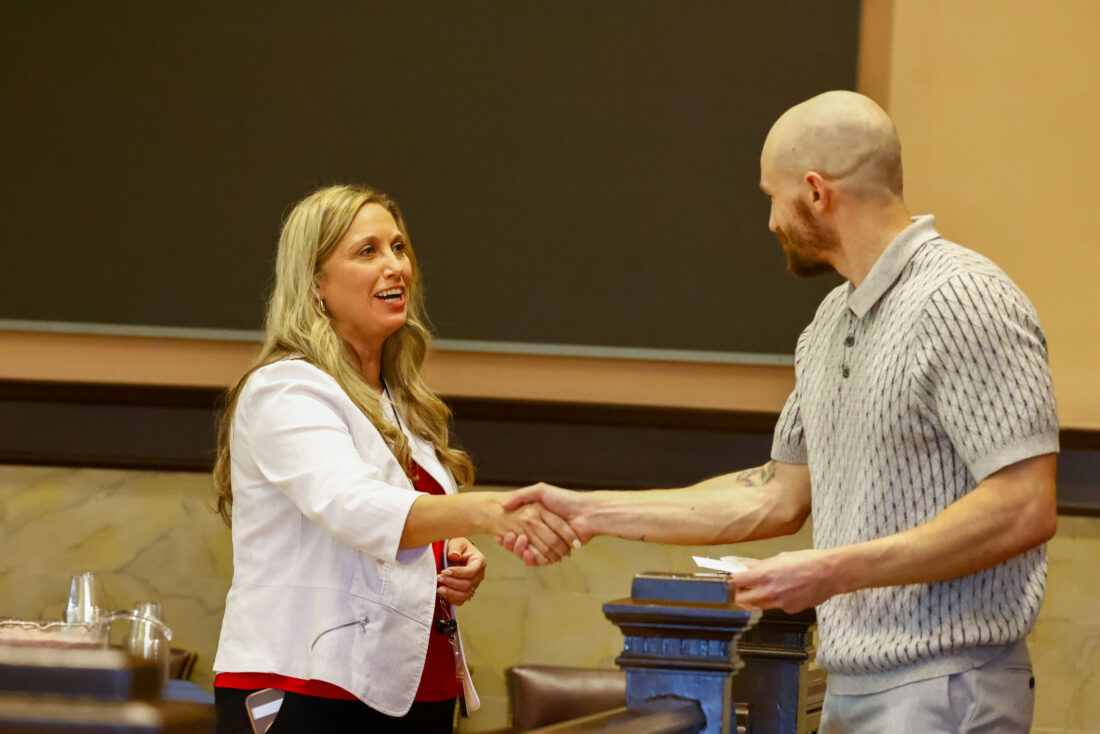
photo by: Kahner Sampson
A participant in Douglas County’s Veterans Treatment Court is pictured on Monday, Oct. 26, 2026, on the court’s one-year anniversary. Veterans Treatment Court Coordinator Stephanie Ruszczyk is at left.
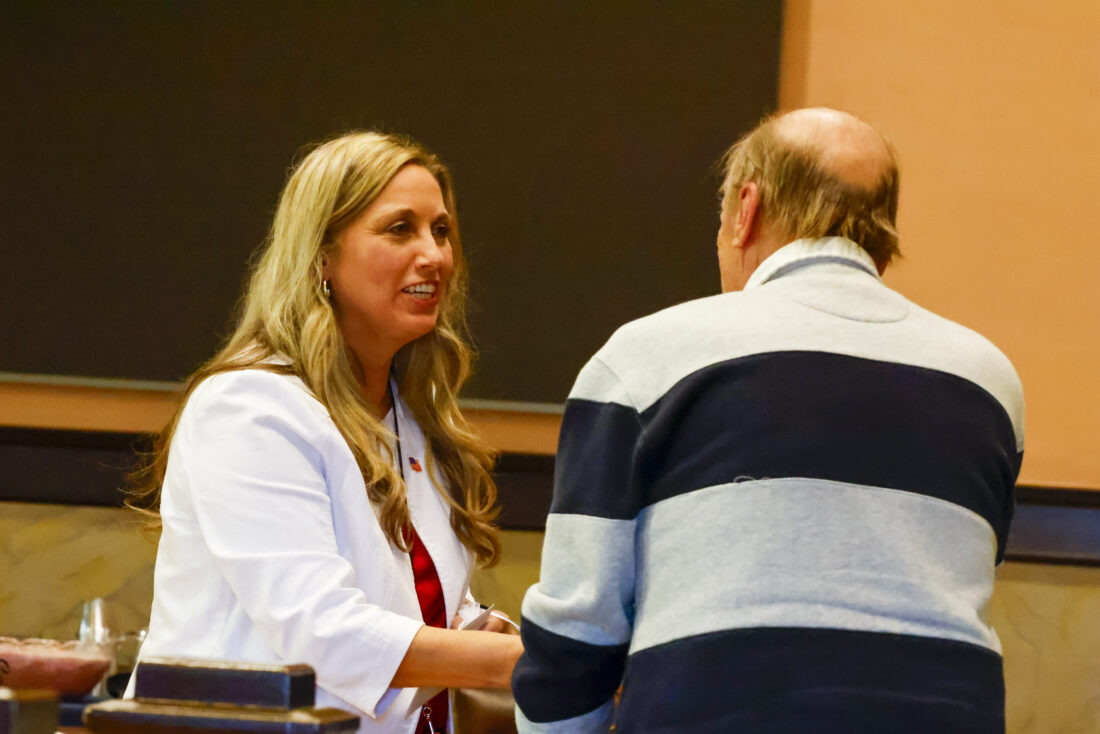
photo by: Kahner Sampson
A participant in Douglas County’s Veterans Treatment Court is pictured on Monday, Oct. 26, 2026, on the court’s one-year anniversary. Veterans Treatment Court Coordinator Stephanie Ruszczyk is at left.
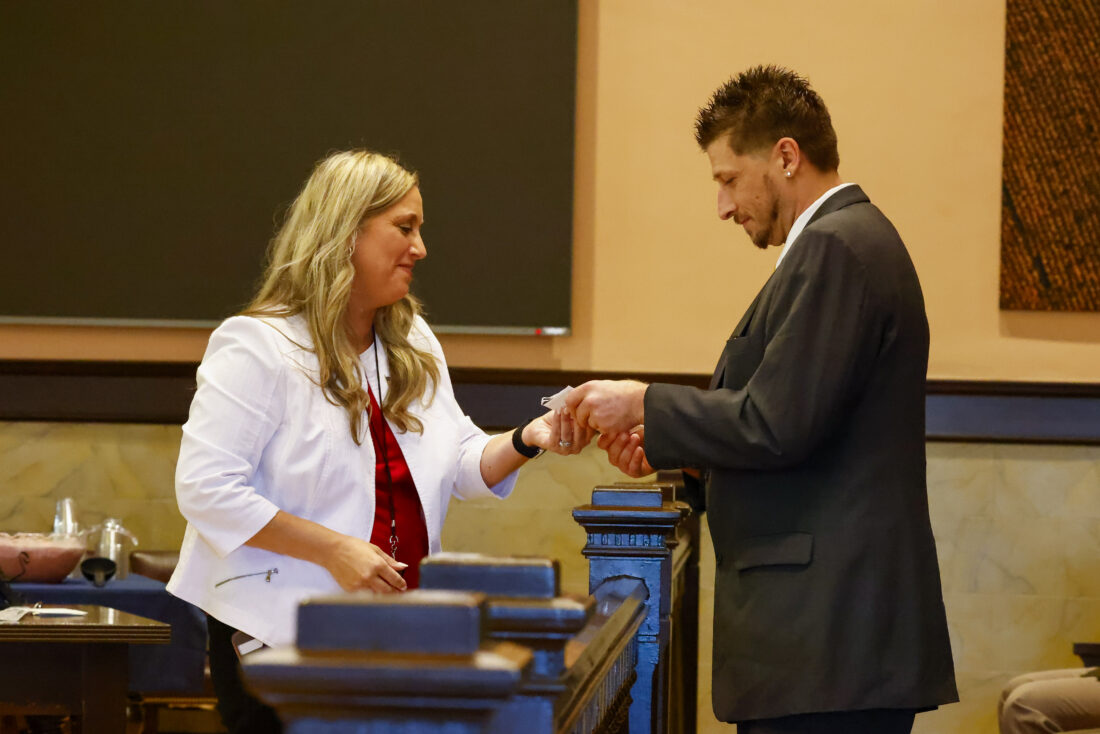
photo by: Kahner Sampson
A participant in Douglas County’s Veterans Treatment Court is pictured on Monday, Oct. 26, 2026, on the court’s one-year anniversary. Veterans Treatment Court Coordinator Stephanie Ruszczyk is at left.
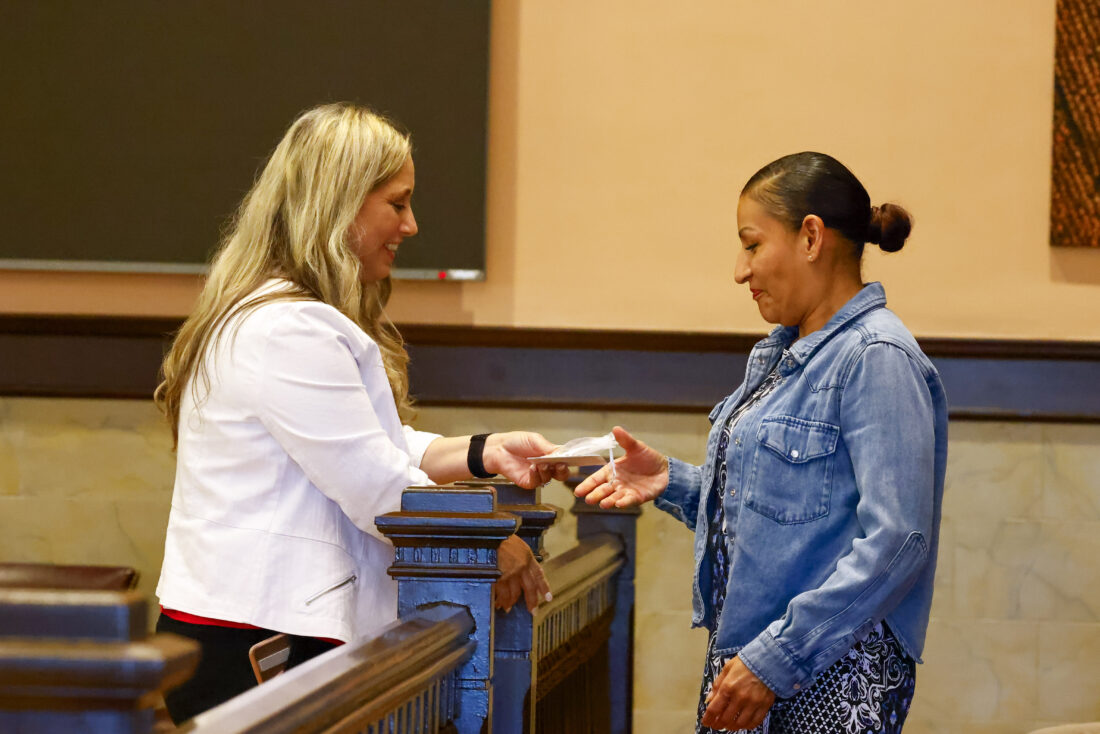
photo by: Kahner Sampson
A participant in Douglas County’s Veterans Treatment Court is pictured on Monday, Oct. 26, 2026, on the court’s one-year anniversary. Veterans Treatment Court Coordinator Stephanie Ruszczyk is at left.
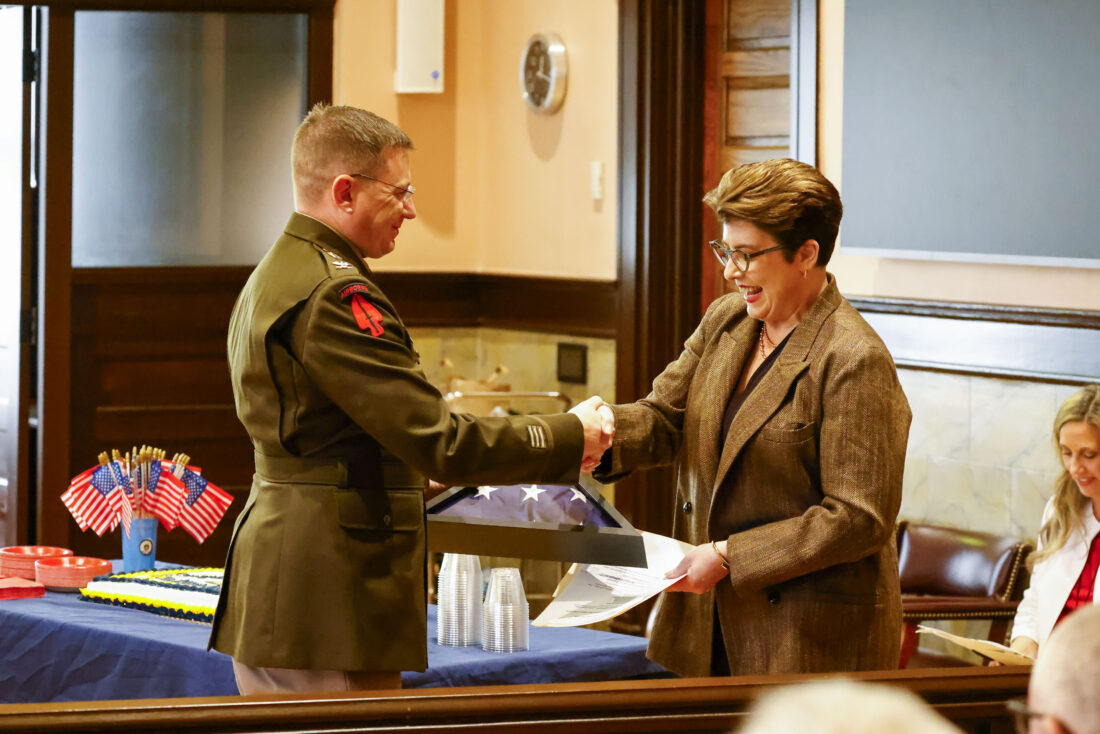
photo by: Kahner Sampson
Judge Amy Hanley receives a flag that was flown over the U.S. Capitol and that was presented to the Veterans Treatment Court by Col. Paul Cope Monday, Oct. 26, 2026, on the court’s one-year anniversary.
Public Safety
‘Restoring important people in our community’: Veterans Court nearing capacity as it celebrates 1st anniversary
In domestic violence case, Lawrence woman is acquitted of 5 of 6 charges; jury finds her guilty of one misdemeanor
Man ordered to stand trial after friend testifies that night of drinking ended with a rape

24-year-old ordered to stand trial in connection with Lawrence mother’s drug death
Former LHS teacher admitted having sex with a sophomore 26 years ago, but a lot turns on whether she was 15 or 16 at the time